
ExhibitionsWomen’s Stories
Medmuzejska razstava
Women’s Stories
Mythical images and the reality of women through objects — twelve stories from Slovenian museums.
O razstavi
The exhibition Women’s Stories through objects from Slovenian museums opens a view of women – from archaeological finds and myths to industry and the 20th century.
Mythical images and reality meet in twelve stories: an Iron Age princess, Celtic women’s burials, Cleopatra in Kranj, seafarers Sava and Jolanda, Alma M. Karlin and others.
The Gorenjski Museum and partners across Slovenia take part. Choose a story on the grid below — or read them in order.
Petra Stipančić · Dolenjski muzej Novo mesto
THE IRON LADY
Kneginja s Kapiteljske njive v Novem mestu
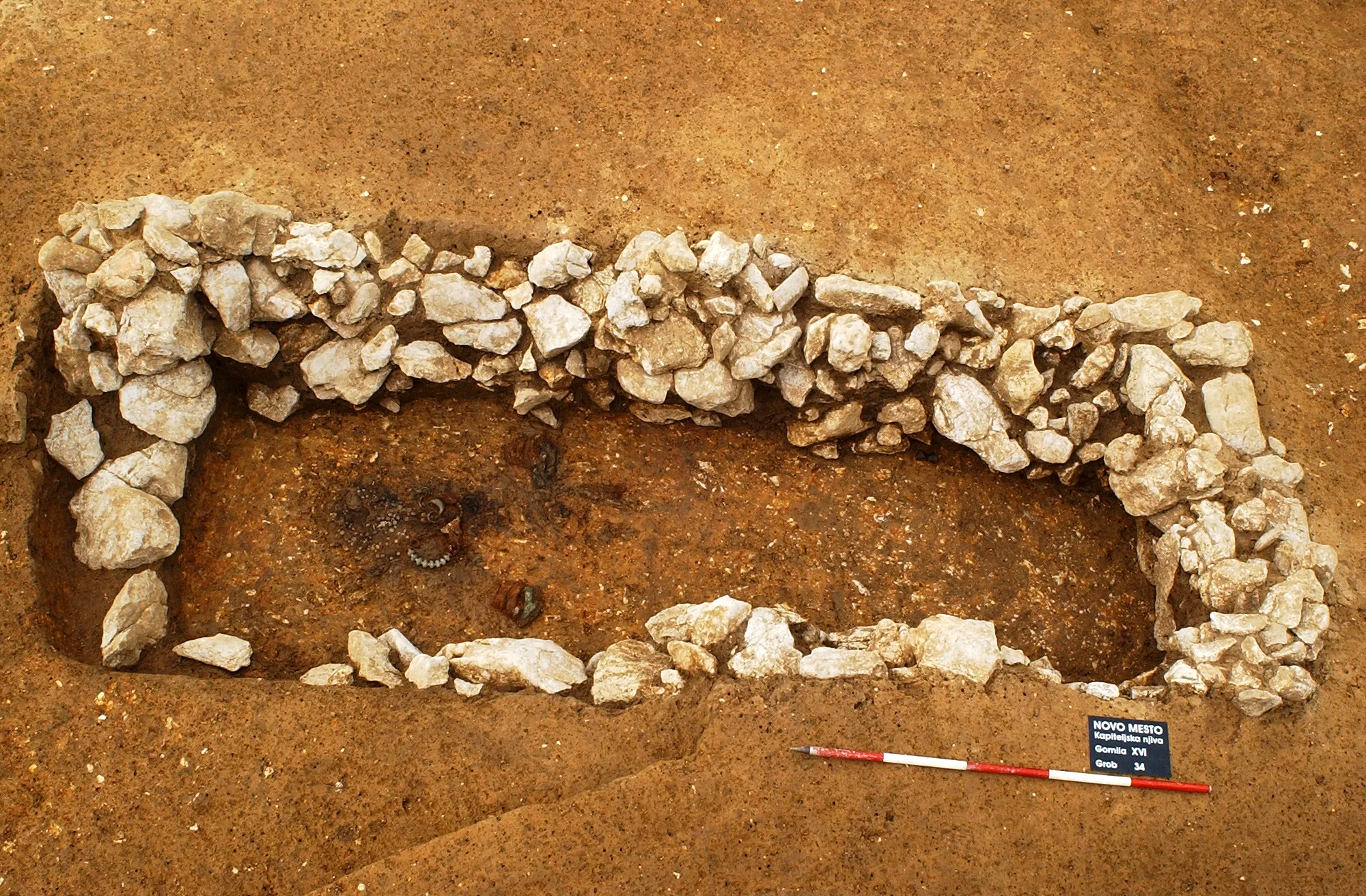
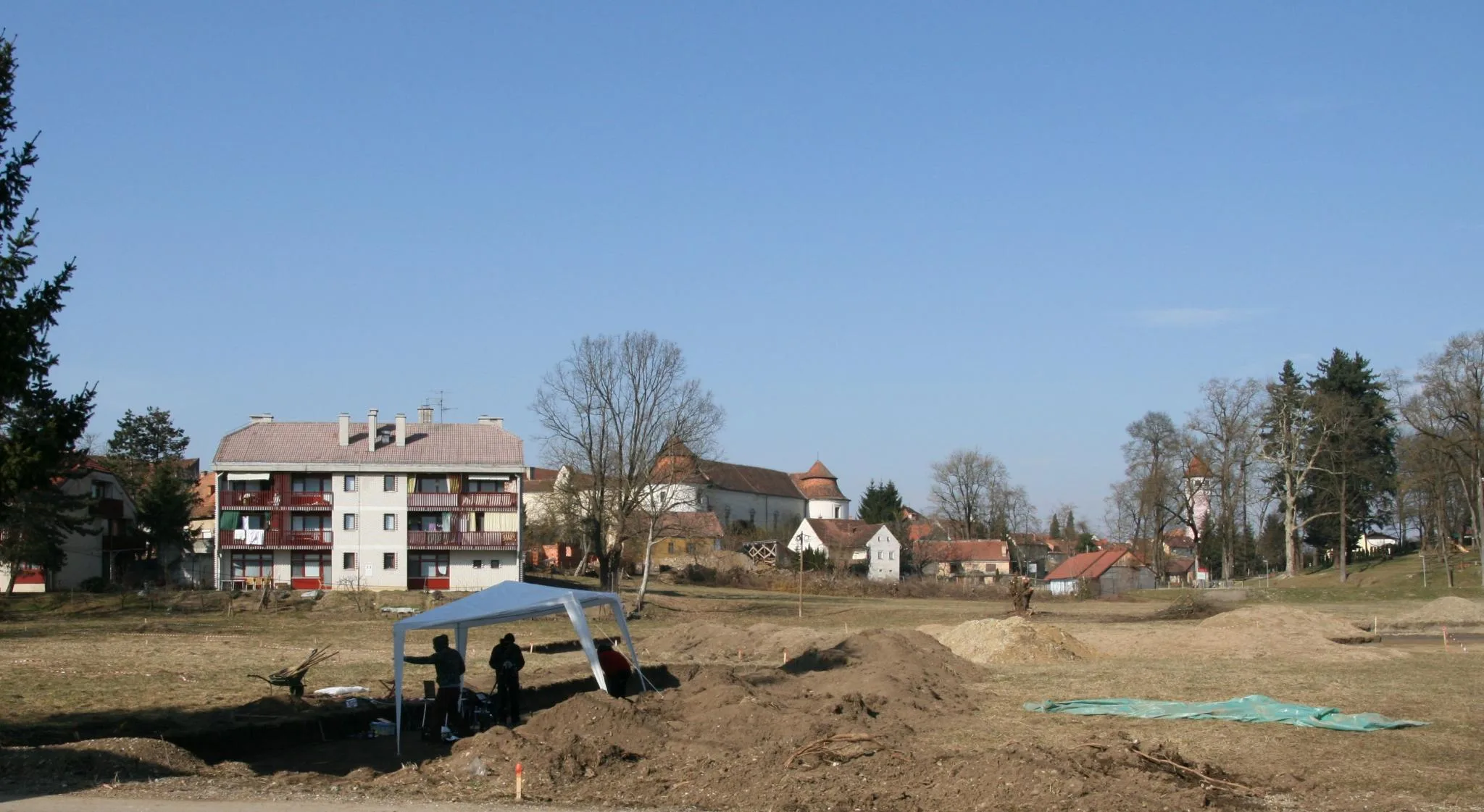
The finds were discovered in 2004 during research of barrow XVI from the Early Iron Age at Kapiteljska njiva in Novo mesto. The barrow was no longer visible, but covered a group of 40 burials. In the richest grave a woman was buried with jewellery from the second half of the 7th century and older, “inherited” pieces from the end of the 8th century BC.
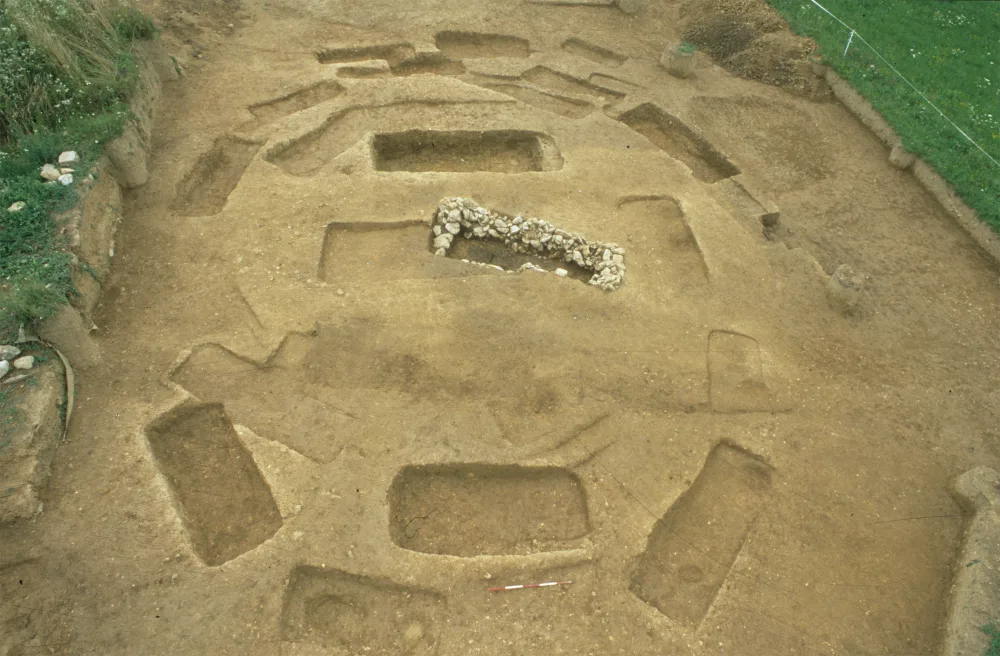
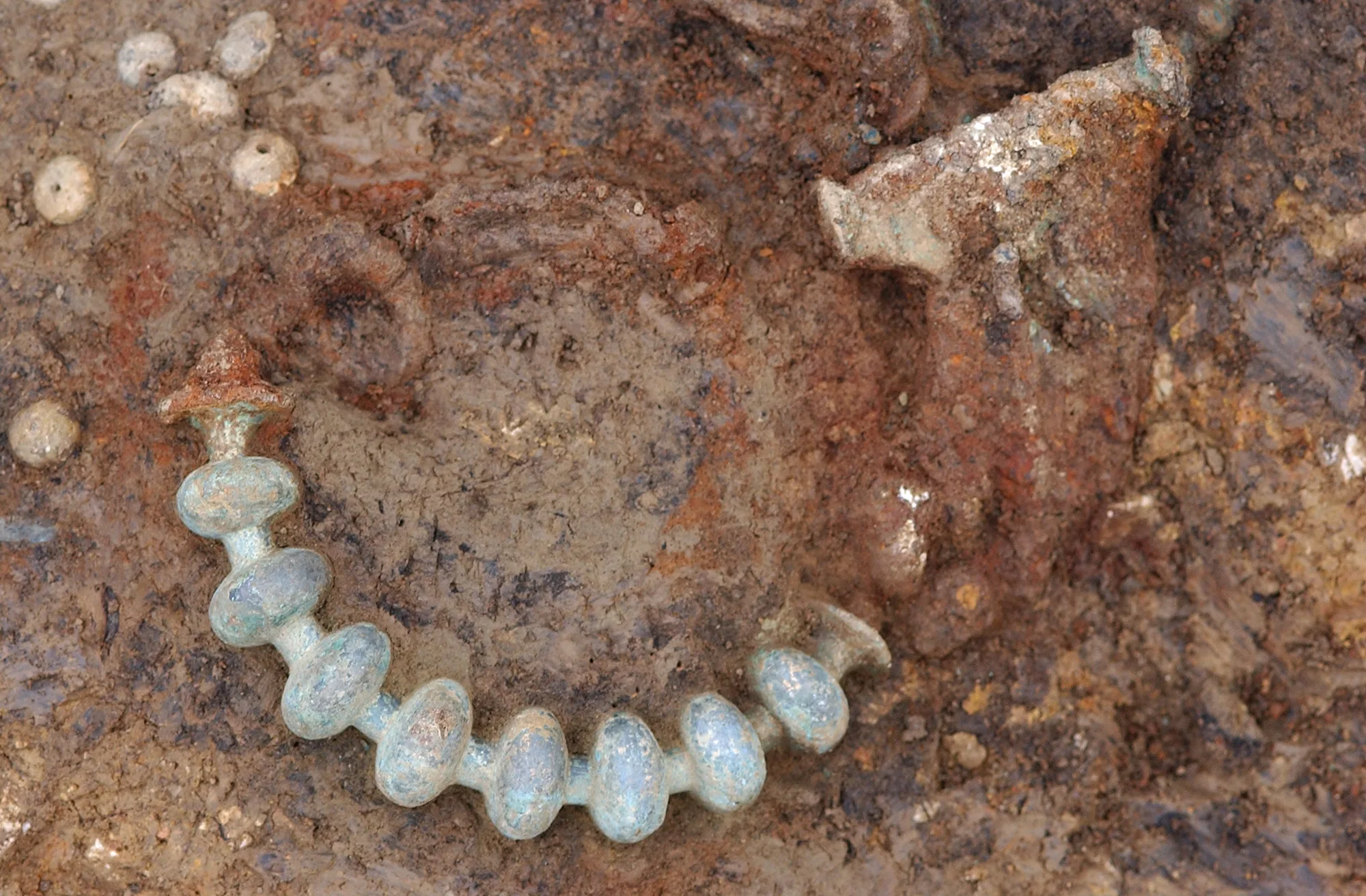
The deceased was buried in a large rectangular pit in the centre of the barrow, from which we infer her high social status as a princess. The lavish objects and their age show that she was most likely the founder of a lineage that continued to bury its dead in the barrow for another 300 years.
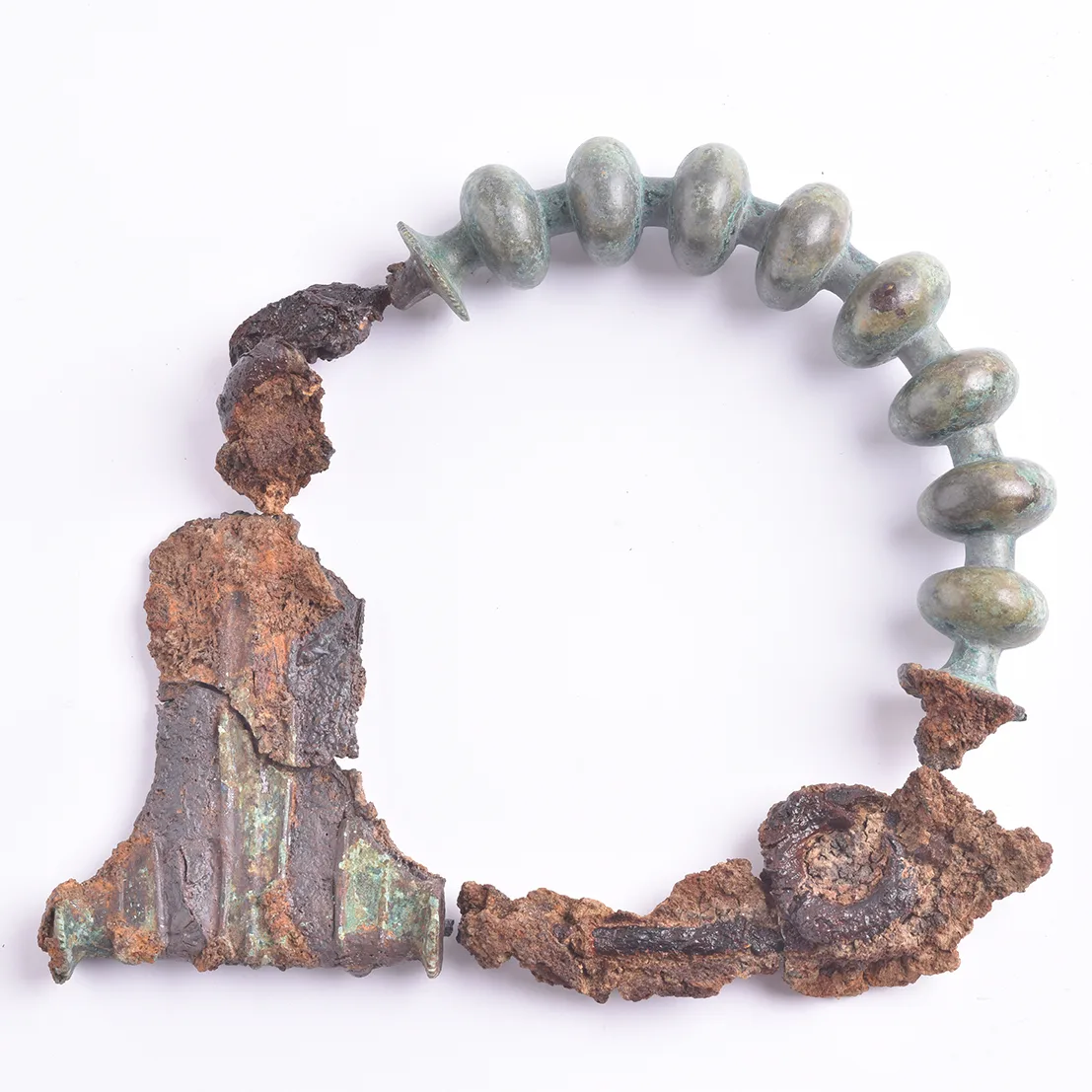
The princess died aged between 20 and 30 and was 160 to 165 cm tall. Her jewellery also points to her high standing, especially an iron brooch, the so-called Vače knotted fibula. Metal fragments hidden in the bronze thickenings of the brooch jingled with body movement. Not only the form, but also the size of the brooch and perhaps the sound effect signalled the deceased’s lineage status. Alongside her fashionable jewellery she also wore older, clearly inherited pieces – bronze–iron brooches, iron bracelets and an amber necklace with bronze tubes. The objects expressed the bond between generations, while burial in a new barrow marked her role as mother and princess of a newly founded lineage.
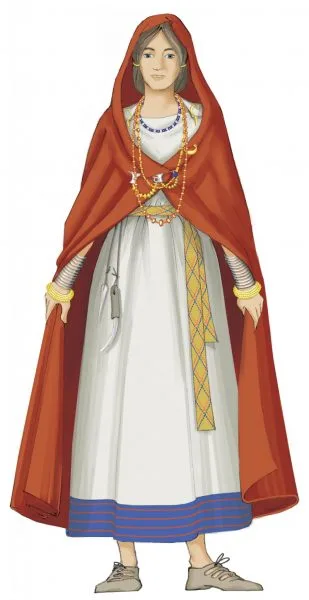
Obleko prinesejo kneginji, lepo, veliko, dvanajst zlatih zaponk vsega krasi ogrinjalo. Zlato nato ogrlico prinese sluga, jantarskih jagod krasan nanizaj, svetal kakor sonce. Odiseja, ∑-XVIII, 292–296 (prevod A. Sovre)
Jana Puhar · Posavski muzej Brežice
UGANKA O SKRIVNOSTNI KELTINJI
Unusual Taurisci burials: accident, epidemic or sacrifice?
In one of the graves from the mid-3rd century BC a warrior and a woman beside him were buried at the same time. At Sejmišče numerous warrior graves were found, buried with sword, shield, spear, fighting knife and razor.
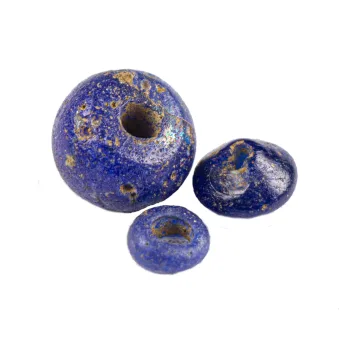
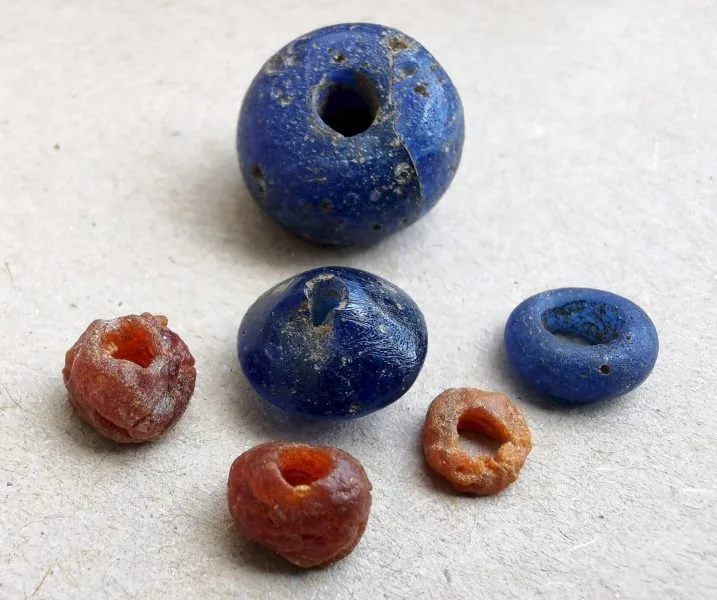
The warrior’s grave with a woman buried beside him stands out by location, size of the burial pit and age, being one of the earliest among the graves. The cremated remains of the man and woman were laid in the grave side by side, yet separately. The woman was about 30, the man 38. The man was buried with warrior equipment. A sword in an ornamented scabbard was laid across the warrior’s cremated remains; beside them were shears, a whetstone, a razor and an iron brooch. The woman was accompanied by a necklace of amber and glass beads on a chain with bronze links. On the heap of bones with the sword were placed pottery vessels with food and a young boar weighing about 30 kilograms. The remains point to animal sacrifice and food offerings as part of the funeral rite.
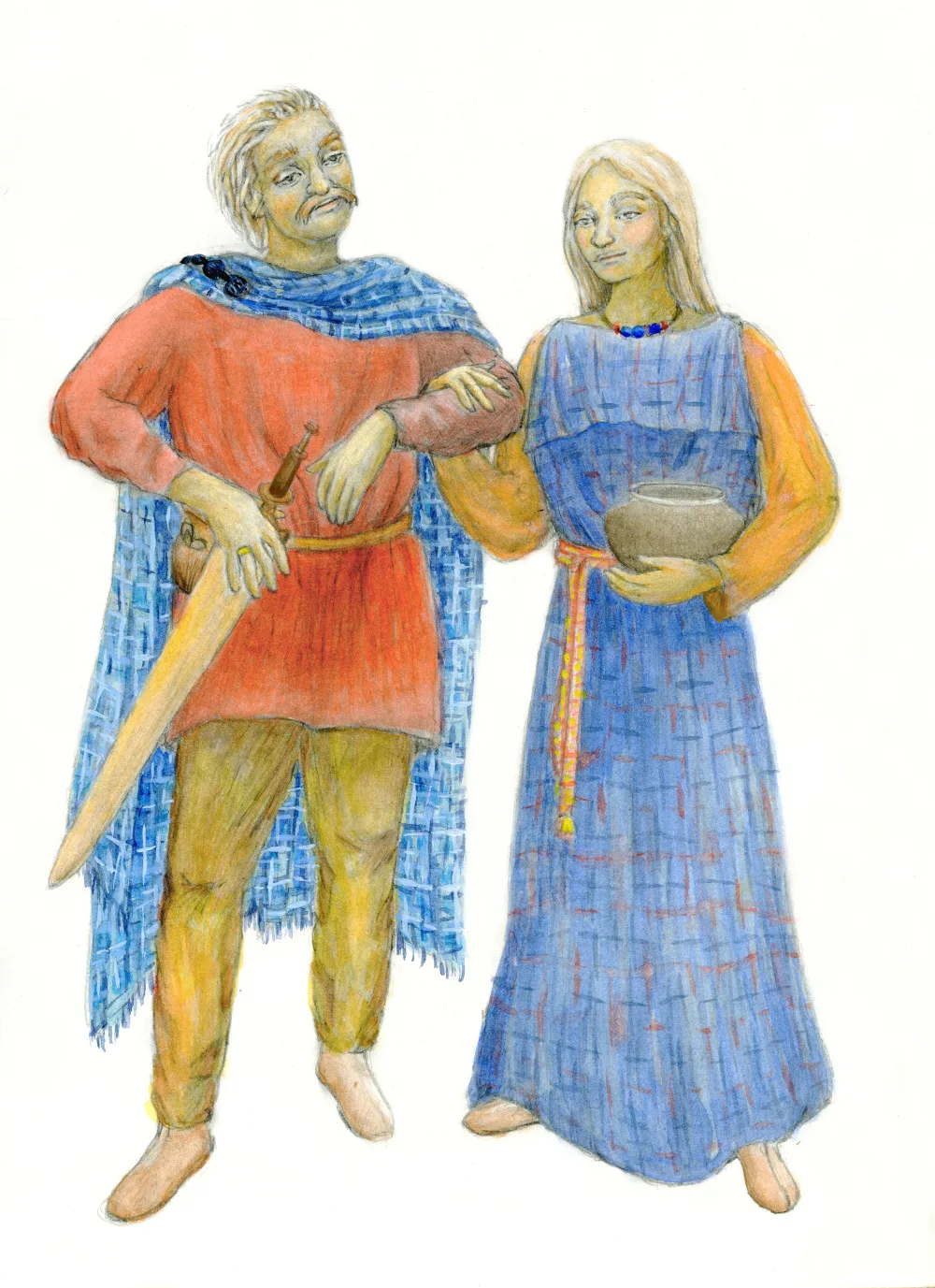
The circumstances of discovery show that both were buried at the same time. Was the cause of death accident, epidemic, or ritual sacrifice? Graves with two or more deceased are relatively common among the Taurisci. From Julius Caesar’s accounts of the Gallic Wars it is known that in Gaul the Celts sacrificed a widow and/or slaves at the burial of an important person.
Britev
Skleda
Lonec
Prstan
Meč
Verena Perko · Gorenjski muzej, Kranj
CLEOPATRA, THE DEFEATED EGYPTIAN QUEEN, ALSO IN KRANJ!
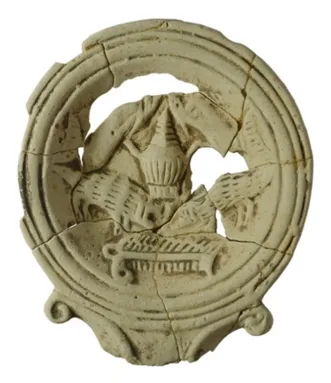
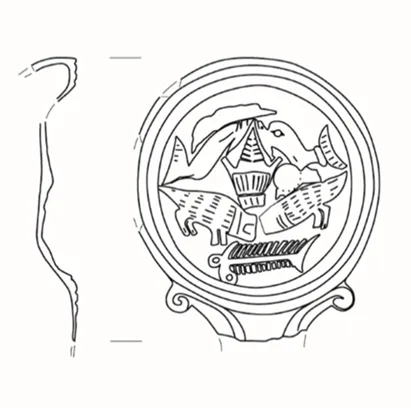
In the centre of Kranj a bronze coin and a ceramic oil lamp were found, both with the image of a crocodile. On the coin are Emperor Augustus (27 BC – AD 14) and General Agrippa, and on the reverse a crocodile on a chain. The emperor wears an oak crown, the general a golden crown of ship’s beaks, a sign of victory. On the lamp are images of crocodiles with a warship, a galley, a water jug and two dolphins.
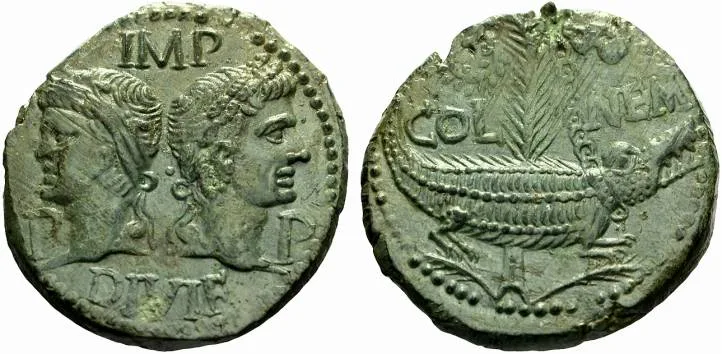
Both objects commemorate the same political and military event, the naval battle of Actium in 31 BC. The Roman fleet was led by General Agrippa, the Egyptian by Antony with Queen Cleopatra. The crocodile on a chain announces the fall of Egypt and the final authority of Emperor Augustus. The crocodiles on the lamp are a caricature of Egyptian Queen Cleopatra and her lover Antony, Augustus’s dangerous rival.
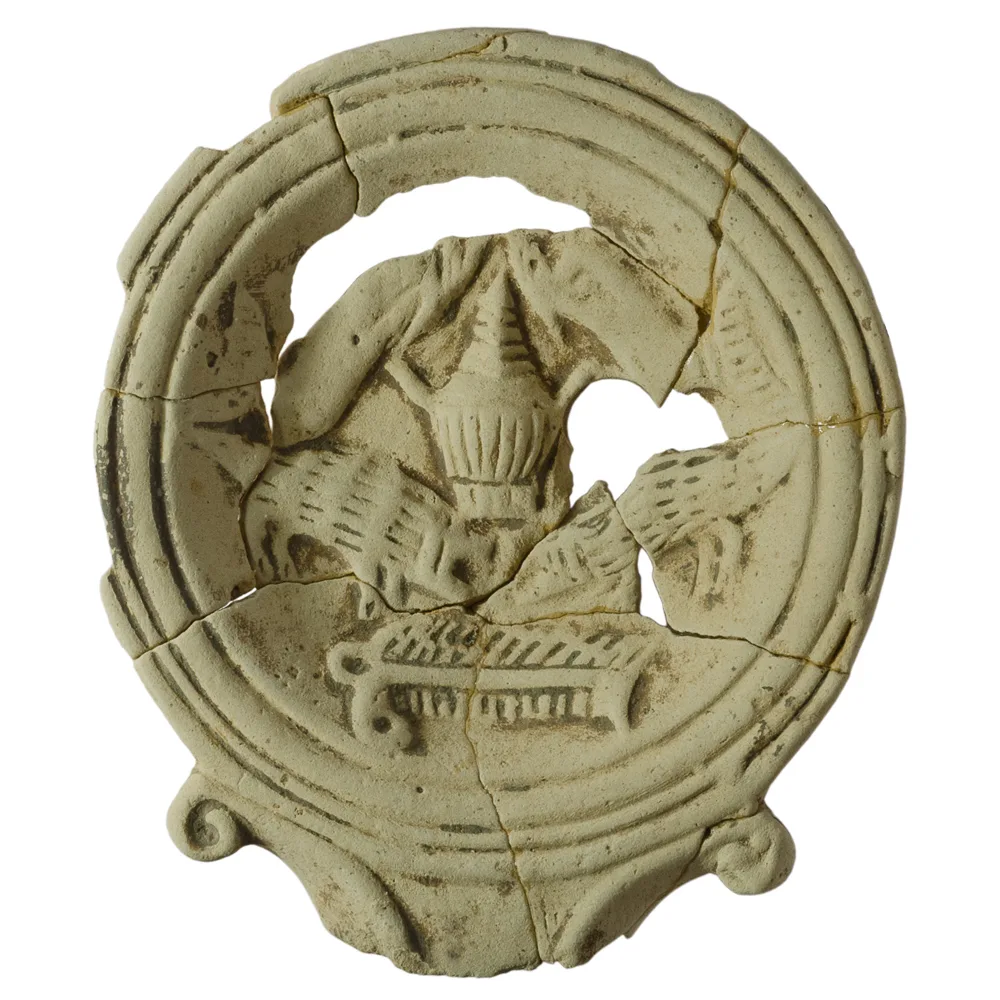
The ceramic oil lamp from the early Roman period with two crocodiles was found near Khislstein Castle. The lamp was made somewhere in Italy; as a cheap product it effectively “reported” Rome’s victory over Egypt and ridiculed Queen Cleopatra.
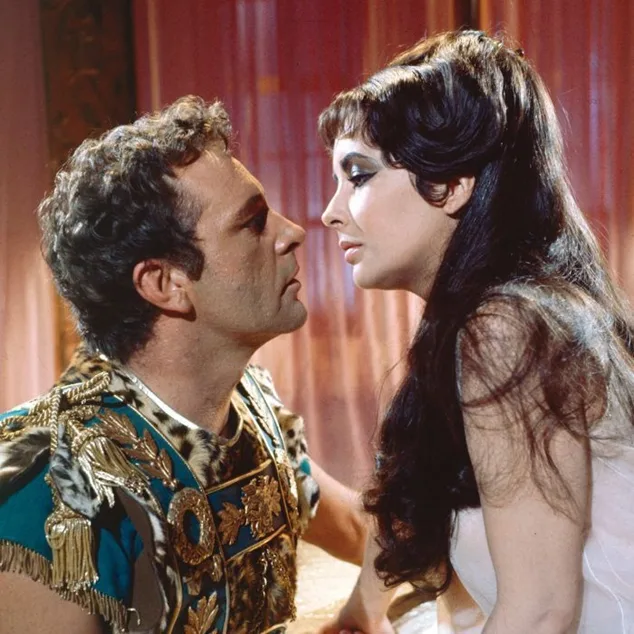
Cleopatra was the last Egyptian ruler. With beauty and wit she swept aside many a crowned head. When the fate of the defeated befell her, death was not enough. She, her mighty land with its ancient civilisation and her lover were depicted as insatiable crocodiles. The crocodile on a chain, a sacred Egyptian animal, stirs cynical mockery, always the most effective tool of devaluation. On coins and millions of ceramic lamps the image long proclaimed across the empire: Cleopatra is defeated, Emperor Augustus is our saviour.
Maša Sakara, Špela Prunk, Andrej Preložnik, Matjaž Novšak · Pokrajinski muzej Koper
WHOSE CHILD RESTS HERE?
A grave at the meeting of two worlds
The Iron Age population of the Trieste Karst and Istria were the Carni, Catali and Histri. They lived in fortified hilltop settlements, castellieri, from which they controlled routes and fields. On the coast they had harbour trading posts. They were in lively contact with neighbouring peoples. Women had an almost equal role to men. They cared for the home, bore children, fed and clothed the family, farmed, and were priestesses who tended religious rites.
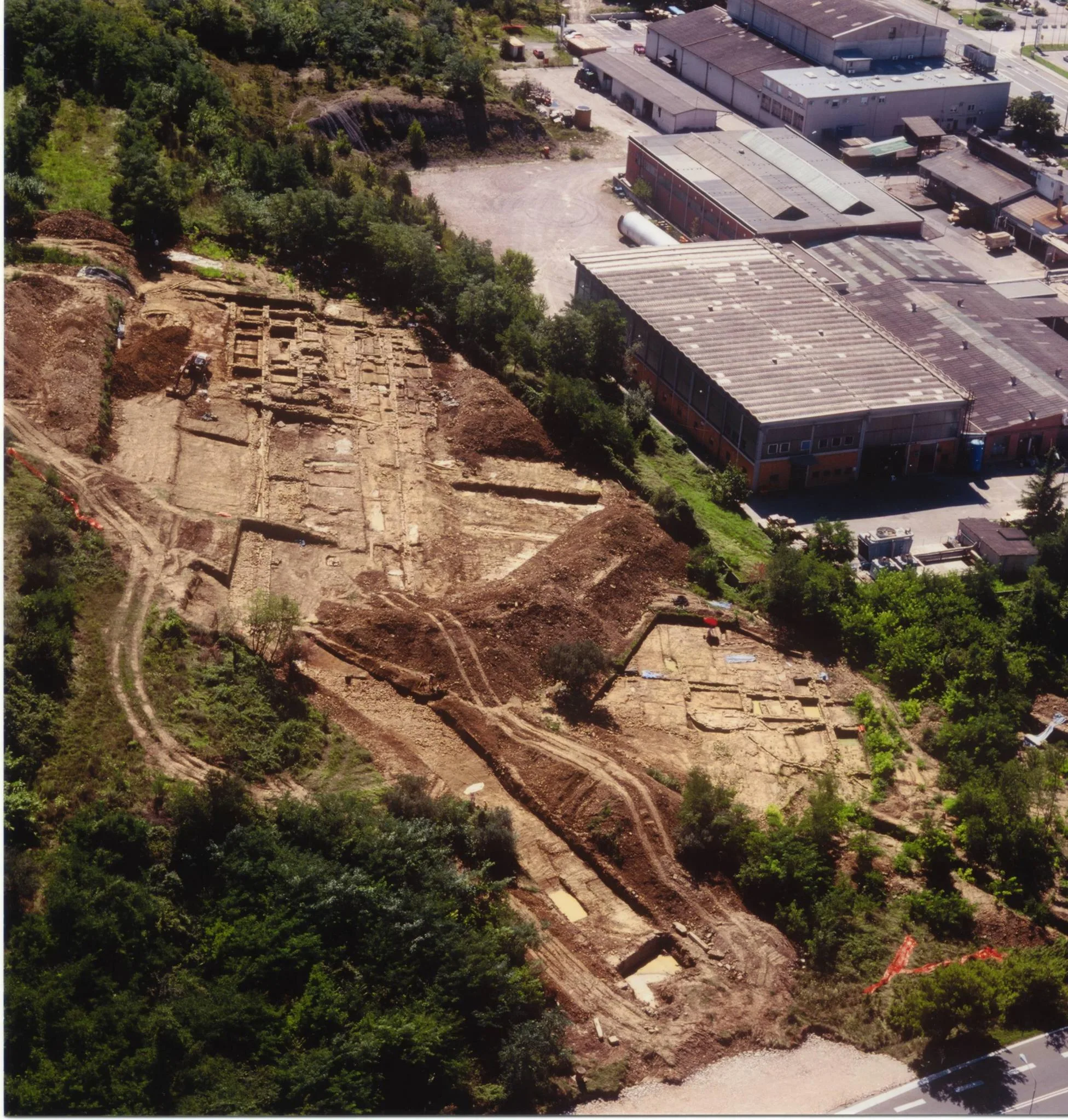
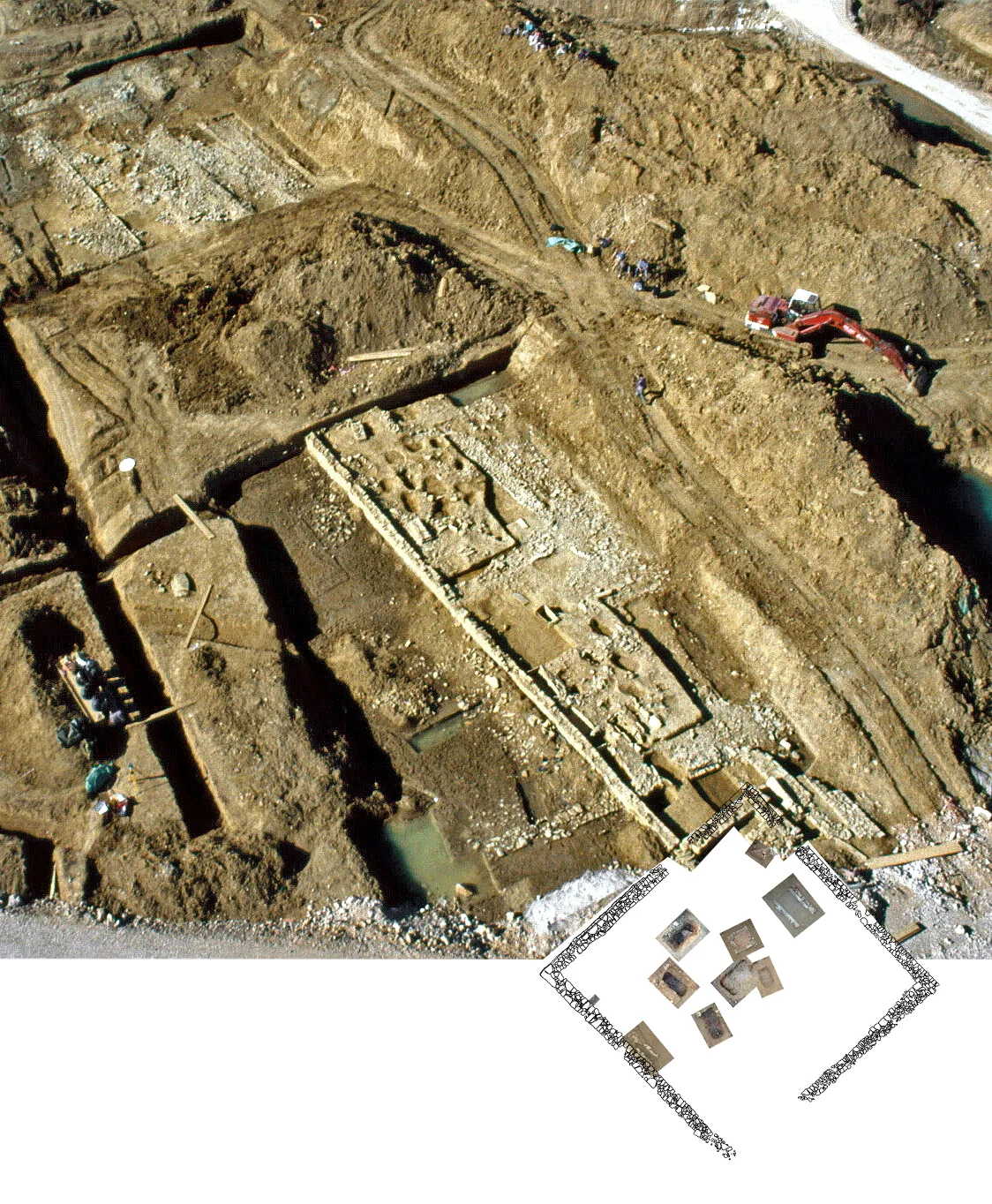
The Romans subjugated the local indigenous people in the 2nd century BC. Under Emperor Augustus, 2000 years ago, Istria became part of Italy. Coastal estates were taken by settlers from Italy. New towns arose, municipia and colonies, among them Tergeste (Trieste), Parentium (Poreč) and Pola (Pula). The villa rustica, a rural estate at Školarice, was built 2000 years ago amid vineyards and olive groves. The wine and oil produced were taken to nearby towns. The villa’s inhabitants – wealthy owners, most likely from Italy, overseers and slaves – were buried beside the nearby road linking Tergeste with Pola.
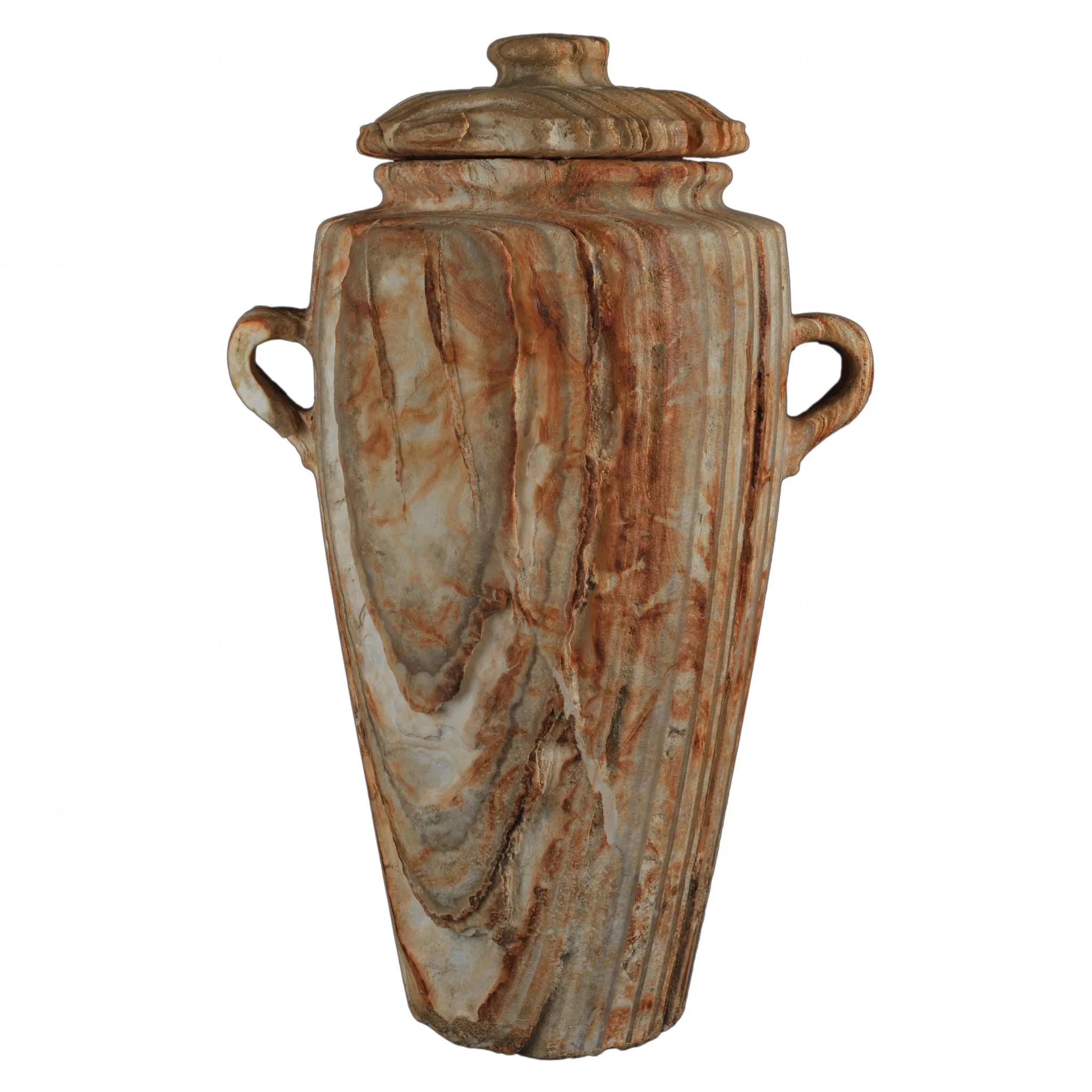
The alabaster urn was placed in a tomb built of bricks. It was covered by a larger brick slab.
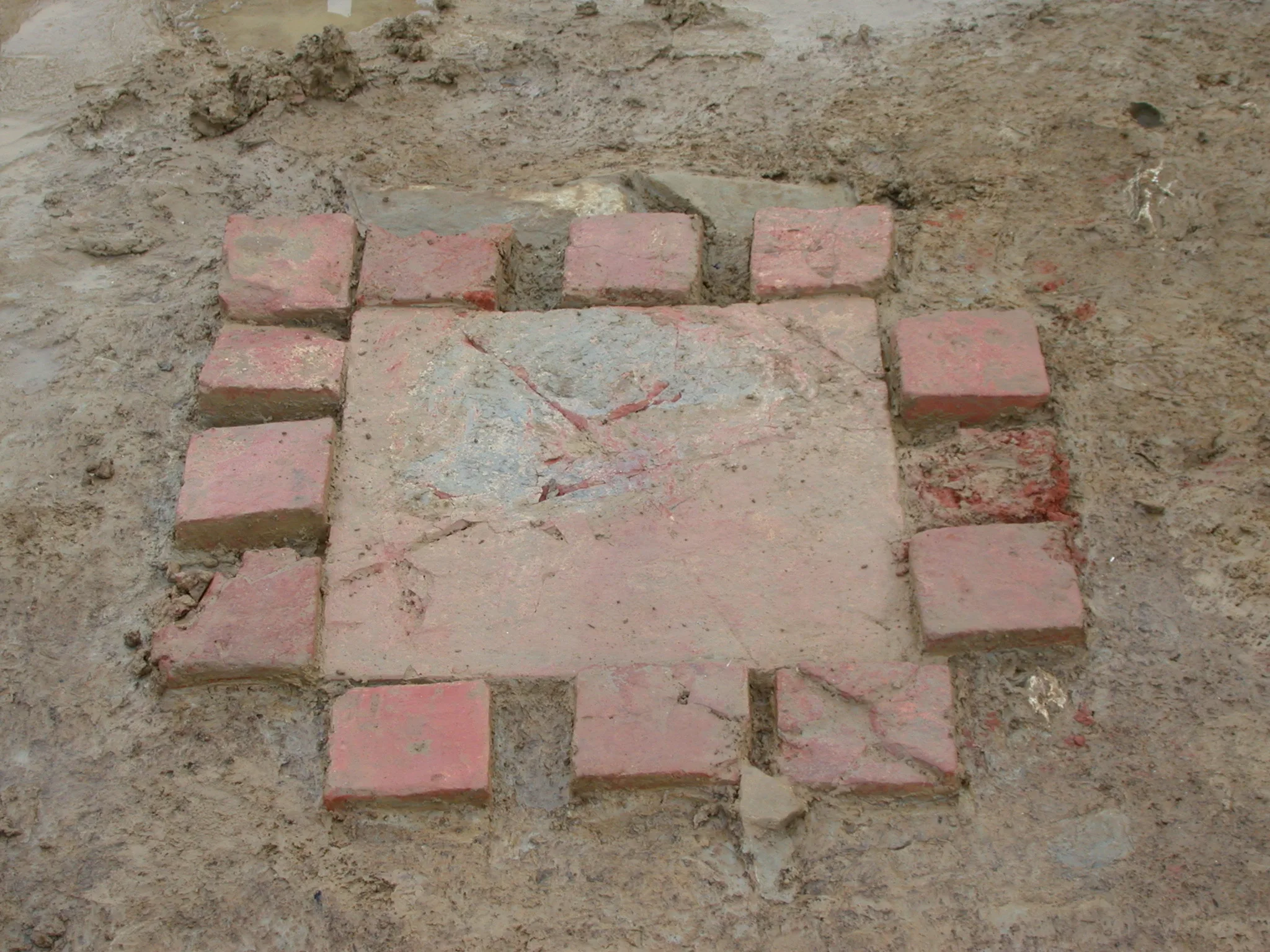
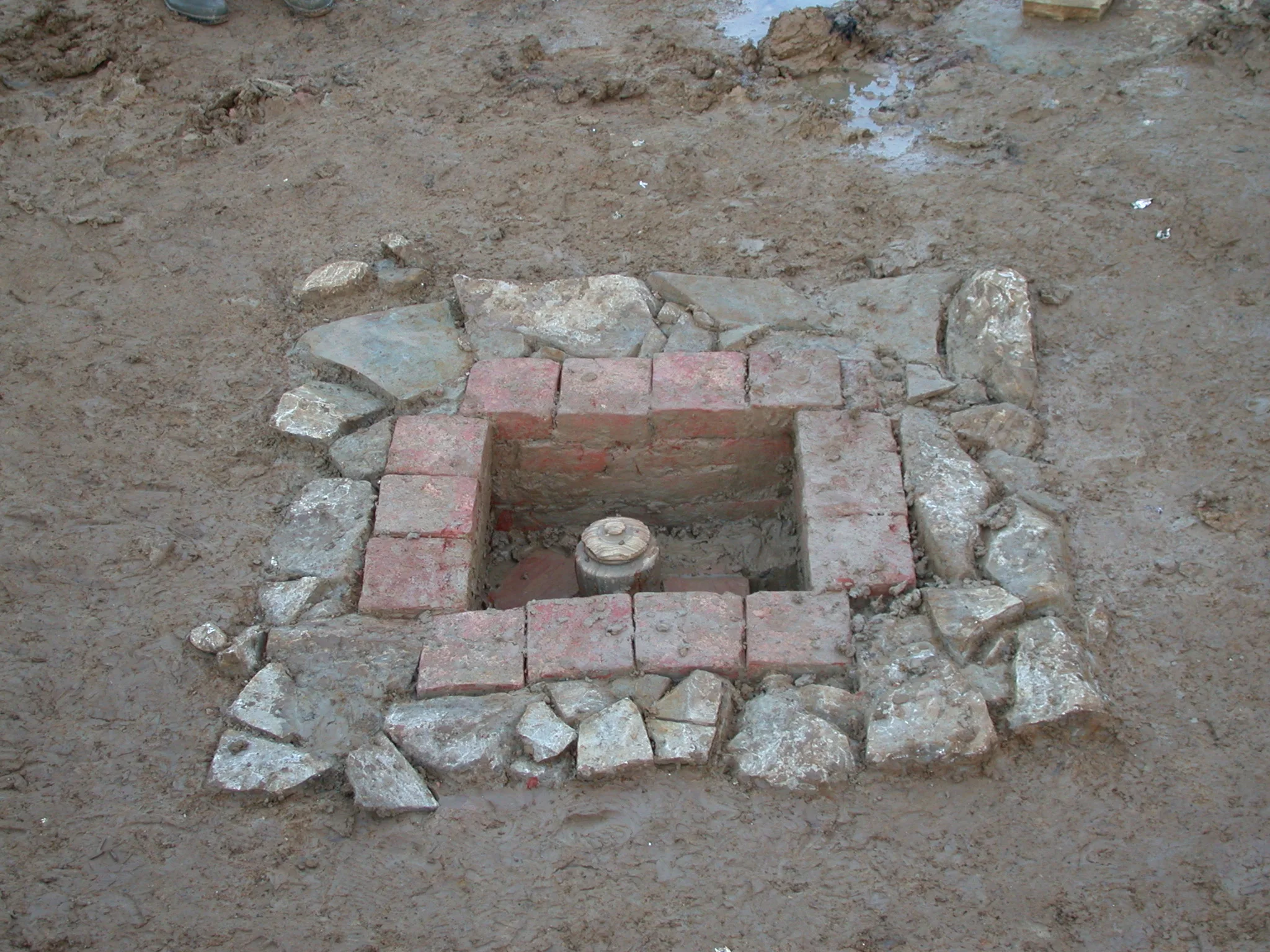
During the villa’s lifetime the indigenous population had already thoroughly adopted the Roman way of life. They were compelled to do so, even though most in the Istrian hinterland still lived in castellieri. Roman settlers often faced colonists’ hardships, reflected also in high child mortality. The sad story of the premature death of a settler family’s descendant is told by children’s grave no. 6 from Križišče near Spodnje Škofije with an alabaster urn made and imported from Volterra (Tuscany).
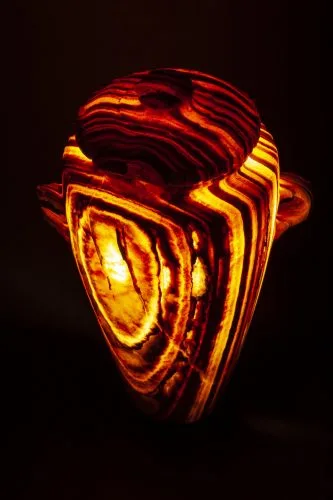
Avtorji 3D modela je skupina Arctur.
Snježana Karinja · Pomorski muzej – Museo del mare »Sergej Mašera« Piran
OBRAZA S KOVANCEV
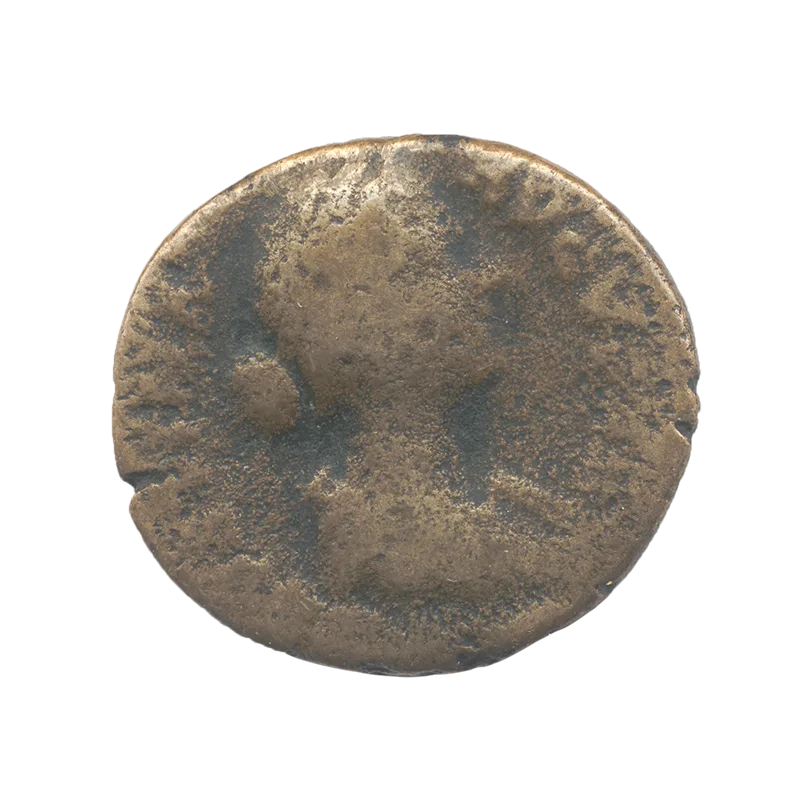
Empress Faustina II is depicted on a bronze coin of her husband Emperor Marcus Aurelius; the coin was found at St George’s Church in Piran. It was minted between 161 and 175 in Rome. On the obverse is Empress Faustina II facing right. Around the rim is the inscription Faustina Augusta or the Exalted Faustina.
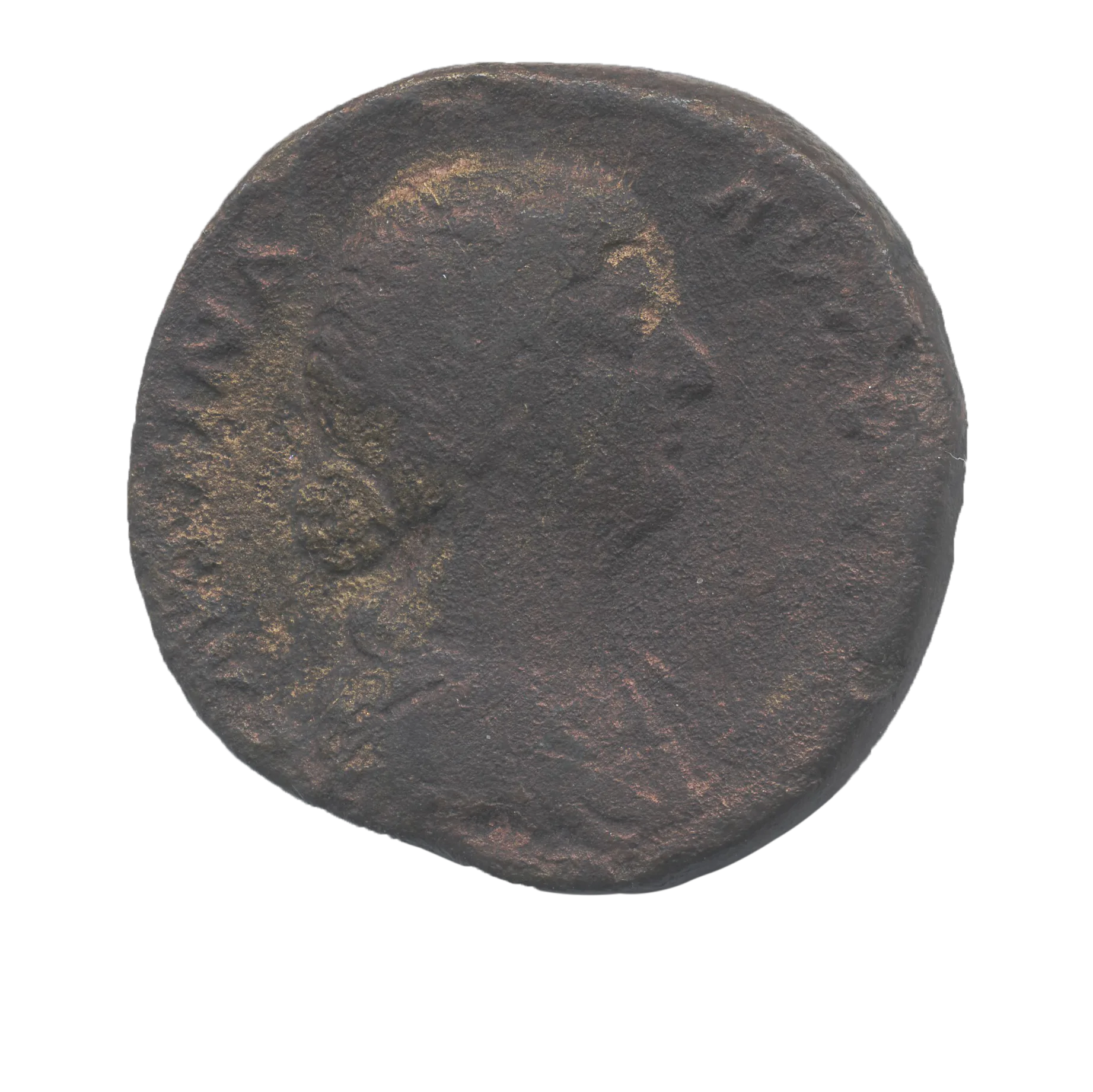
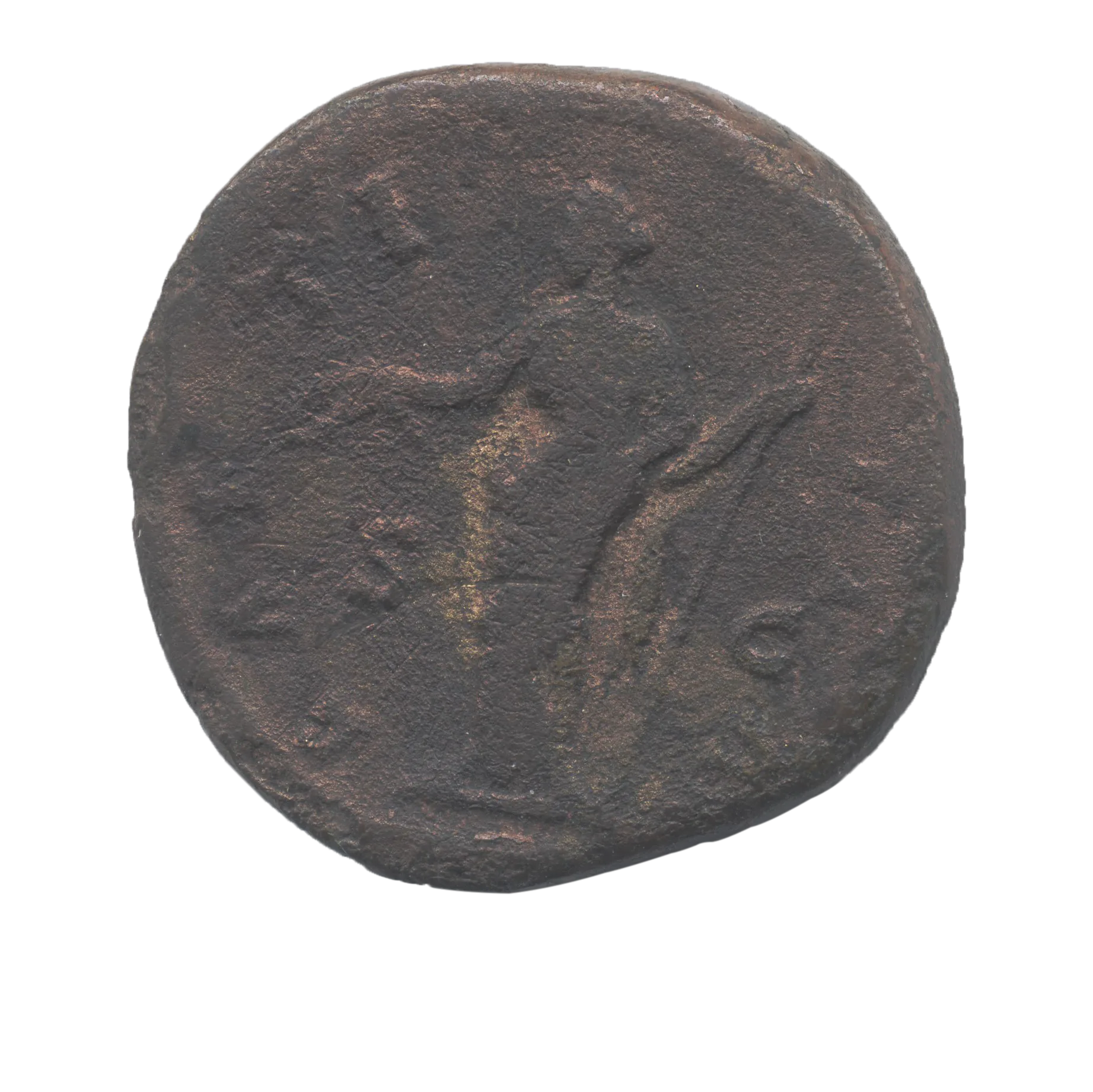
Faustina was renowned for her beauty and regarded as an exemplary wife and mother. In thirty years of marriage she bore 13 or 14 children. At the birth of her first child, daughter Domitia Faustina, she was 17 and received the honorary title Augusta. Empress Faustina II also appears on another coin found at Sečovlje. On the reverse is the goddess Juno with a ritual bowl and sceptre, and a peacock at her feet. On both coins the empress wears a characteristic hairstyle with a parting in the middle, softly falling curly hair twisted into a bun at the nape.
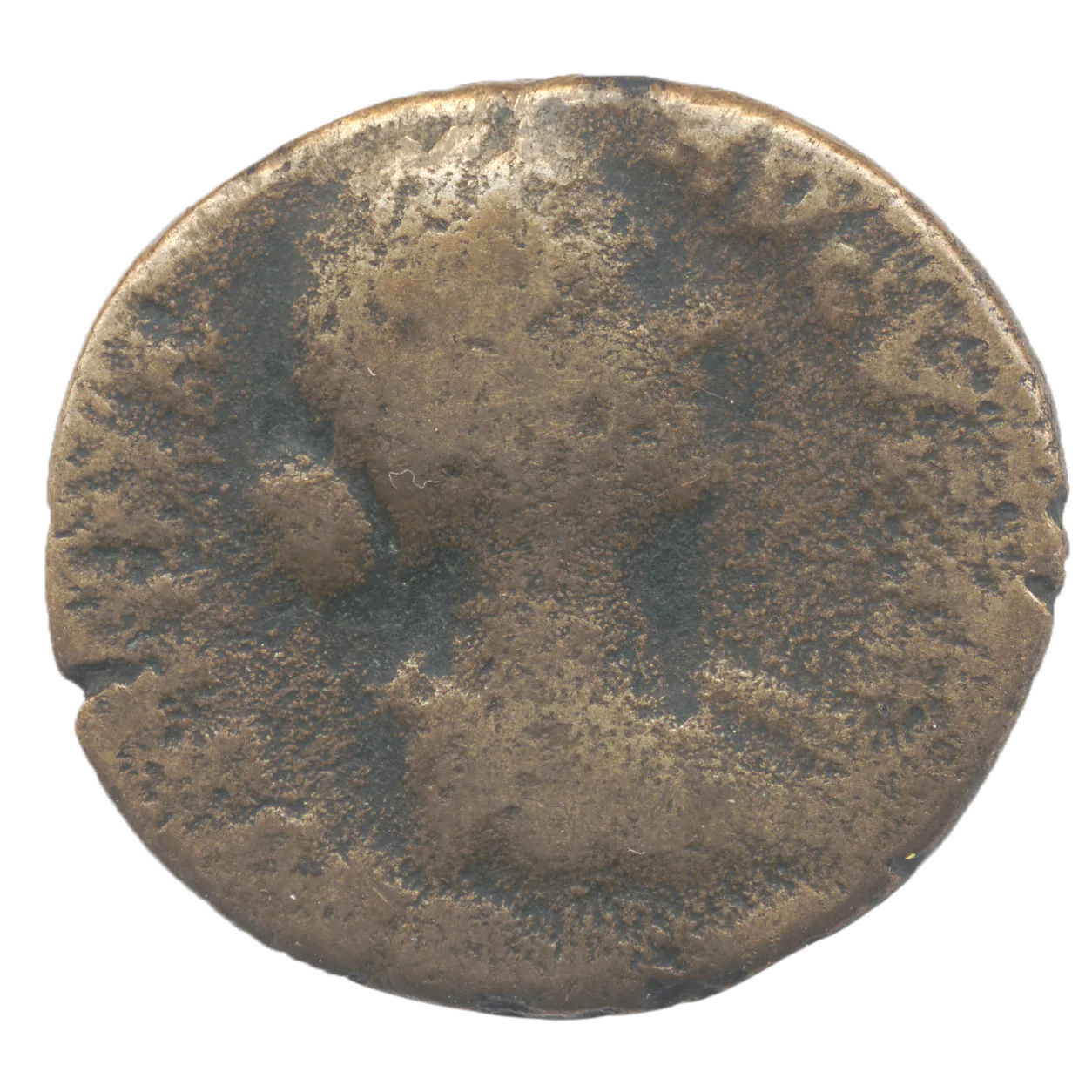
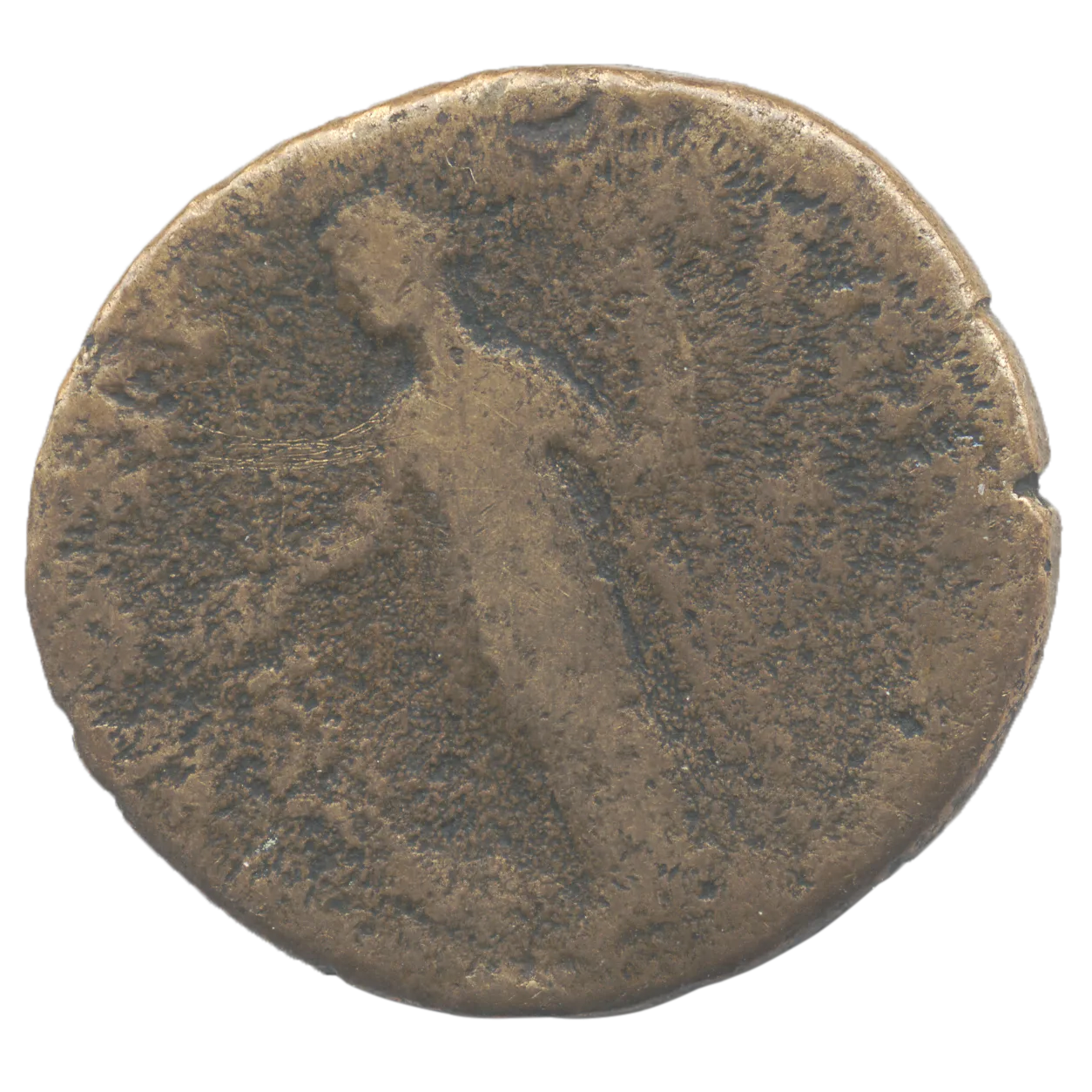
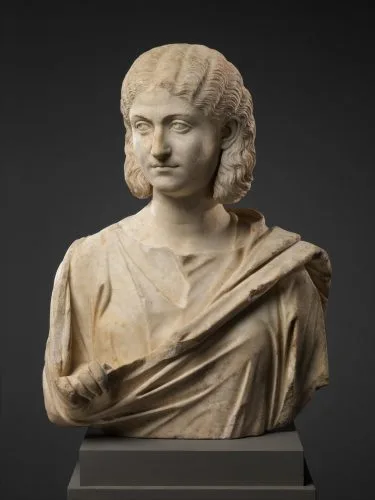
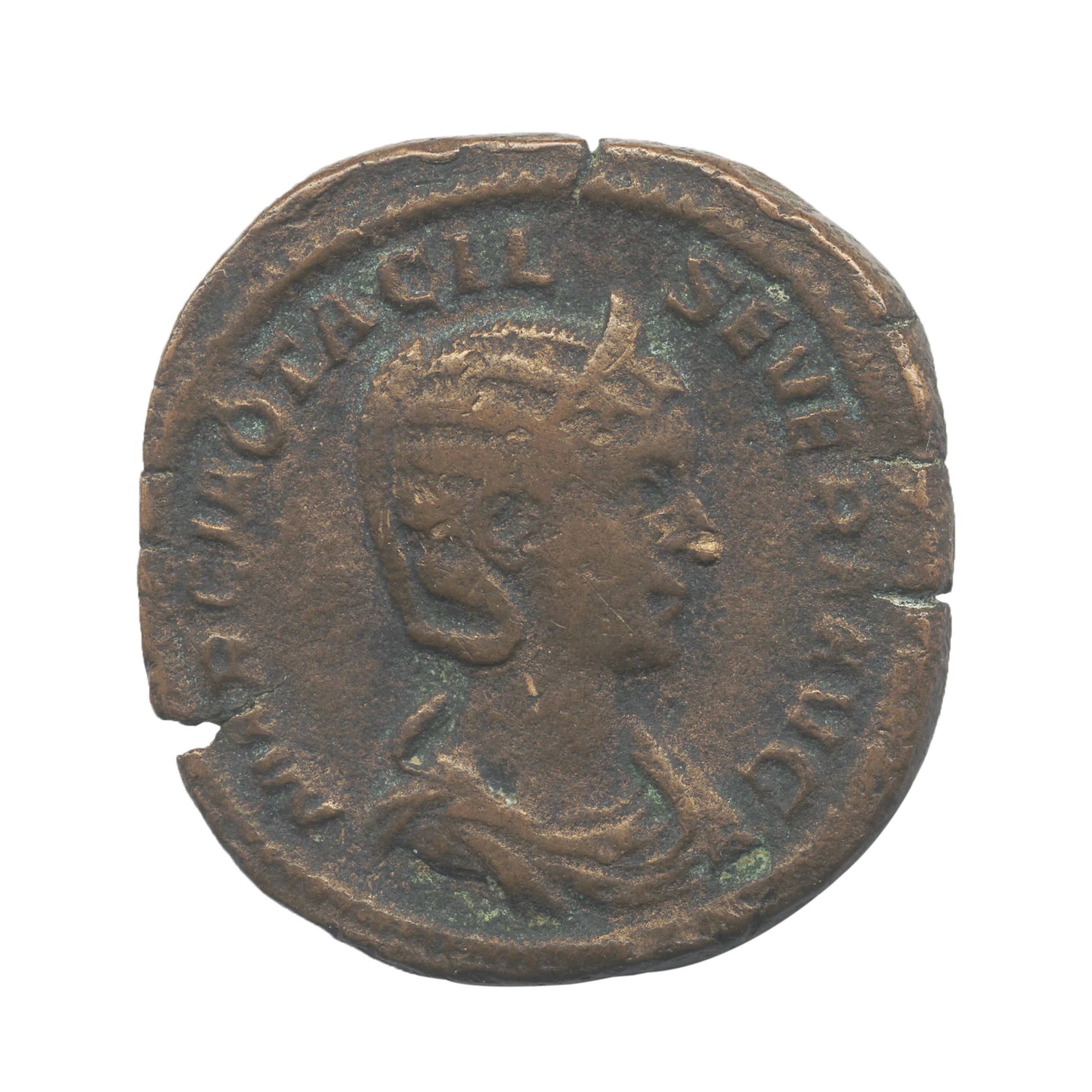
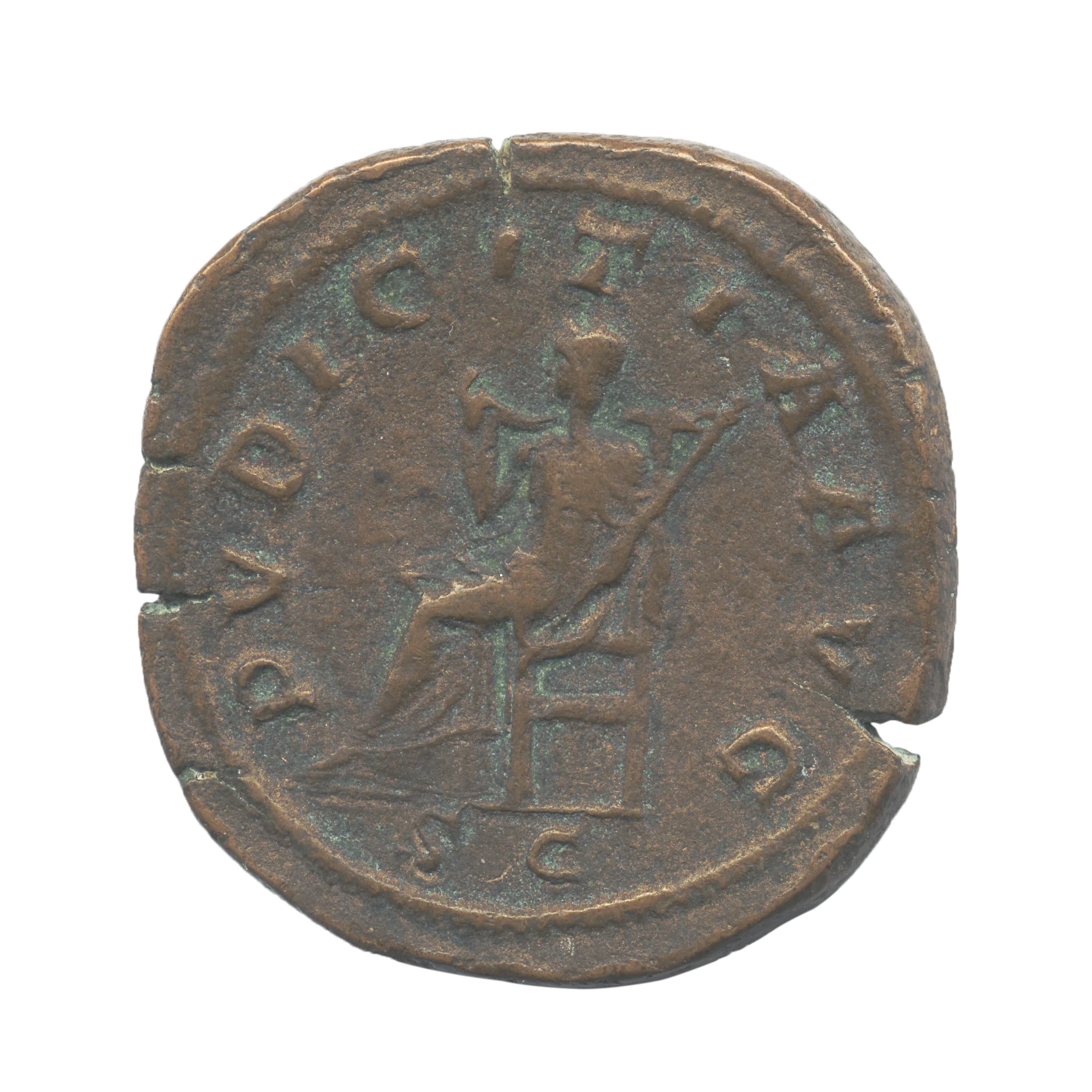
On the third coin is Marcia Otacilia Severa, wife of Roman Emperor Philip the Arab (244–249). Little is known about her. She too was granted the honorary title Augusta. On the reverse is Pudicitia, personification of female chastity and modesty. The empress is shown with a diadem and a characteristically wavy, very elaborate hairstyle. As with her predecessors, her hair strongly influenced women’s fashion of the time.
Maja Bausovac · Pokrajinski muzej Celje
THE PIOUS WOMAN FROM RIFNIK
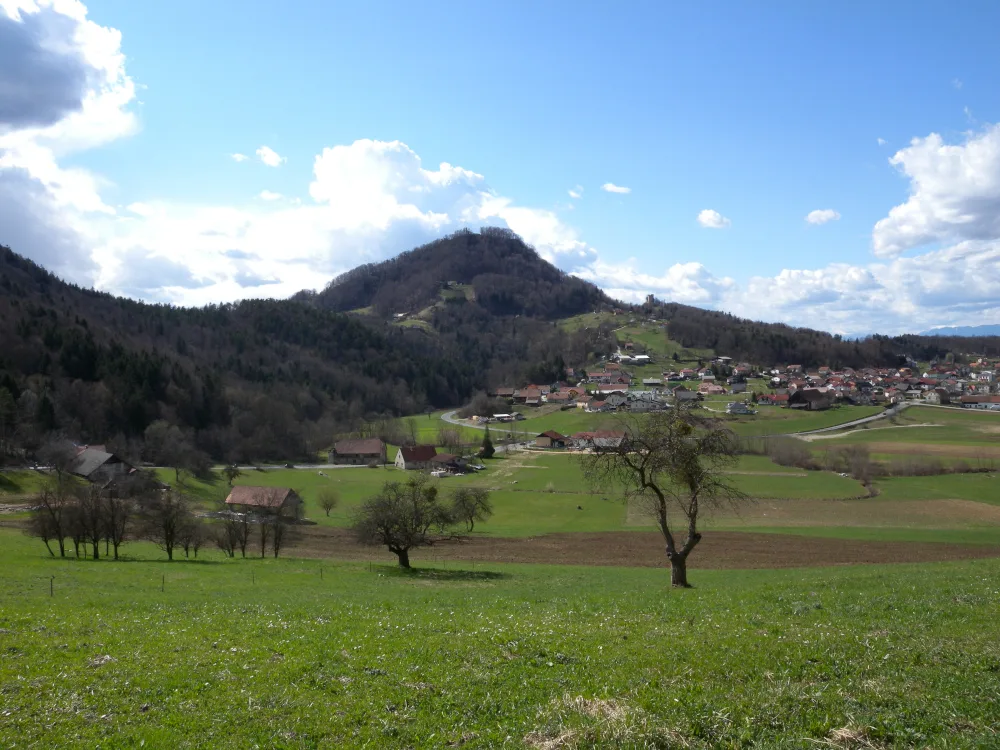
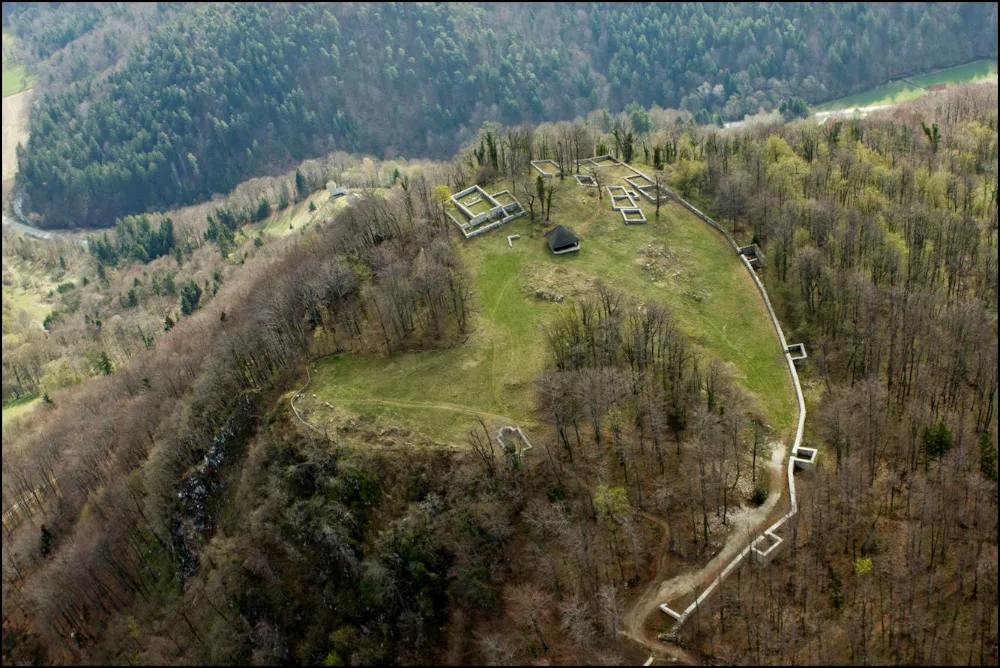
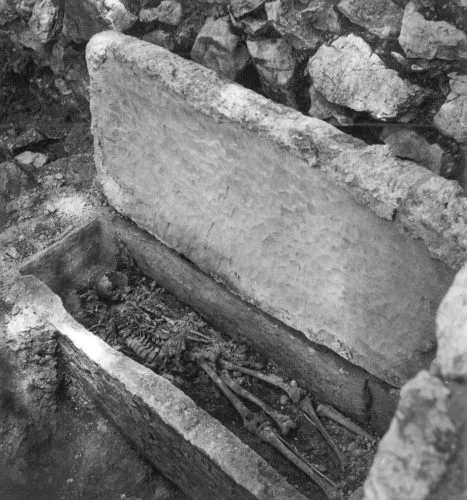
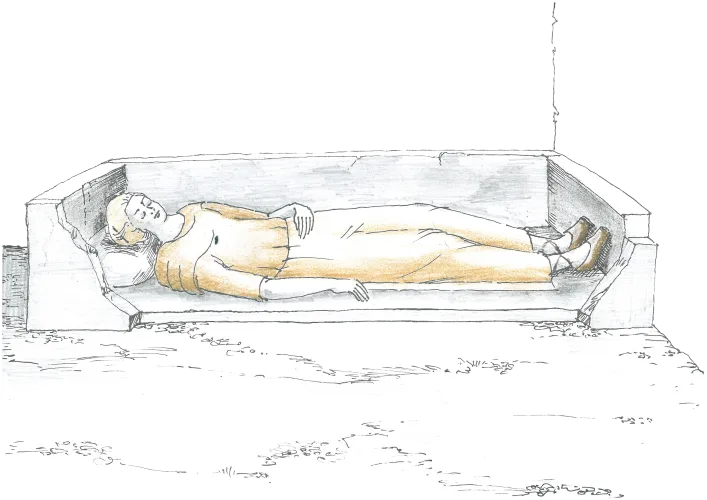
Rifnik is a hill near Šentjur. 1500 years ago a walled settlement arose there, where inhabitants of ancient Celeia and surrounding places withdrew from foreign invasions. The small town was well organised militarily and was also a Christian centre with a large church. In 1976 excavators were surprised by the find of a stone tomb in the ruins of the church porch. It had been placed in the porch during the church’s renovation in the first half of the 6th century.
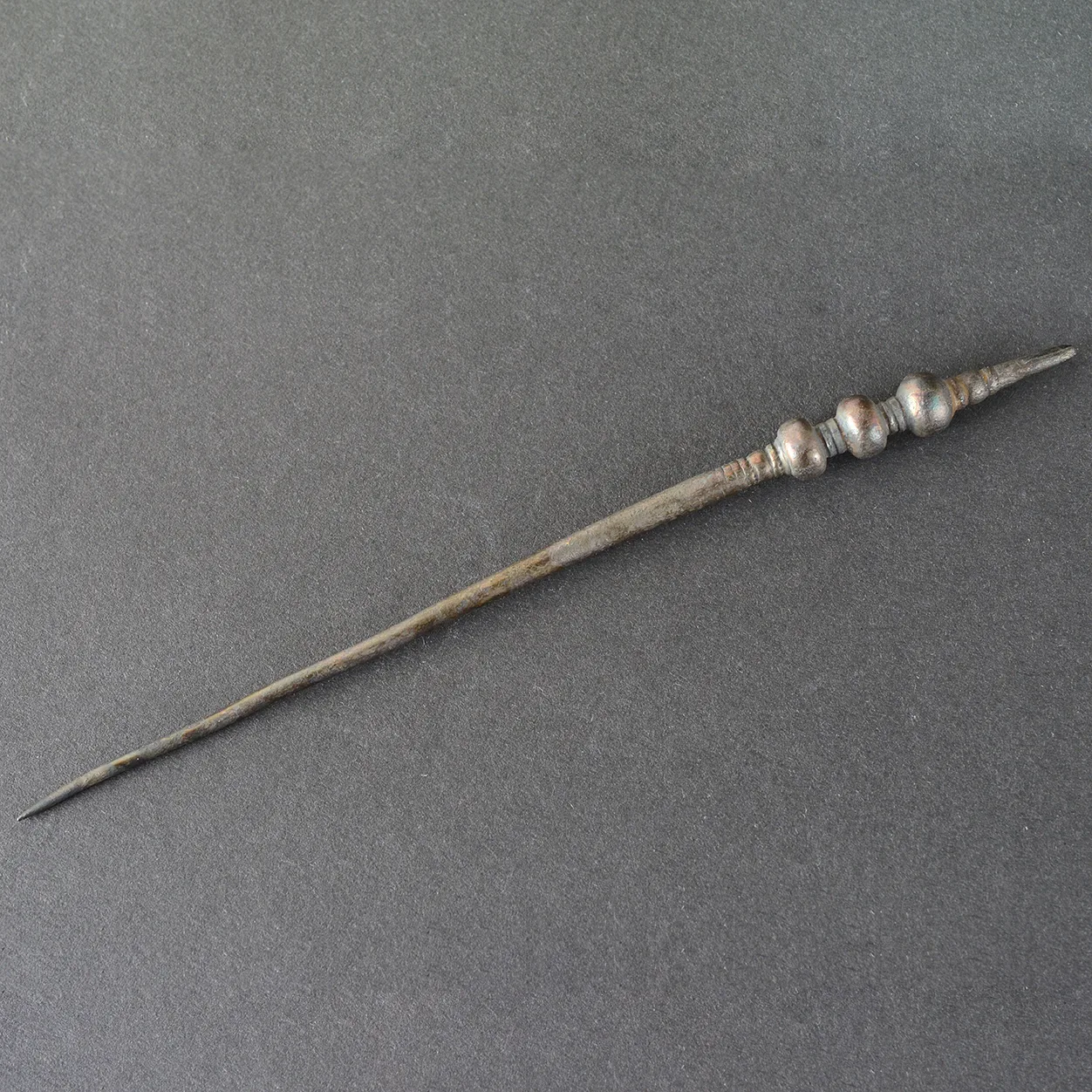
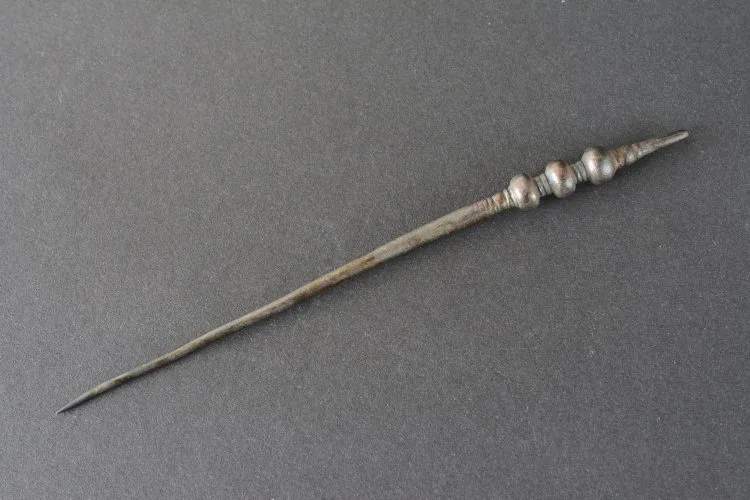
When they lifted the lid they found the skeletons of two deceased. The younger man, who had a bronze belt buckle at the waist, was placed in it later, while the tomb was originally intended for a woman aged 40 to 60. She had a silver pin woven into her hair. Who then was the woman granted such a unique burial, while all other settlement inhabitants lay in the cemetery on the southern slope? For now the meaning of this and similar burials at some contemporary sites remains unknown. Perhaps consecrated persons, martyrs or important community members and church donors were buried in tombs within church walls; in any case the deeply devout.
Aleksandra Nestorović · Pokrajinski muzej Ptuj – Ormož
EVROPA, SEMITSKA MATI EVROPEJCEV
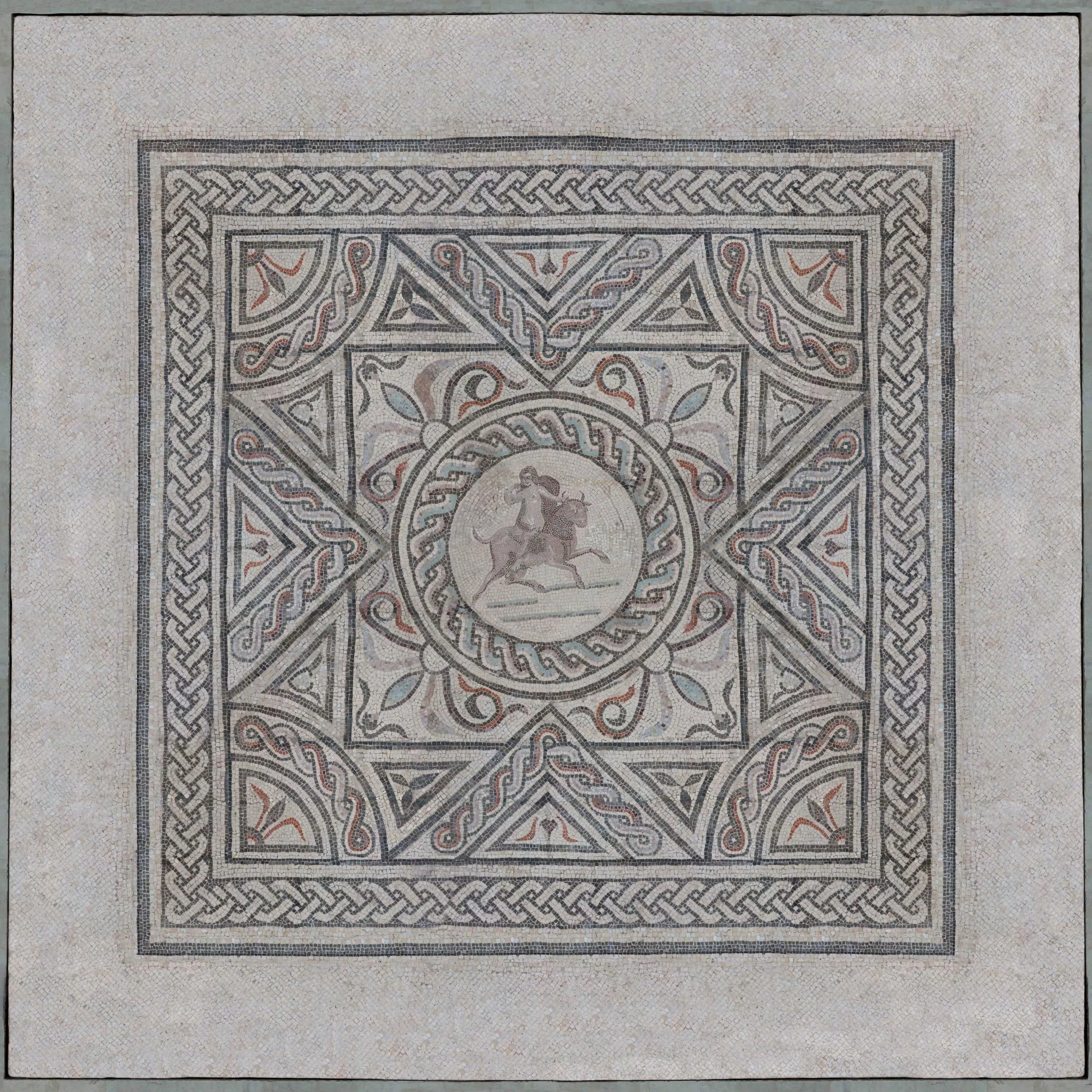
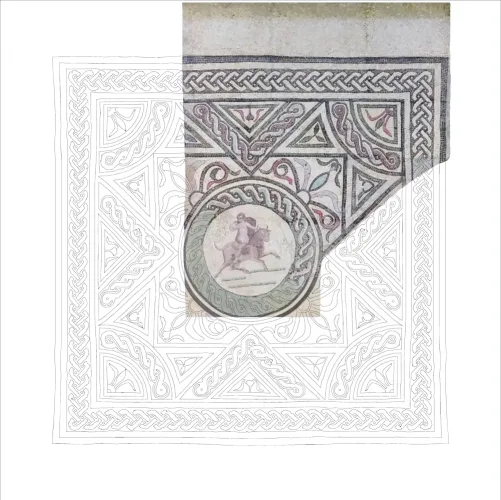
The Ptuj mosaic depicting Europa adorned a representative room of a Roman villa. Made in the second half of the 3rd or early 4th century, it points to the prosperity and flourishing of Poetovio in a crisis period of the Roman Empire. The mosaic room was decorated with colourful wall frescoes and stucco. The house stood in a wealthy quarter of suburban villas beside the main road from the military to the civilian part of the ancient town. The central scene shows the naked princess Europa on a bull, her cloak fluttering behind. The scene represents Zeus who, in the form of a bull, abducted the Semitic princess and took her from Phoenicia to Crete. From their union five children were born, whose lineages populated the continent. The story of Europa belongs among colonisation myths. Europa remained on Crete; her descendants settled Mediterranean coasts and the interior. The myth also shows the spread of civilisation from East to West. The Phoenicians contributed writing, urbanisation, laws and spread olive and vine cultivation. Zeus/the bull also associates with cattle breeding linked to highly developed cultures.
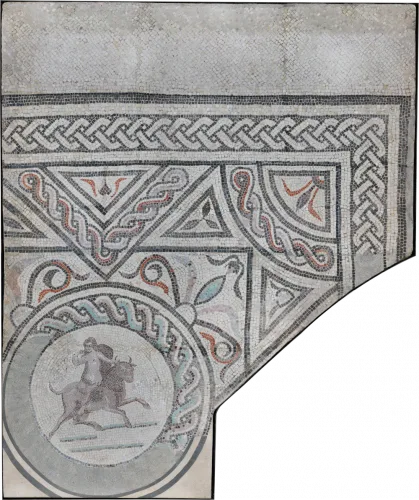
The myth of Europa remains relevant, and the abducted woman represents an archetype. It reveals violence against women, abduction and rape, and speaks of enduring migrations from the eastern Mediterranean. Europa is the mother of many European peoples, yet also a mirror of xenophobia and racism.
Jože Štukl · Loški muzej Škofja Loka
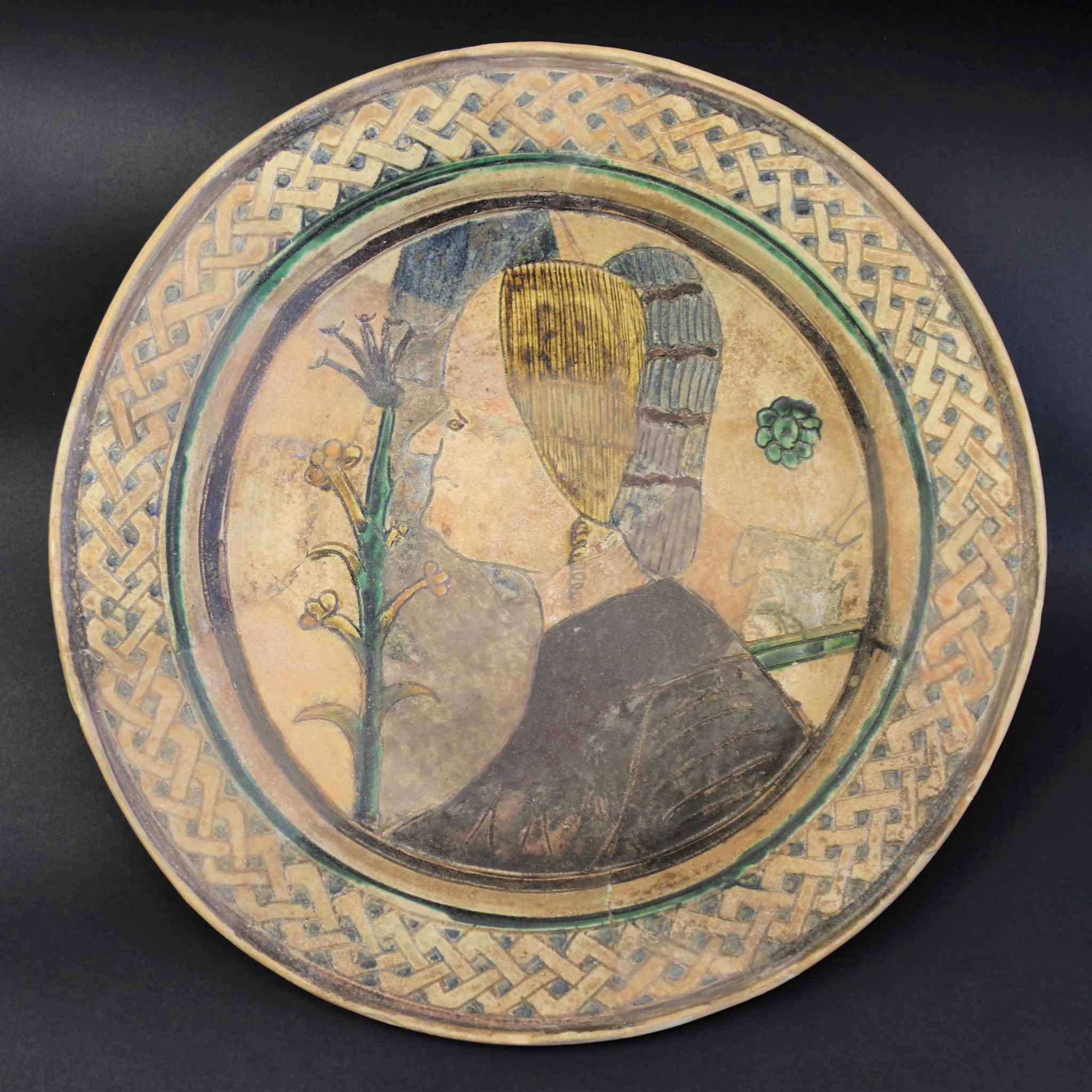
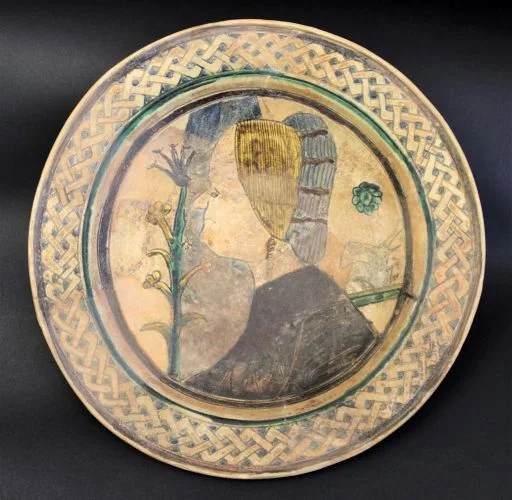
RENAISSANCE LADY ON A ŠKOFJA LOKA PAINTED BOURGEOIS CERAMICS PLATE
In 1972, during construction of an extension to today’s Mercator shop, in the courtyard of the house at Mestni trg 9, Gothic architectural remains were found. Archaeological research yielded numerous ceramic and metal finds. The former town commune stood in this area.
Besides simple hearth pottery and everyday objects, engraved and painted table ceramic ware from the 16th and first half of the 17th century was also found. A special piece is a plate with a bust portrait of a woman in costume and hairstyle in the early-16th-century Renaissance style. The Renaissance put the human being at the centre. Its influence is felt in literature, philosophy, art, architecture, music, politics, science and even religion. In this period the “modern woman” also began to assert herself in higher social strata, ready to enter the world. Through education Renaissance women grew more confident; they tried writing letters, poems and stories, and some were even active in politics.
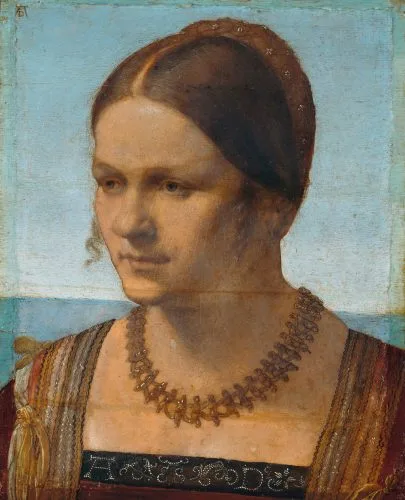
The echo of broader European developments is also reflected on the Škofja Loka painted bourgeois ceramics plate. Who the portrayed lady from Škofja Loka was, what she did and what status she enjoyed in society of the time, we do not know. Her presence suggests that Škofja Loka was then a highly developed modern town and that its inhabitants followed the fashion and spiritual trends of the age and place.
Oži Lorber · Posavski muzej Brežice
EVROPA V EVROPI – SPRVA MIT, ZATEM CELINA
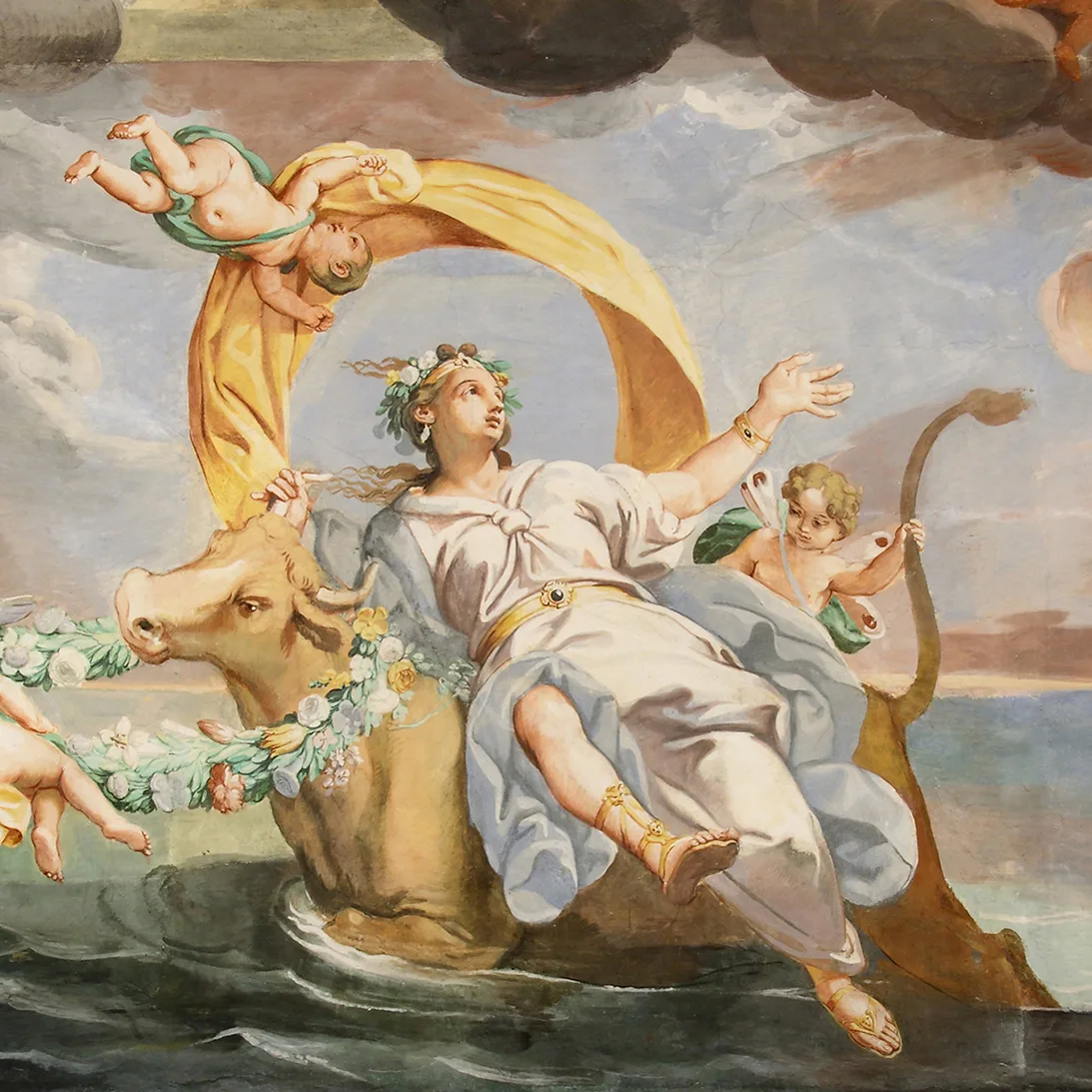
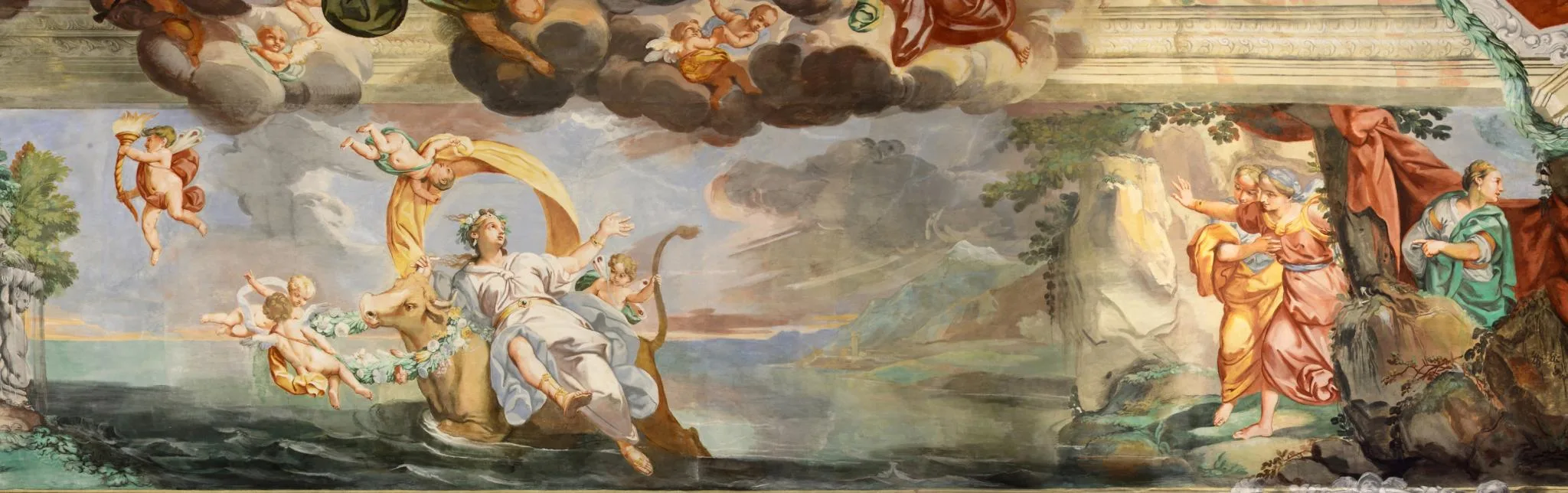
The image The Abduction of Europa was created as part of the allegory of the element of water in the painting of the Knights’ Hall at Brežice Castle. It is the work of master Frančišek Karel Remb from around 1703. The motif is among the lesser known, although the myth of the abduction of princess Europa was among the most popular from antiquity to today.
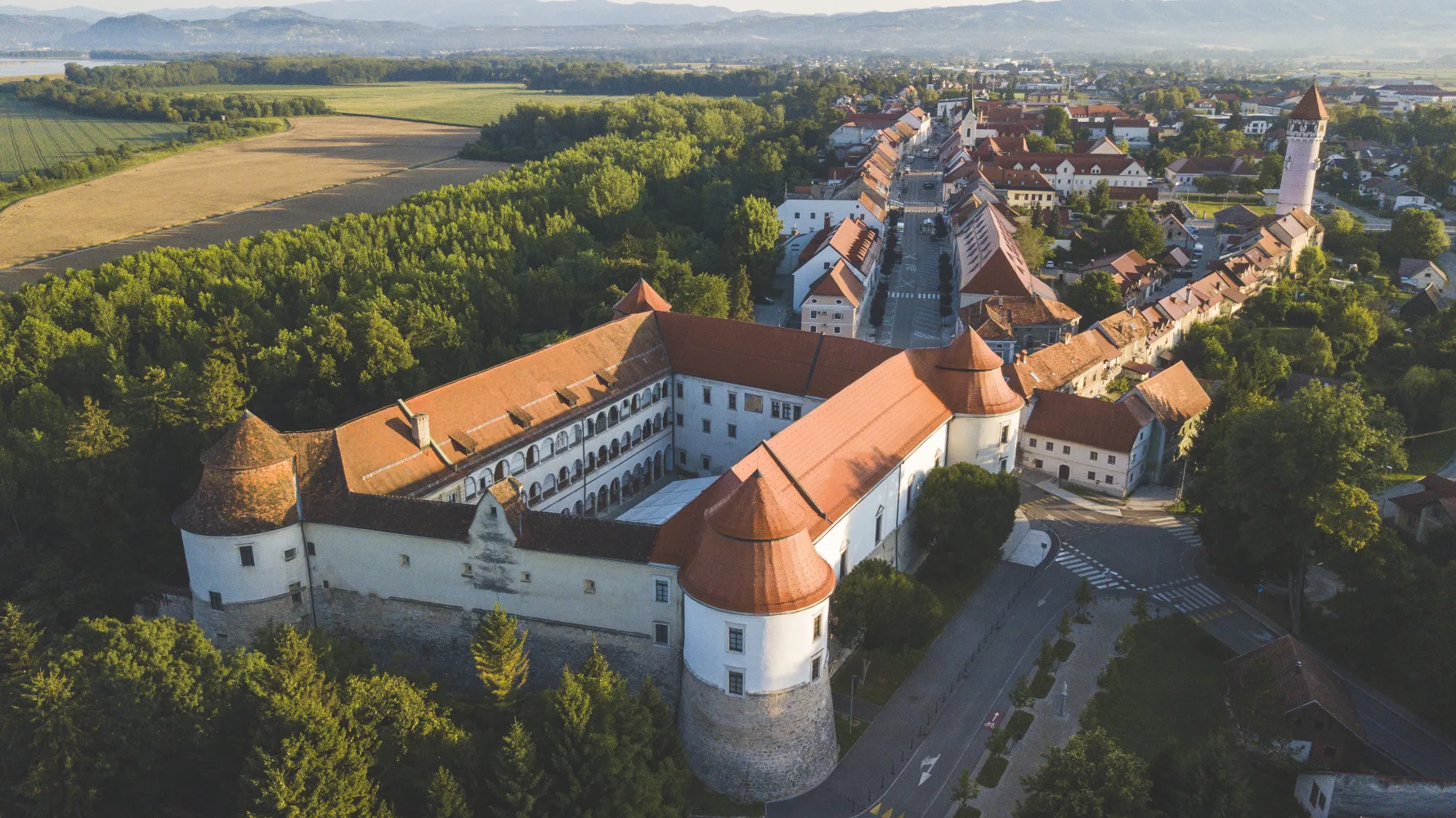
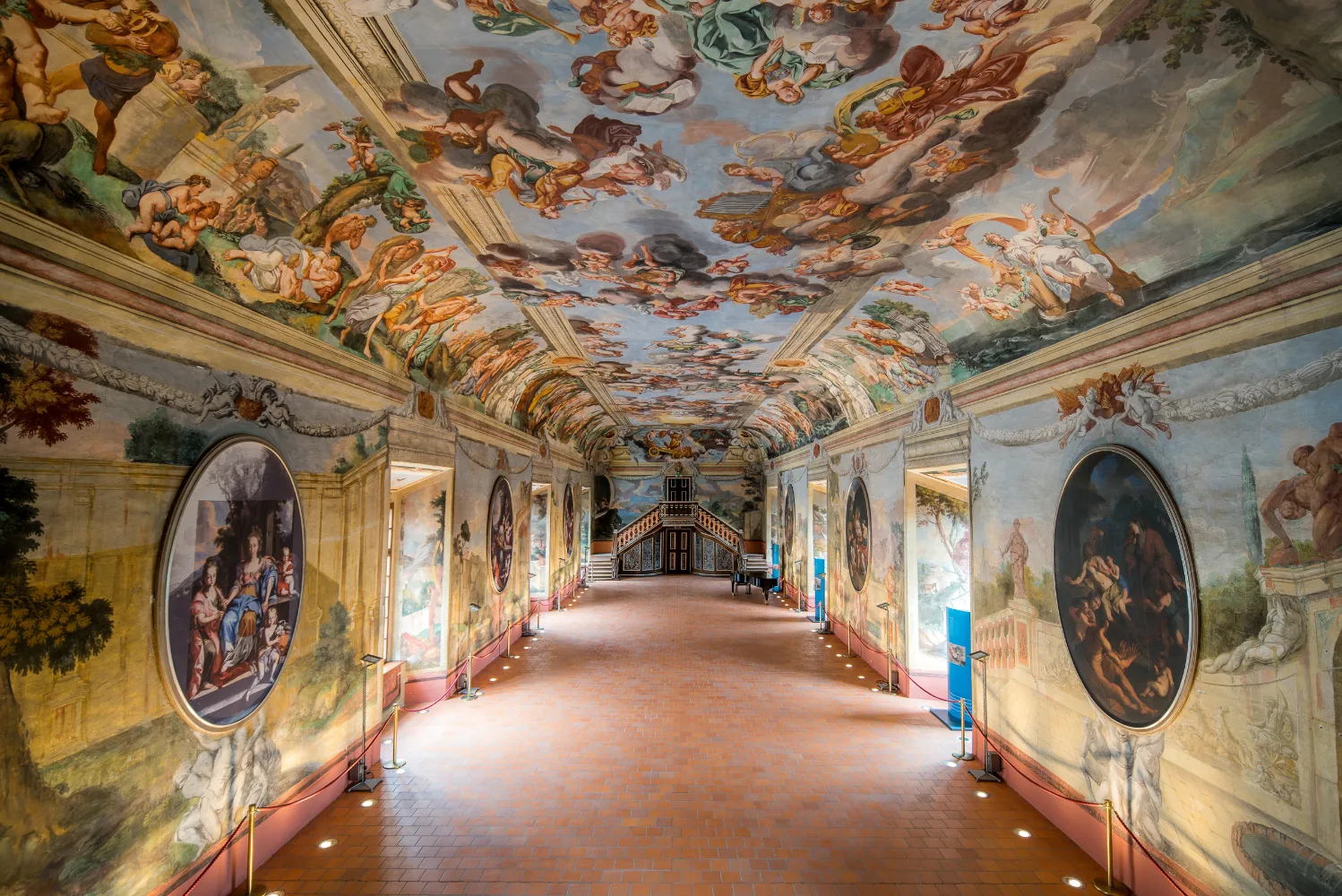
Depiction of the Europa abduction myth began in ancient Greece, was revived in the Renaissance and flourished in the Baroque. Alongside general knowledge of antiquity and foundational literary works, Ovid’s Metamorphoses were especially admired in the early Baroque; J. V. Valvasor had them printed in 1680 at Bogenšperk. The poetic masterpiece also inspired the commissioners of the Brežice Knights’ Hall paintings, castle owner Ignaz Maria Count Attems and his wife Maria Regina, and painter Frančišek Karel Remb.
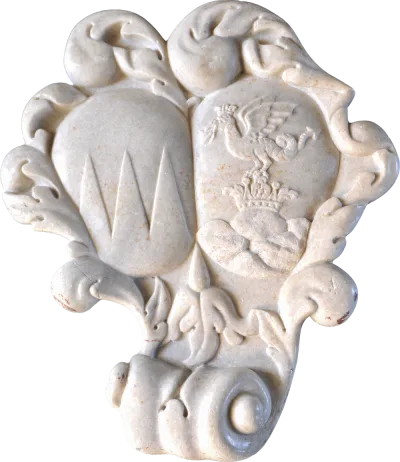
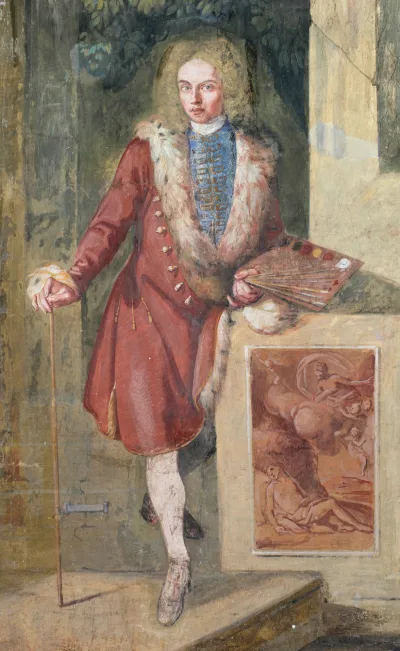
Commissioners of the frescoes Ignaz Maria Count Attems (1652–1732) and wife Maria Regina Attems (1659–1715), née Wurmbrand-Stuppach, depicted with children, Frančišek Karel Remb, c. 1703, copy, Knights’ Hall of Brežice Castle (originals: Graz, Joanneum, Alte Galerie).
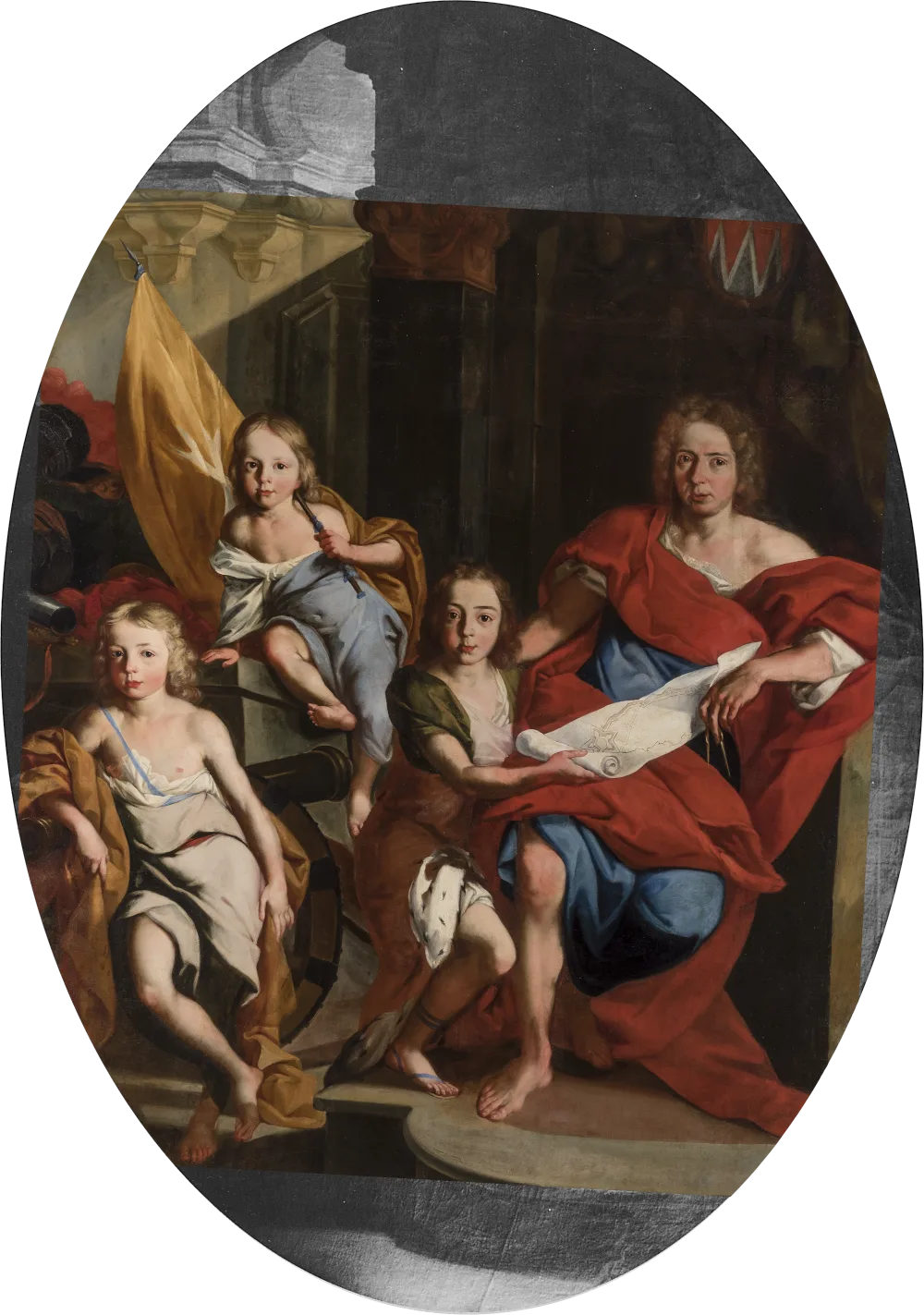
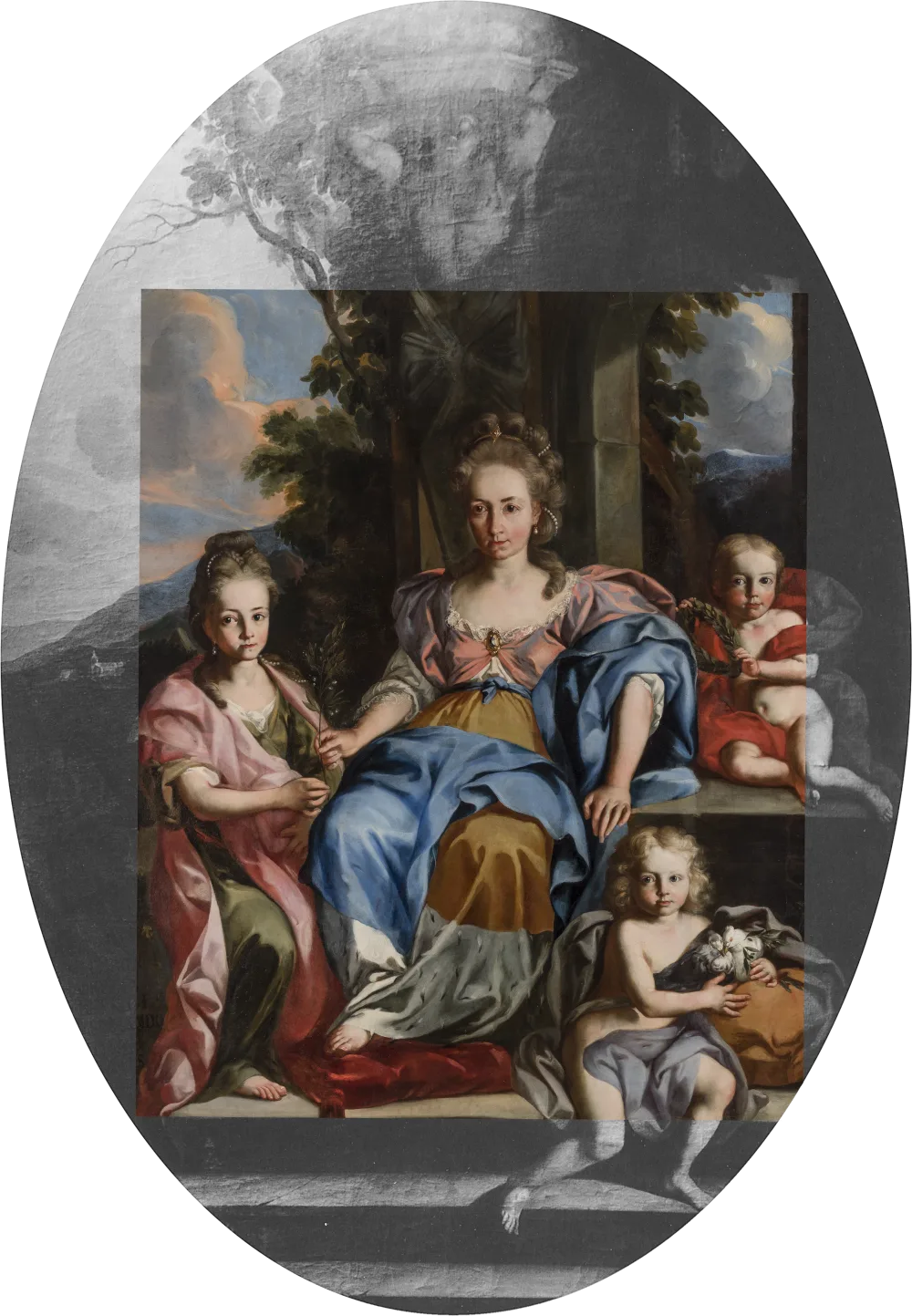
The depiction shows Europa, a Phoenician princess, playing with companions on the shore of Tyre. Zeus fell in love with her and, in the form of a gentle bull, lured her onto the open sea, abducted her and took her to Crete. Because of the abduction she thereafter had to live in exile, yet she did not take revenge. From the lord of Olympus, Zeus who had abused her, she received the gift of immortality. He named after her the part of the world he entrusted to her care.
Boginja Evropa
Goddess Europa is regarded as mother of Europeans and represents a clear archetype – female energy, the energy of creation, making and birthing the new. At a time of redefining the criminal offence of rape in Slovenia and of numerous sexual abuses and traumatic events with far-reaching destructive consequences, one must also recognise the dark side of the Europa myth, who is first a mortal, a woman, abducted and raped.
»… kraljična se drzno celo je povzpela biku na hrbet – v nevednosti, h komu zares se privija – bog pa tedaj se polagoma s kopnega, s čvrste obale v plitvo morje ob obrežju pomika z varljivim korakom; dlje še od tod se poda in prek morskih širjav valovitih nosi svoj plen: drgetaje ugrabljenka zdaj se ozira k bregu, ki zginja za njo, in roga se oklepa z desnico, z drugo se hrbta drži; oblačila vihrajo ji v vetru.« (Publij Ovidij Nazon, Metamorfoze, prevod: Barbara Šega Čeh)
Karla Oder · Muzej Ravne na Koroškem
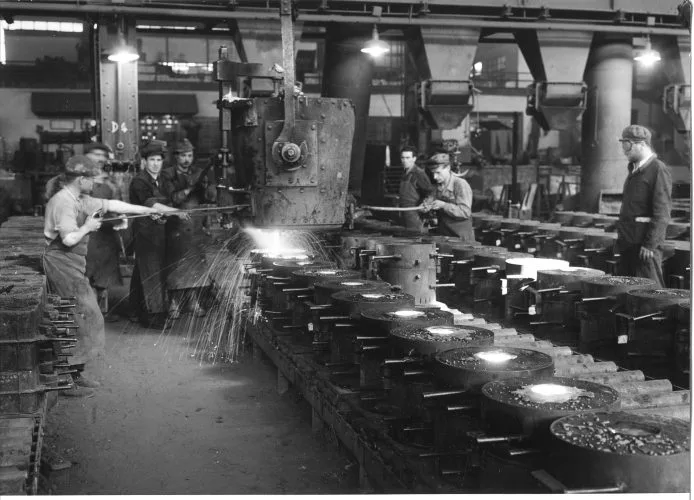
WOMEN IN THE STEEL INDUSTRY
Ironworking and steelmaking have for millennia been fundamental economic activities representing a world of men. The first known woman linked by oral tradition to blast-furnace work in Slovenian lands was Hemma of Gurk (985?–1045), a Carinthian nun and saint of comital rank. A blast furnace at Bohinjska Bela bears her name. From the ironworking noble Zois family we also know an enterprising woman. Serafina, née Aichelburg (1791–1849), after the death of her husband Karel Zois took over management of the Gorenjska enterprise and modernised production. Following the model from Prevalje she introduced English puddling and rolling technology.
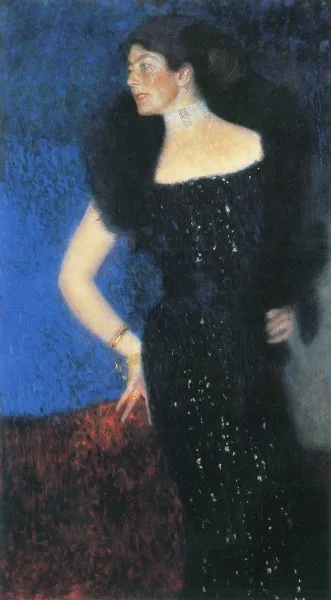
From the Rosthorn industrialist family, which introduced English steel technology in Slovenian lands when it began producing railway rails at Prevalje in 1835, came Rose Rosthorn, married Friedmann (1864–1919). In 1901 Austrian painter Gustav Klimt portrayed her in a black dress symbolically adorned with tiny minerals. In 1960 Eva Perman, née Nauta, already an established spectroscopy expert, came from the Jožef Stefan Institute to the Ravne Ironworks. She contributed greatly to Ravne competing with the best steel laboratories in Yugoslavia and Europe.
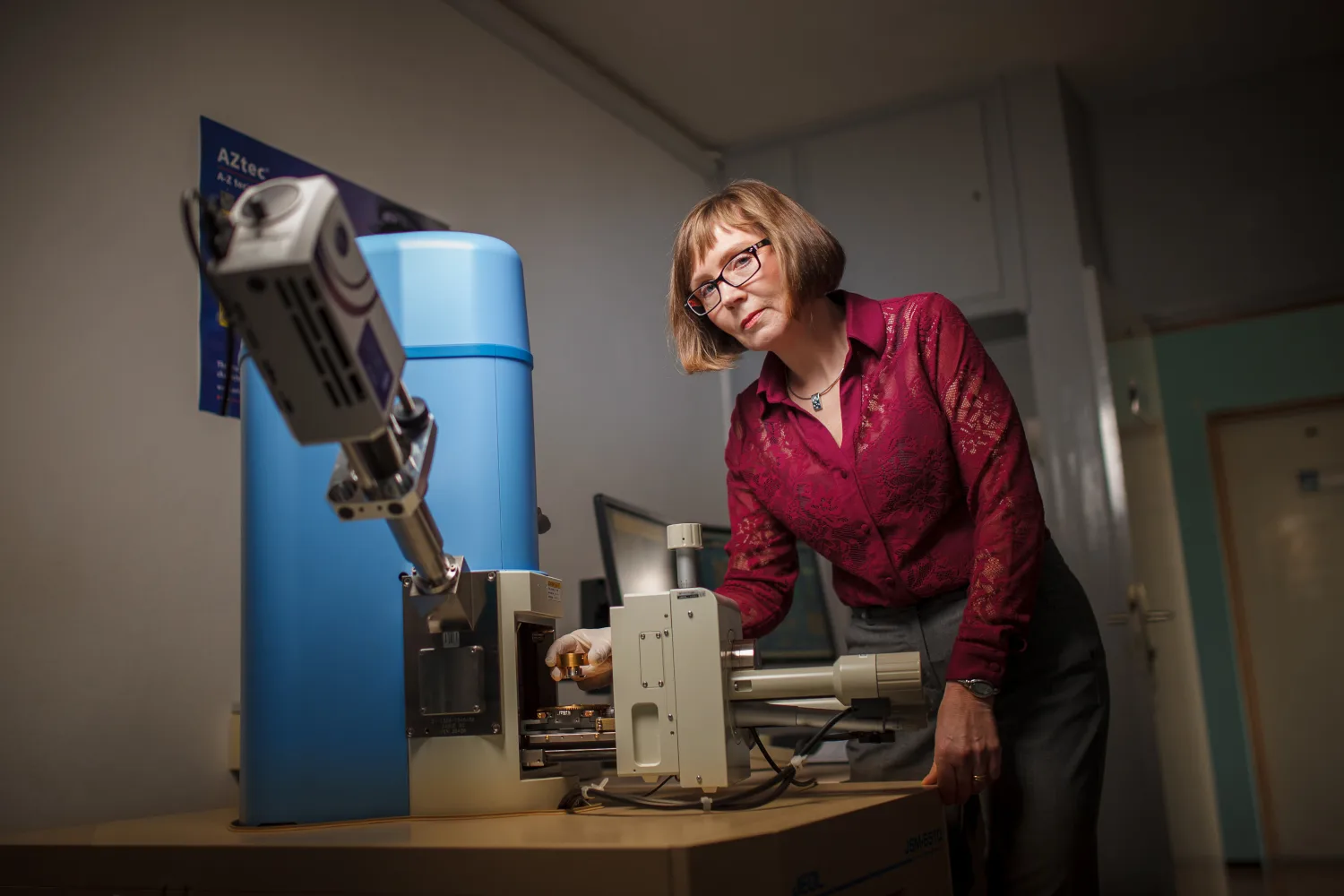
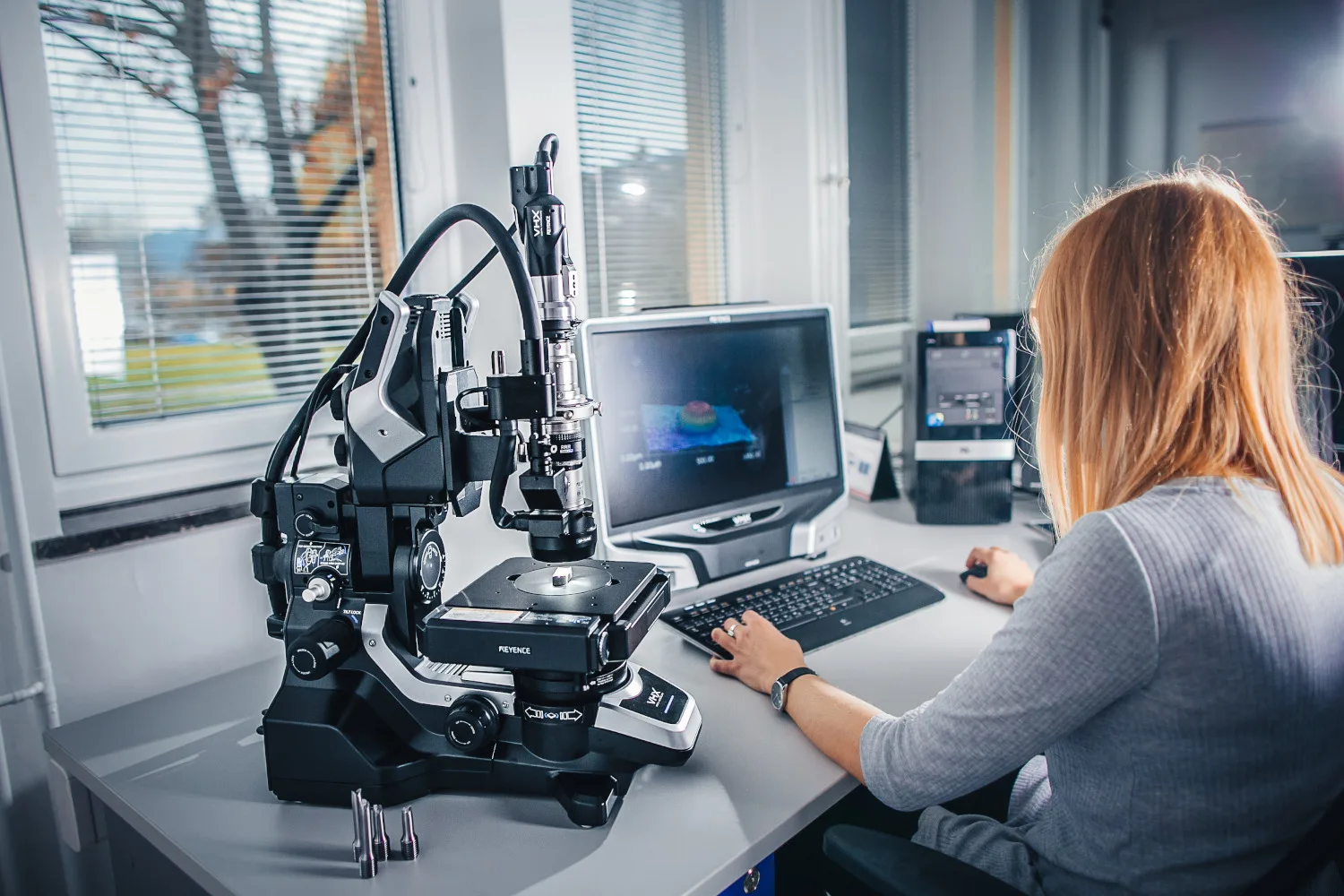
The first woman at the head of one of the ironworks companies at Ravne na Koroškem in the 1990s was Ivana Klančnik. The “baton” of the first woman doctor of science in metallurgy at SIJ Metal Ravne is carried by innovator Dr Tatjana Večko Pirtovšek. She heads the Metallurgical Development and Research department, dedicating her research to hot forming of the most difficult-to-form tool steels.
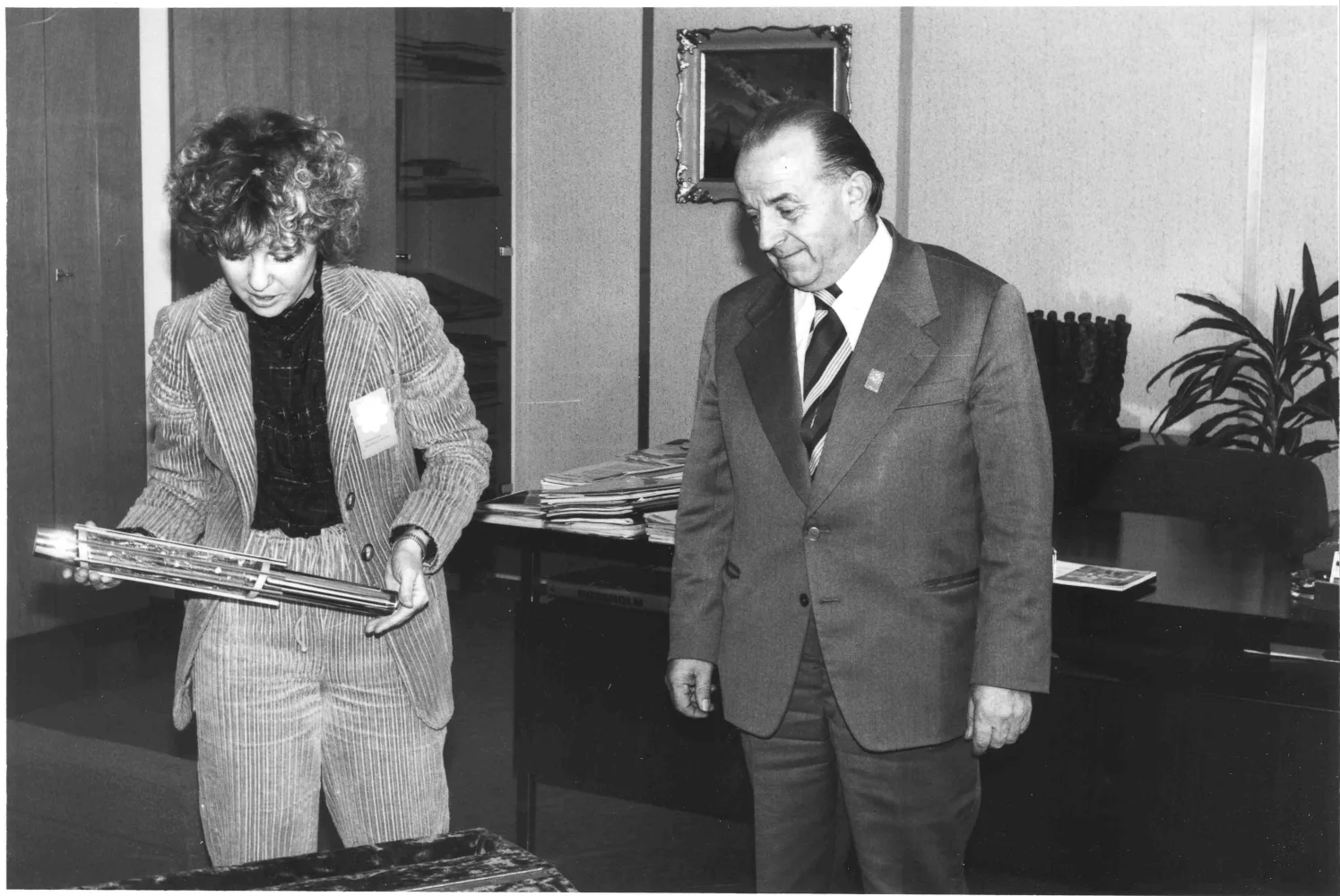
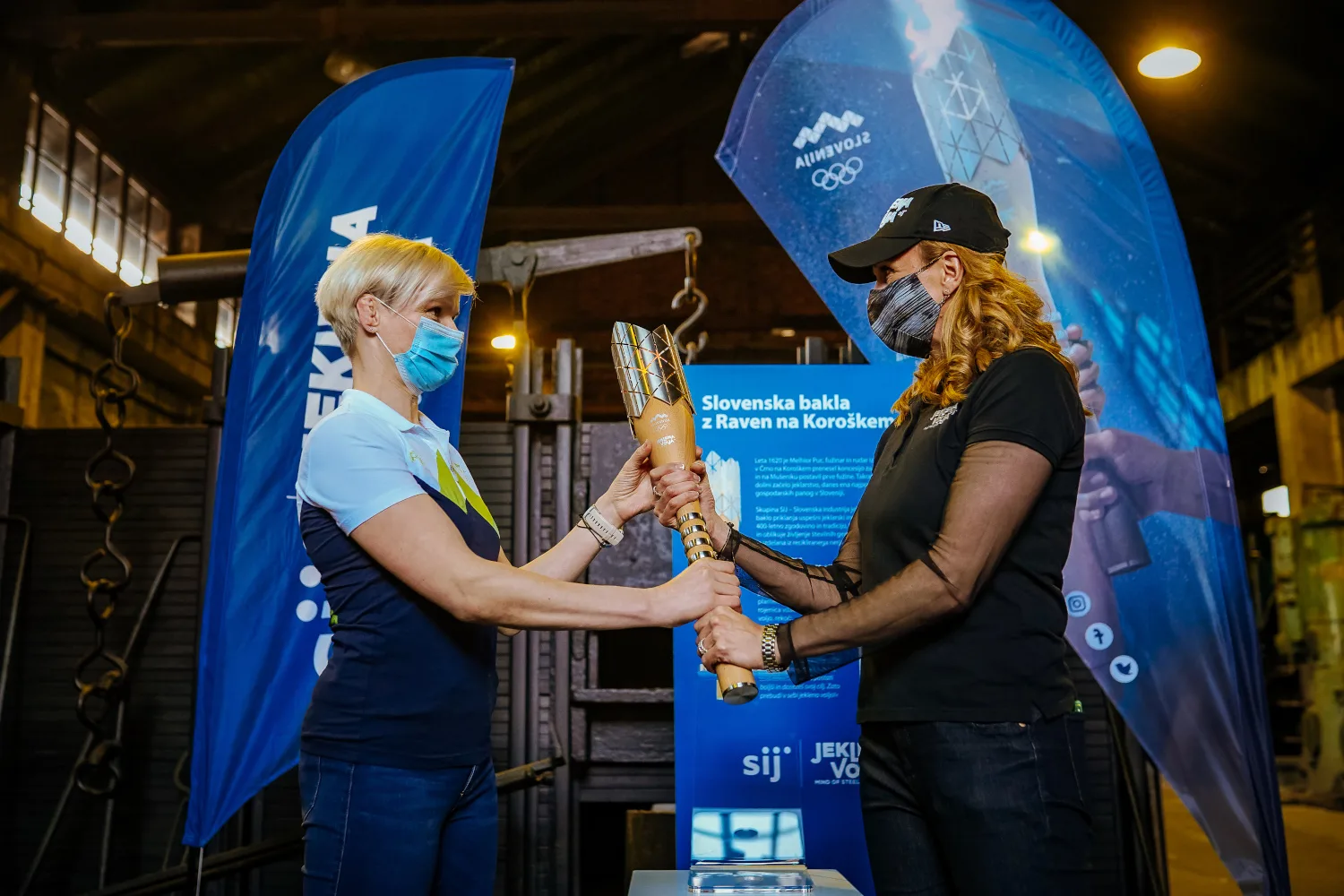
Creative women are also linked with steelmaking and a will of steel. Academic sculptor Milena Braniselj is the author of the steel sculpture Forma viva (1981) at Ravne na Koroškem and of a relay baton of steel and glass – the Youth Relay. Alenka Kolmančič was the first to carry it on its journey through Yugoslavia in 1979. The Tokyo 2020 Olympic torch, made of steel and wood, was first escorted on its route through Slovenia by athletes of steel will Petra Majdič and Urška Žolnir.
In a special way steelmaking and a will of steel are also linked with academic sculptor Milena Braniselj, author of the steel sculpture Forma viva (1981) at Ravne na Koroškem and of a steel-and-glass Youth Relay baton, which Alenka Kolmančič first carried through Yugoslavia in 1979. The Tokyo 2020 Olympic torch of steel and wood was first escorted through Slovenia by athletes of steel will Petra Majdič and Urška Žolnir.
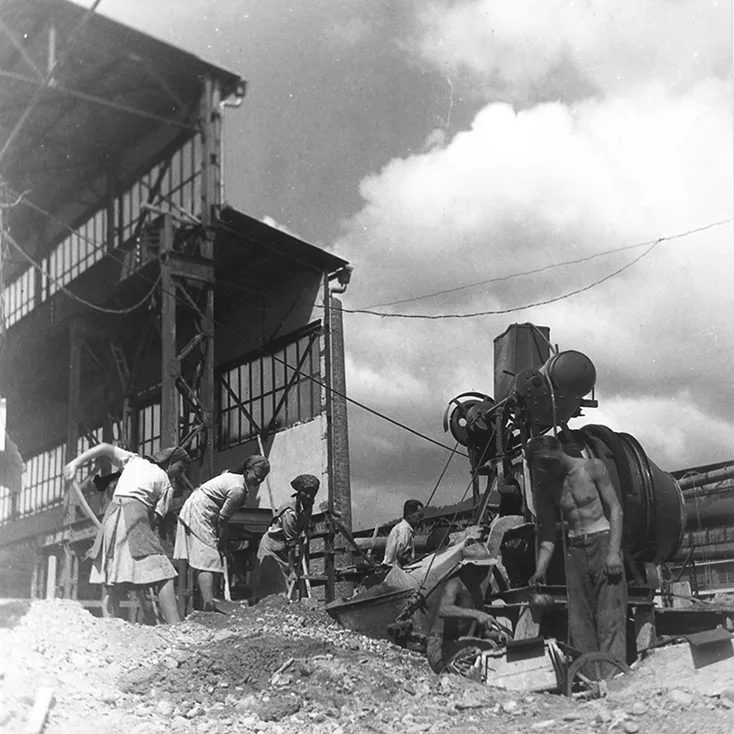
WHEN WOMEN DO MEN’S WORK
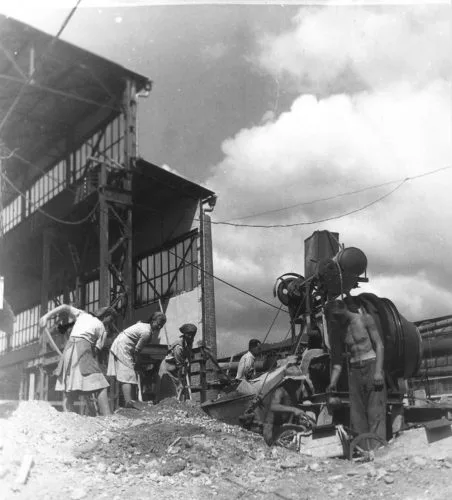
Women found earnings early in heavy industry, mining and ironworking. Work at home did not lessen for that reason. World wars also changed their role and position, when women willingly or under compulsion took on work in the steel industry as well.
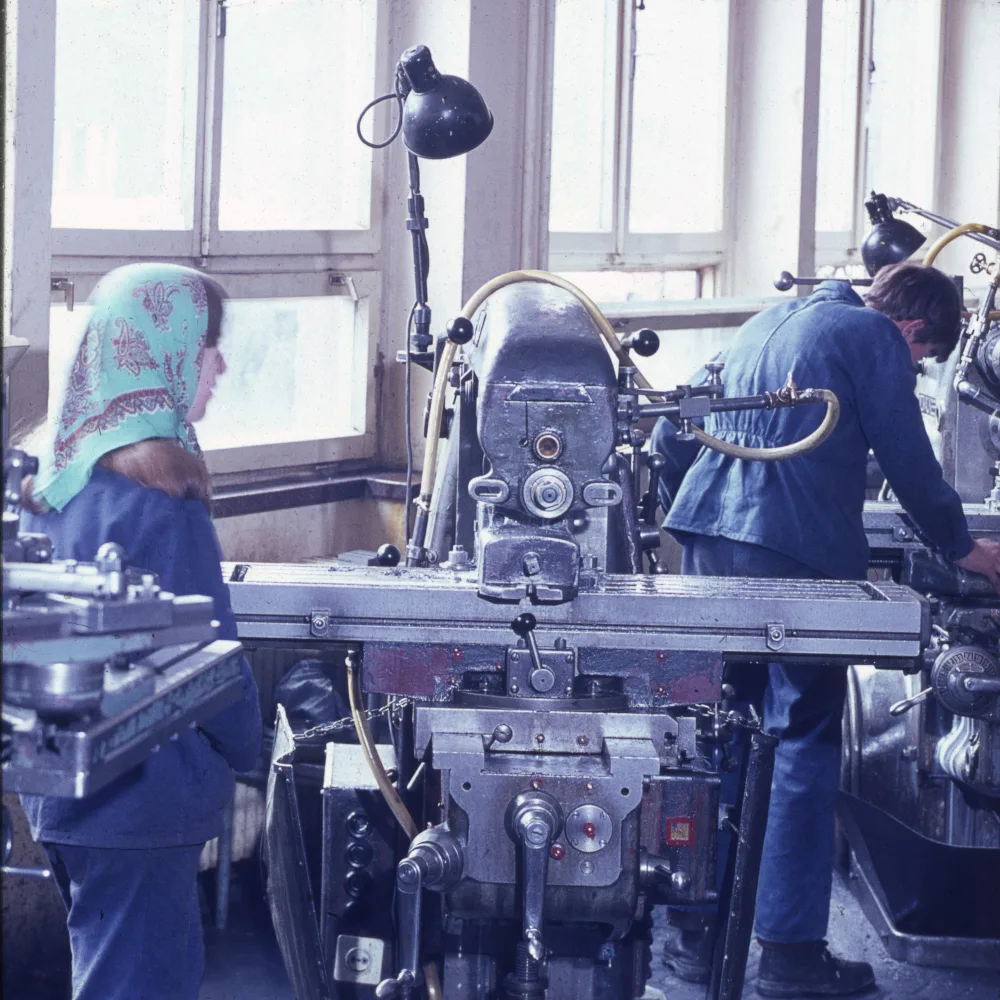
With the rapid growth of heavy industry the state already in the 19th century tried by law to protect women and children from excessive exploitation. In 1885 night work for women and children was banned, yet employers often violated the law. The 1918 Workers’ Protection Act gave women workers maternity leave, two months before birth and two after. With health insurance they gained maternity benefit. Companies with more than 100 workers, among them at least 25 with small children without care, were obliged to establish a children’s shelter. After World War II women were given greater safety and social protection at work. The path to education and entry into professions formerly exclusive to men also opened to them.
Barbara Trnovec · Pokrajinski muzej Celje
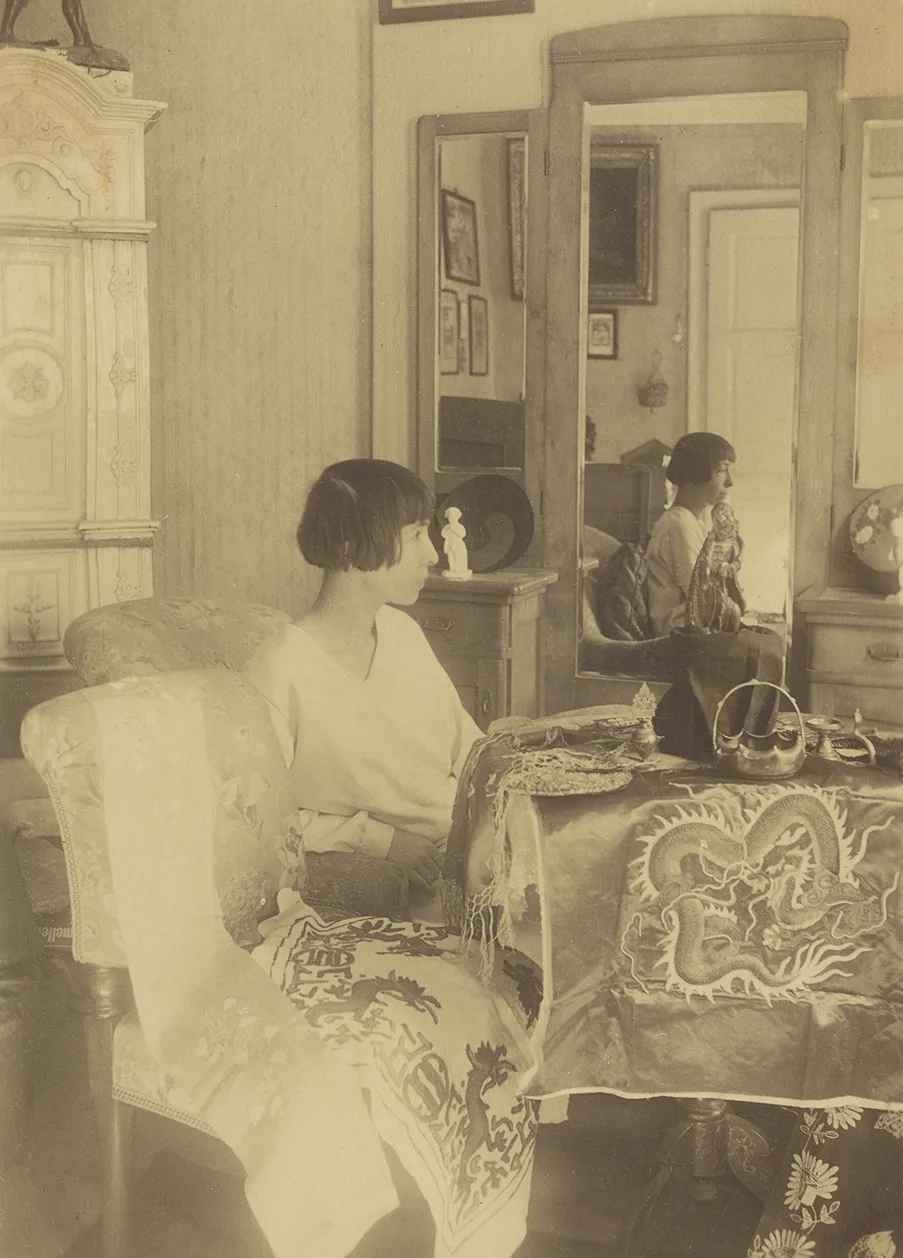
ALMA M. KARLIN, INDEPENDENT, UNYIELDING, INQUISITIVE
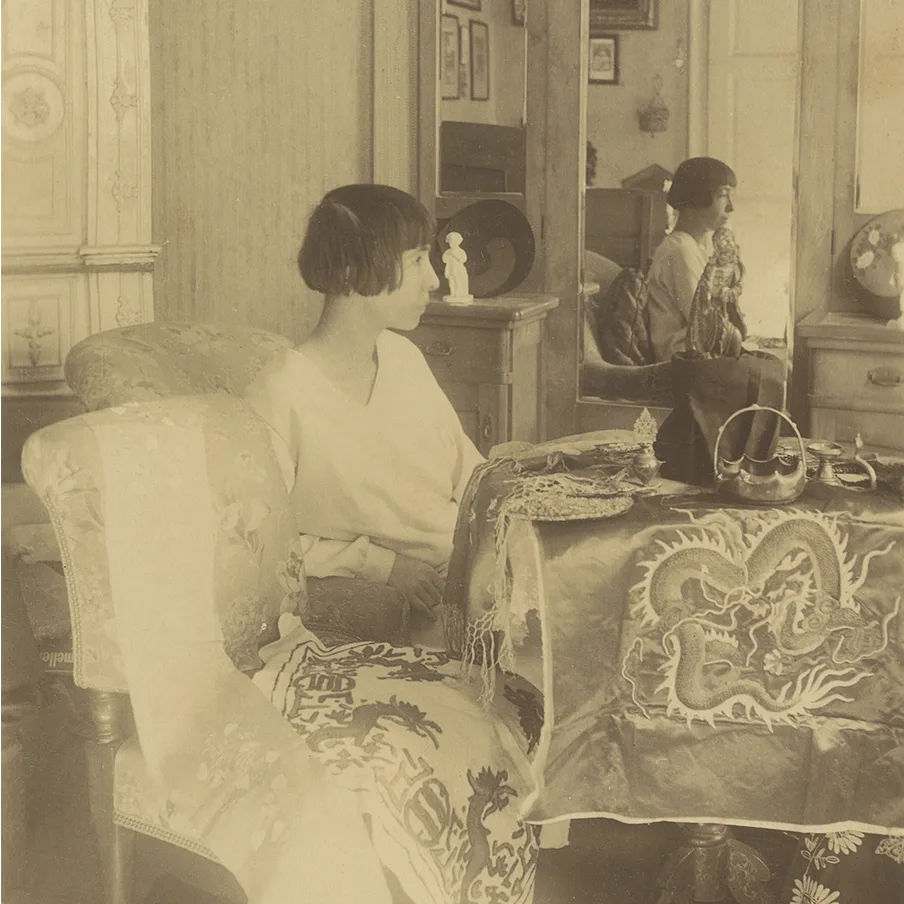
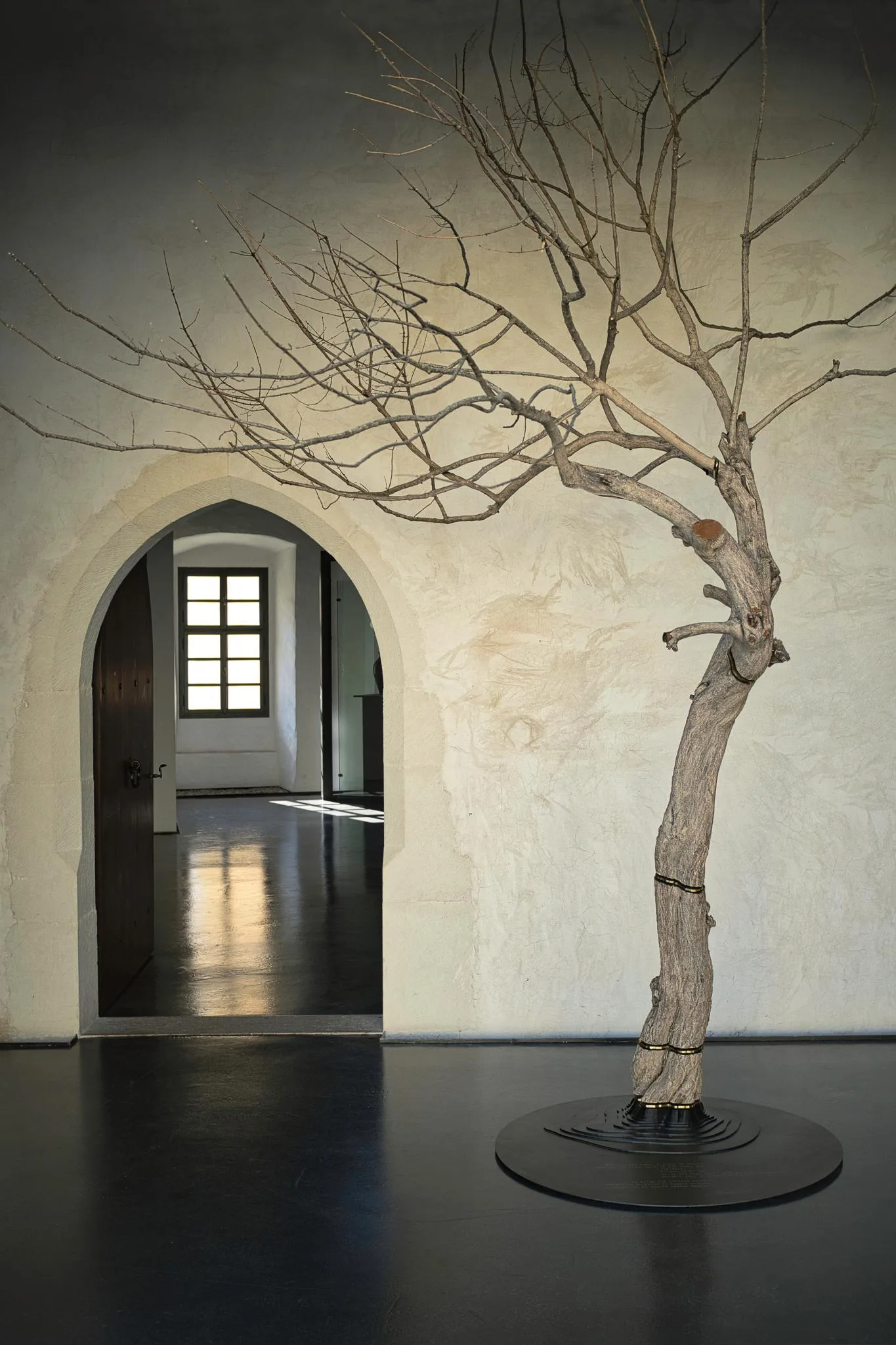
Writer and journalist, world traveller, amateur researcher and polyglot Alma M. Karlin (1889–1950) crossed every possible boundary on her life’s path; boundaries of physical limits, her gender, social class, national identity, physical distances, and also the spirit of the age – her ideas are therefore still fresh and relevant today. In 1919–1927 she travelled the world. She travelled alone, continuously for eight years, supporting herself along the way with work as she went. The nature of her journey places her among the greatest travellers of all time. At the end of the 1920s and in the first half of the 1930s she enjoyed great success as a writer and traveller – in European and wider contexts. Then followed very dark years, to a bitter end. Alma M. Karlin is buried at Svetina. Until October 2016 an unusual tree grew on her grave – a woody growth of the spindle bush Euonymus europaeus, which was then brutally cut down. The botanical name Euonymus in Greek means of good name or to have luck, which Alma M. Karlin most likely knew. According to the testimony of Franc Rozman, who as a child met her at Svetina, she herself “marked” the place in the cemetery where she wished to be buried and planted a tree there. Presentation of the monograph The Endless Journey of Alma M. Karlin about her astonishing life, work and legacy.
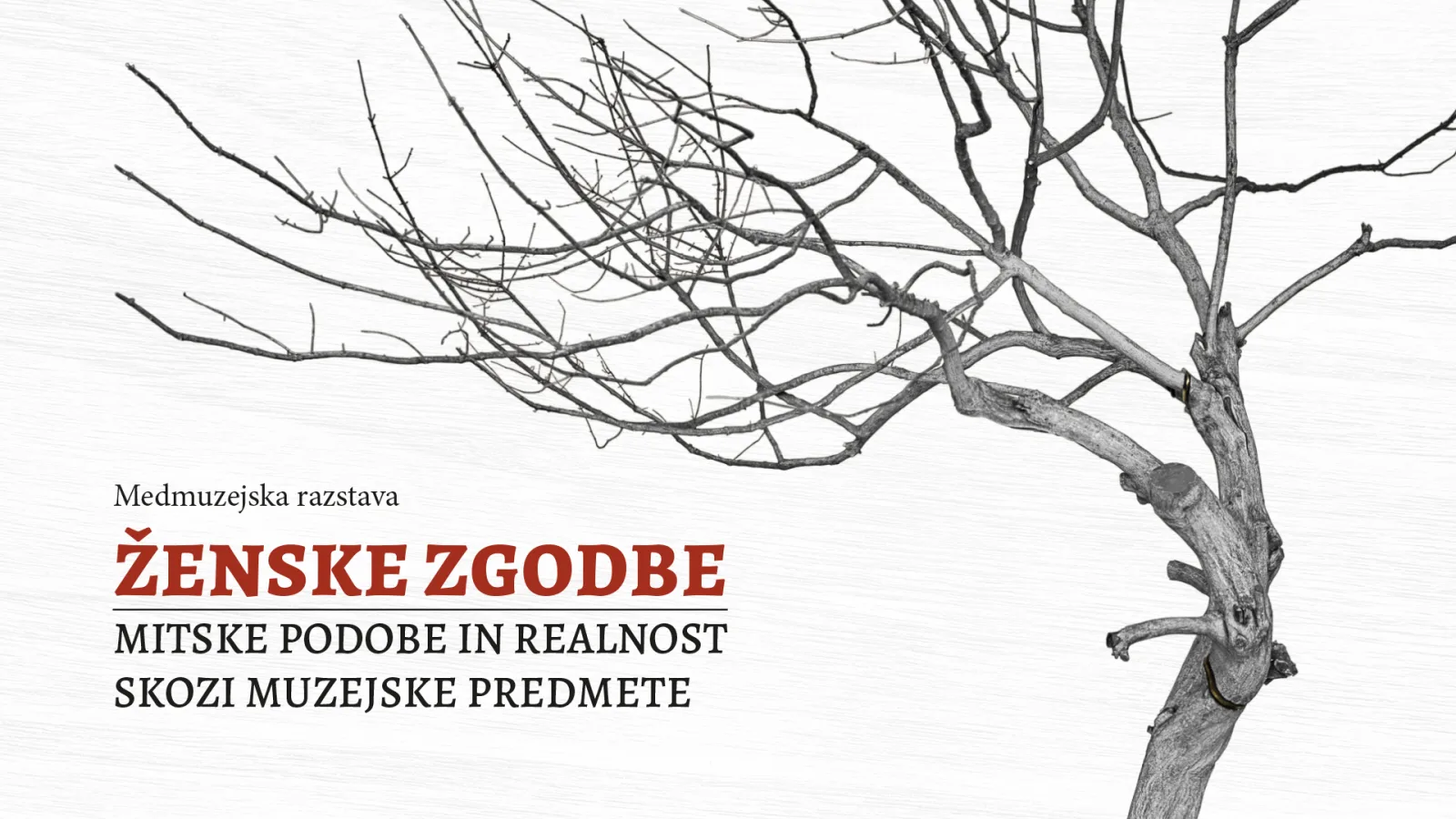
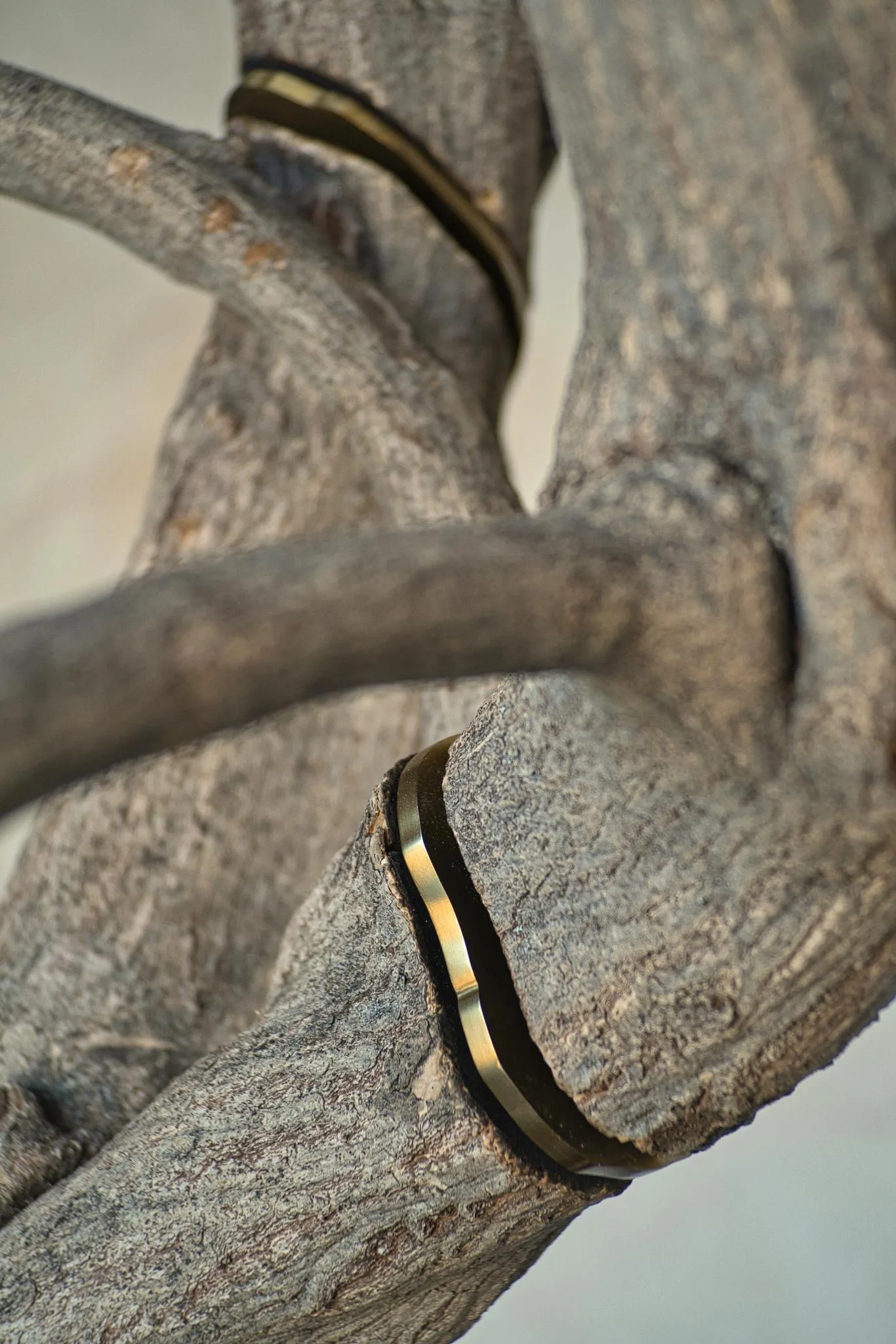
Tree from Alma M. Karlin’s grave (2017), concept Barbara Trnovec, execution Studio Moste. Individual parts of the tree from Alma M. Karlin’s grave were assembled into a whole. Joints between them are emphasised with gold tiles that symbolically represent cuts in the tree and thus recall a chapter in its history. The Japanese technique of kintsugi was used.
Nadja Terčon · Pomorski muzej – Museo del mare »Sergej Mašera« Piran
SAVA in JOLANDA
The first Slovenian and Yugoslav women seafarers
Women and the sea, and Slovenian women’s entry into the male world of seafaring
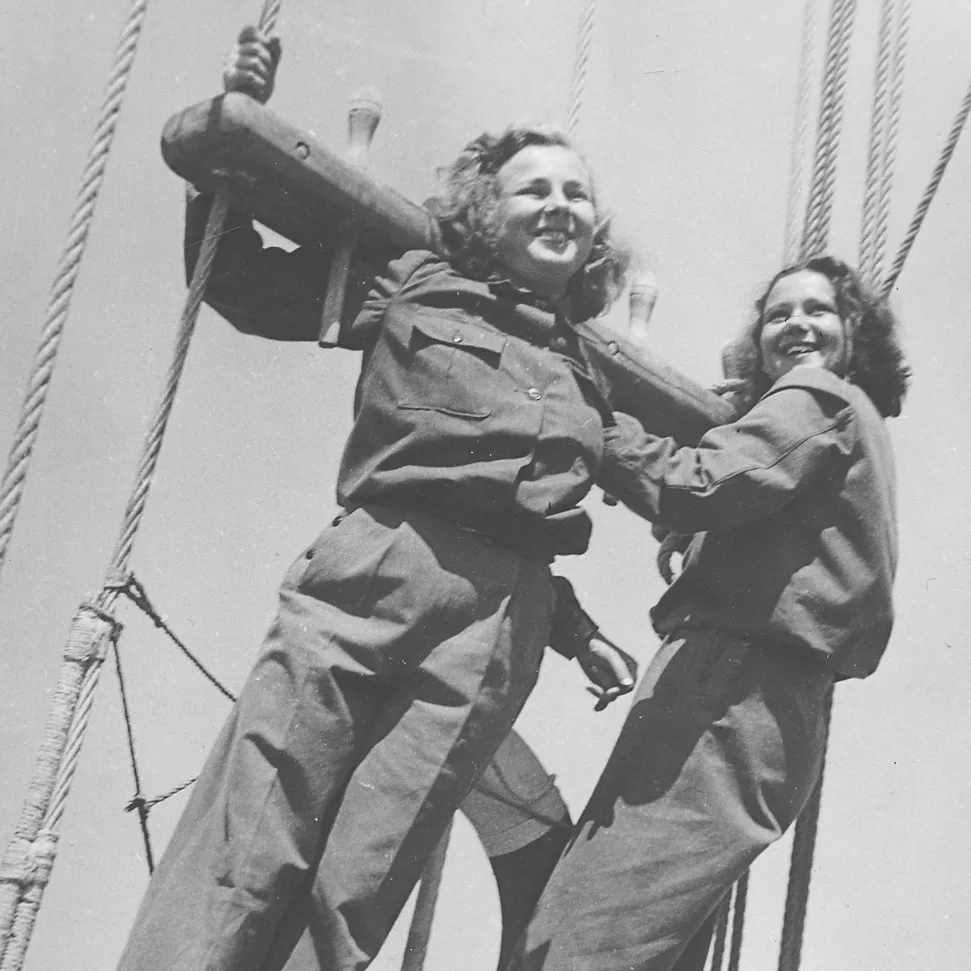
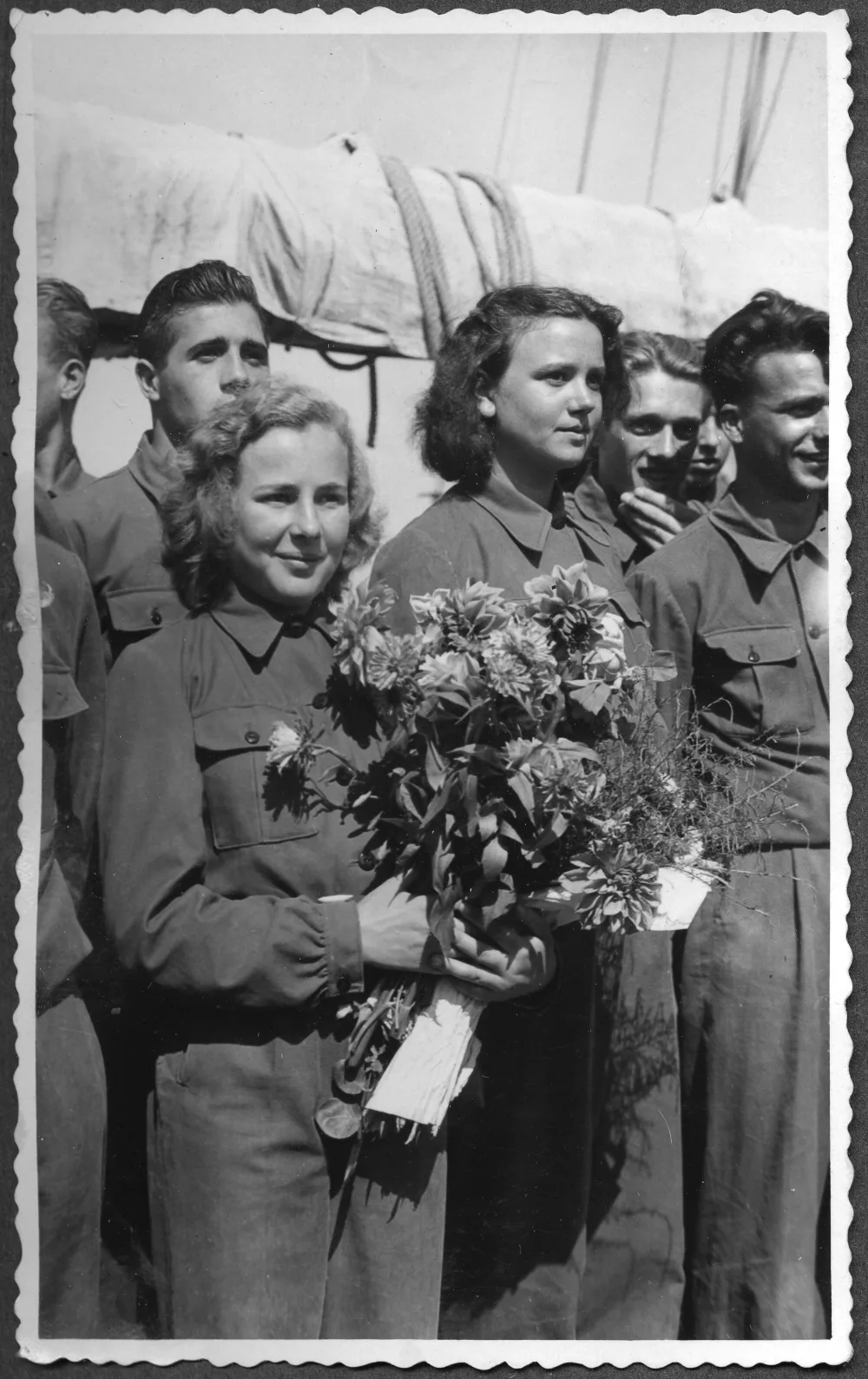
Sava and Jolanda, the first Slovenian women trained as professional seafarers. Both found work on a ship. The decision of Sava Kaluža and Jolanda Gruden for a life with the sea belongs to the woman-friendly time of socialist Yugoslavia. Sava and Jolanda were young, curious and ambitious, brave and bold women, both from families that supported them. They followed their dreams and enrolled in a school where no girl’s foot had yet stepped. Their entry into “male” schooling, the matura exam, cadetship, mate’s examination and employment on Jugolinija and Splošna plovba ships mark the beginning of Slovenian and Yugoslav women’s entry into a traditionally male profession. The schooling and careers of both were marked by the hard and hope-filled conditions of the first postwar decade on the Littoral. Schooling in Slovenian was the dream of all who until then had been forced to study in Italian. The two girls seized a favourable moment when a new maritime school was created to be, in Zone B of the Free Territory of Trieste (FTT), an example of how socialism was also being built in Istria and what that meant for all. Sava and Jolanda became pioneers of a new era. They broke new ground. They had no role models, yet became role models. Every step, every decision was theirs alone. They paved the way and opened for women the possibility of schooling and employment in shipping. Sava and Jolanda were exceptionally modern women of their time. They were a social and media attraction. Motherhood and care for the family later anchored them on land, as also their successors.
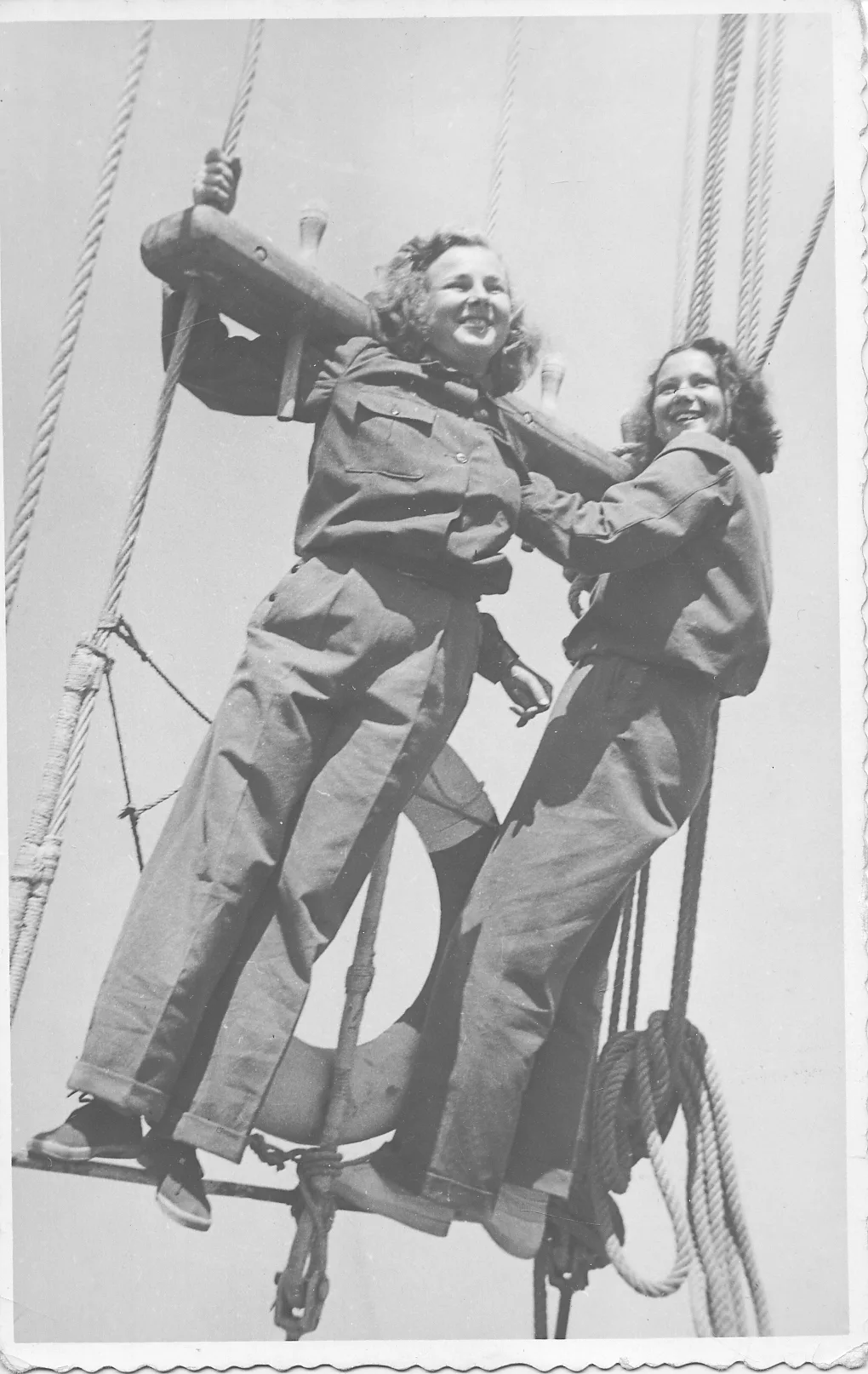
»Kapitanka Sava«
Sava Kaluža (Ilirska Bistrica, 17. 6. 1929 – Lucija, 4. 10. 2014)
After finishing maritime school Sava Kaluža sailed on Jugolinija ships Titograd and Hrvatska from Rijeka, for a time on Obalna plovba boats and on the ship Bled. After finally going ashore she worked in the administration of Splošna plovba Piran until retirement.
“A born seafarer”
Jolanda Gruden, poročena Mažer (Nabrežina, 9. 5. 1930 – Reka, 24. 1. 2014)
After finishing school Jolanda Gruden sailed on Jugolinija ships from Rijeka – Hrvatska, Bosna and Titograd, then until her marriage to Captain Srećko Mažer worked at the Mediterranea shipping agency in Trieste.
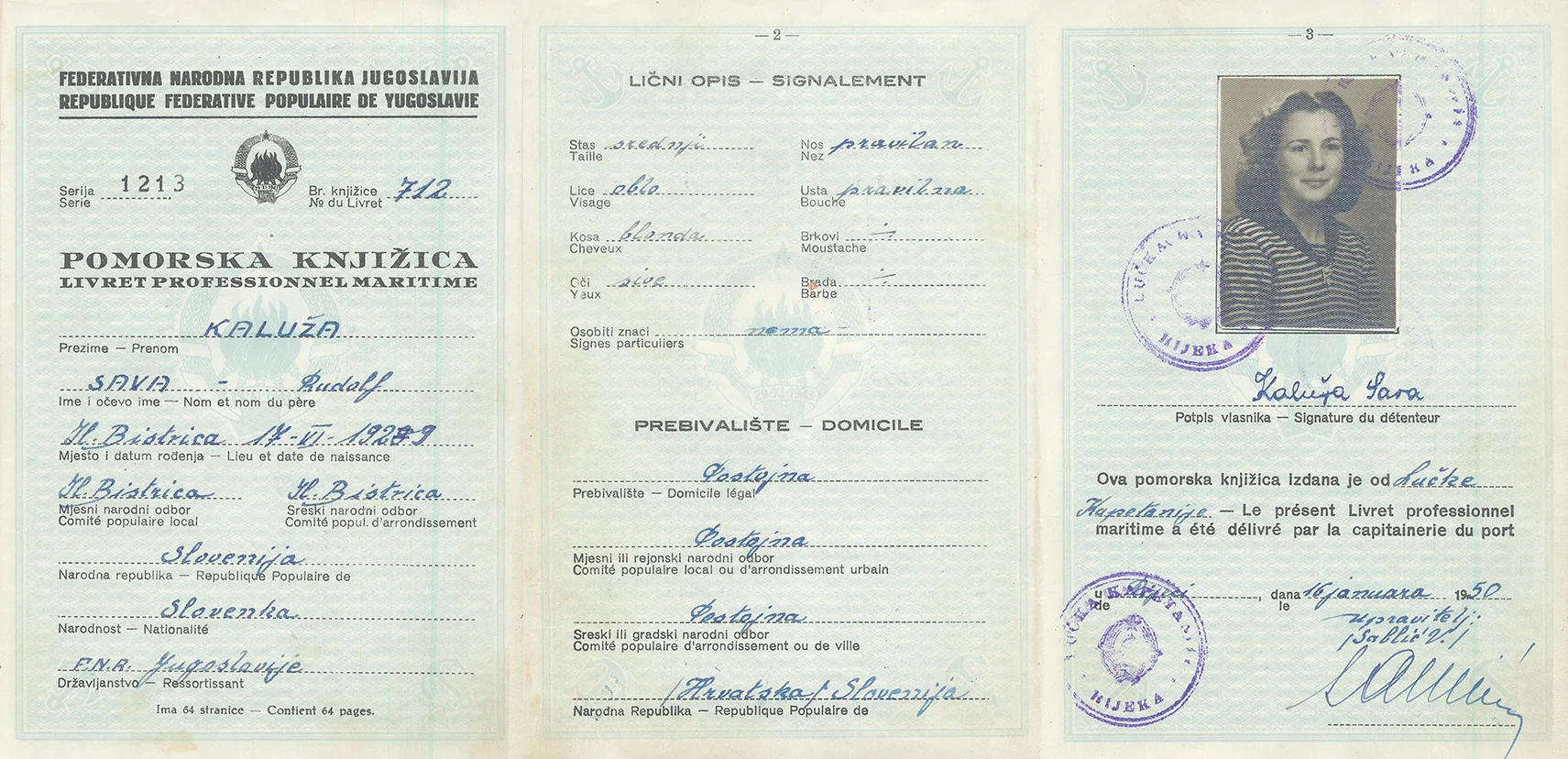
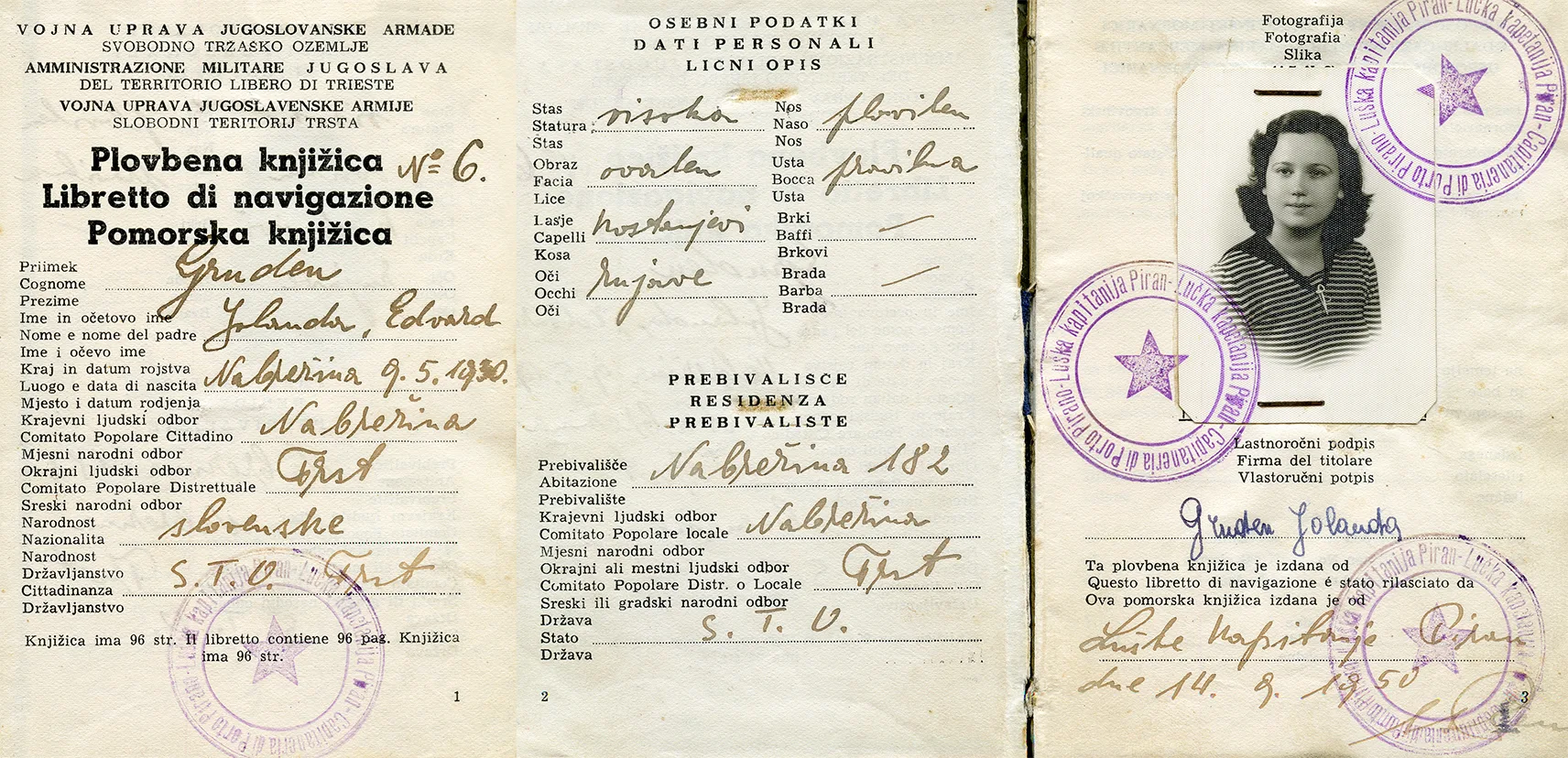
The seaman’s book is a seafarer’s most important document, an “identity card and special employment document for merchant ships and yachts, further as proof of service on board and as a passport when a seafarer travels abroad to embark or returns from abroad”. Every citizen of the FPRY (Federal People’s Republic of Yugoslavia) who wished to work on merchant ships or yachts as master, officer or in deck, engine, radiotelegraph and administrative service had to have a seaman’s book. This order rested on the Yugoslav regulation on seamen’s books published in the Official Gazette of the FPRY in 1946 (no. 69), also published in the Maritime Yearbook for 1941–1951. Sava Kaluža was issued her seaman’s book in Rijeka, Jolanda Gruden already in Piran.
Kolofon
Authors and participating museums: Verena Perko, Gorenjski muzej, Kranj
Snježana Karinja, Nadja Terčon, Pomorski muzej – Museo del mare »Sergej Mašera« Piran – Pirano
Maša Sakara, Špela Prunk, Andrej Preložnik (UP FHŠ), Matjaž Novšak (Arhej, d. o. o.), Pokrajinski muzej Koper – Museo regionale di Capodistria
Petra Stipančić, Dolenjski muzej Novo mesto
Oži Lorber, Jana Puhar, Posavski muzej Brežice
Barbara Trnovec, Maja Bausovac, Pokrajinski muzej Celje
Karla Oder, Koroški pokrajinski muzej, Muzej Ravne na Koroškem
Aleksandra Nestorović, Pokrajinski muzej Ptuj – Ormož
Jože Štukl, Loški muzej Škofja Loka
Materials: Gorenjski muzej, Kranj, Pomorski muzej – Museo del mare »Sergej Mašera« Piran – Pirano, Pokrajinski muzej Koper – Museo regionale di Capodistria, Dolenjski muzej Novo mesto, Posavski muzej Brežice, Pokrajinski muzej Celje, Koroški pokrajinski muzej, Muzej Ravne na Koroškem, Pokrajinski muzej Ptuj – Ormož, Universalmuseum Joanneum, Loški muzej Škofja Loka
Photographs: Arhej, d. o. o., Borut Križ, Jana Puhar, Jože Štukl, Maja Bausovac, Bojan Plevčak, Nina Sovdat, Viktor Berk, Tomo Jeseničnik, Maks Dolinšek, Skupina SIJ, Metal Ravne, Dobran Laznik, fotodokumentacija Koroškega pokrajinskega muzeja, Muzej Ravne na Koroškem, Primož Stergar, Boris Farič, fotodokumentacija Pokrajinskega muzeja Ptuj – Ormož, fotodokumentacija Universalmuseum Joanneum, Janez Rupnik, Aleksandra Krajnc, Andrej Loc, fotodokumentacija Gorenjskega muzeja, Kranj, Andrej Hirci (fotomontaža), Gregor Molan, Srečko Rožman, Luka Rudman, Simon Srečkovič, Blaž Zupančič, Tamara Kaluža Pocecco, Alida Mažer, fotodokumentacija Pomorskega muzeja – Museo del mare »Sergej Mašera« Piran – Pirano, fotodokumentacija Dolenjskega muzeja Novo mesto, fotodokumentacija Metropolitanskega muzeja, New York
Graphic reconstruction of the mosaic with the Europa scene: Gregor Oštir, Anže Mrak, Dejana Javoršek, Helena Gabrijelčič Tomc, Tanja Nuša Kočevar – vsi Univerza v Ljubljani, Naravoslovnotehniška fakulteta, Oddelek za tekstilstvo, grafiko in oblikovanje
Drawings, computer processing: Tamara Korošec, Špela Osojnik, Jasna Radšel, Nejka Uršič, Natalie Finkšt, Nataša Grm
Naravoslovne analize: Tamara Leskovar, Filozofska fakulteta v Ljubljani, Oddelek za arheologijo
Conservation of materials: RGZM Mainz, Zdenka Salmič Pungerčar, Jože Lorber, Davorin Prah, Konservatorsko-restavratorska delavnica Posavskega muzeja Brežice, Restavratorski center ZVKDS
Lektoriranje: Judita Babnik
Translations: Kaja Štembergar Flegar, Jože Štukl
Oblikovanje: Jani Turk, Vasko Vidmar
Website production: Armin Peček
Coordination assistance: Veronika Bjelica, Pomorski muzej – Museo del mare »Sergej Mašera« Piran – Pirano
Tisk: Tiskarna Jagraf, d. o. o.