RazstaveBlueberry rakes
Zbirka
Blueberry rakes
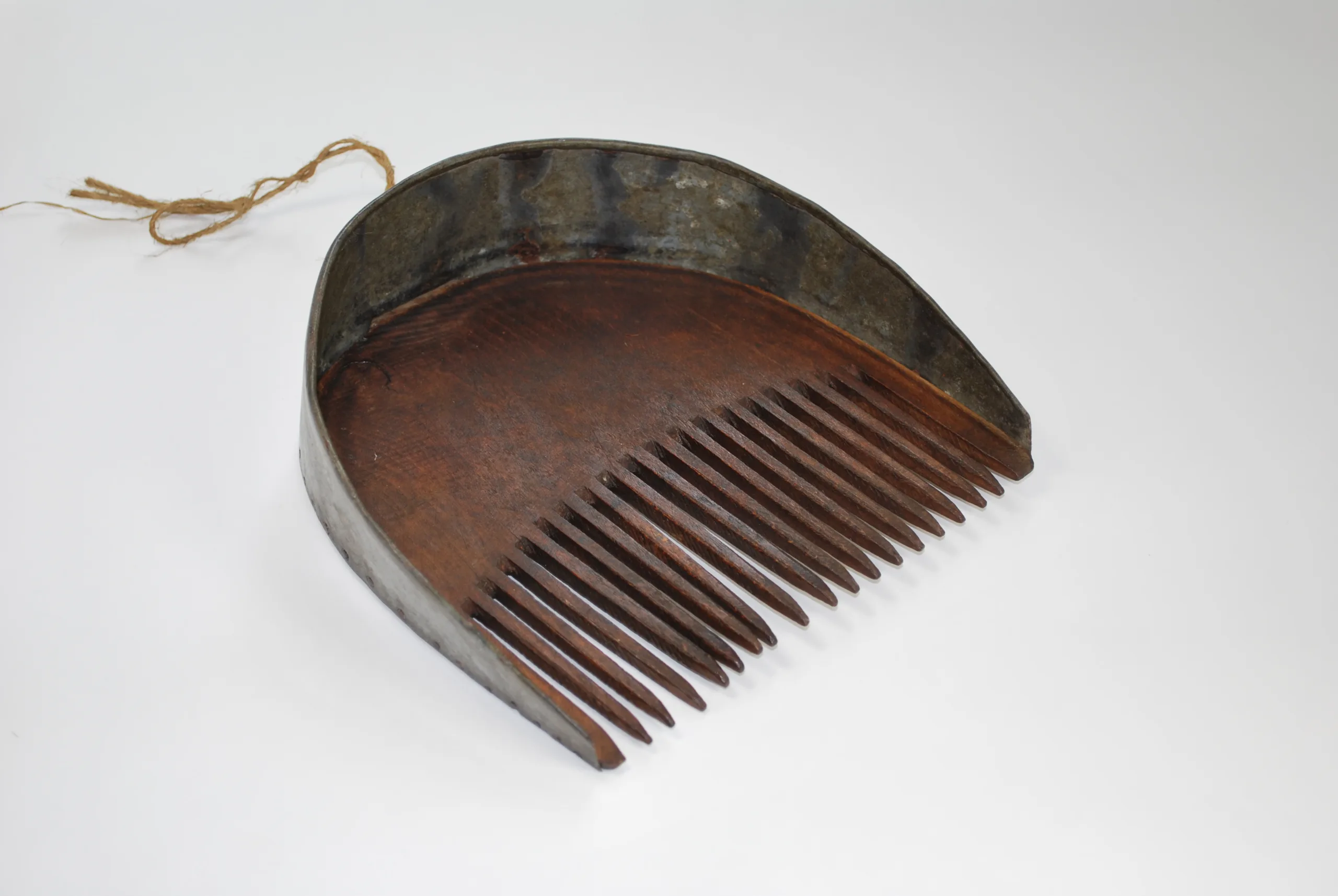
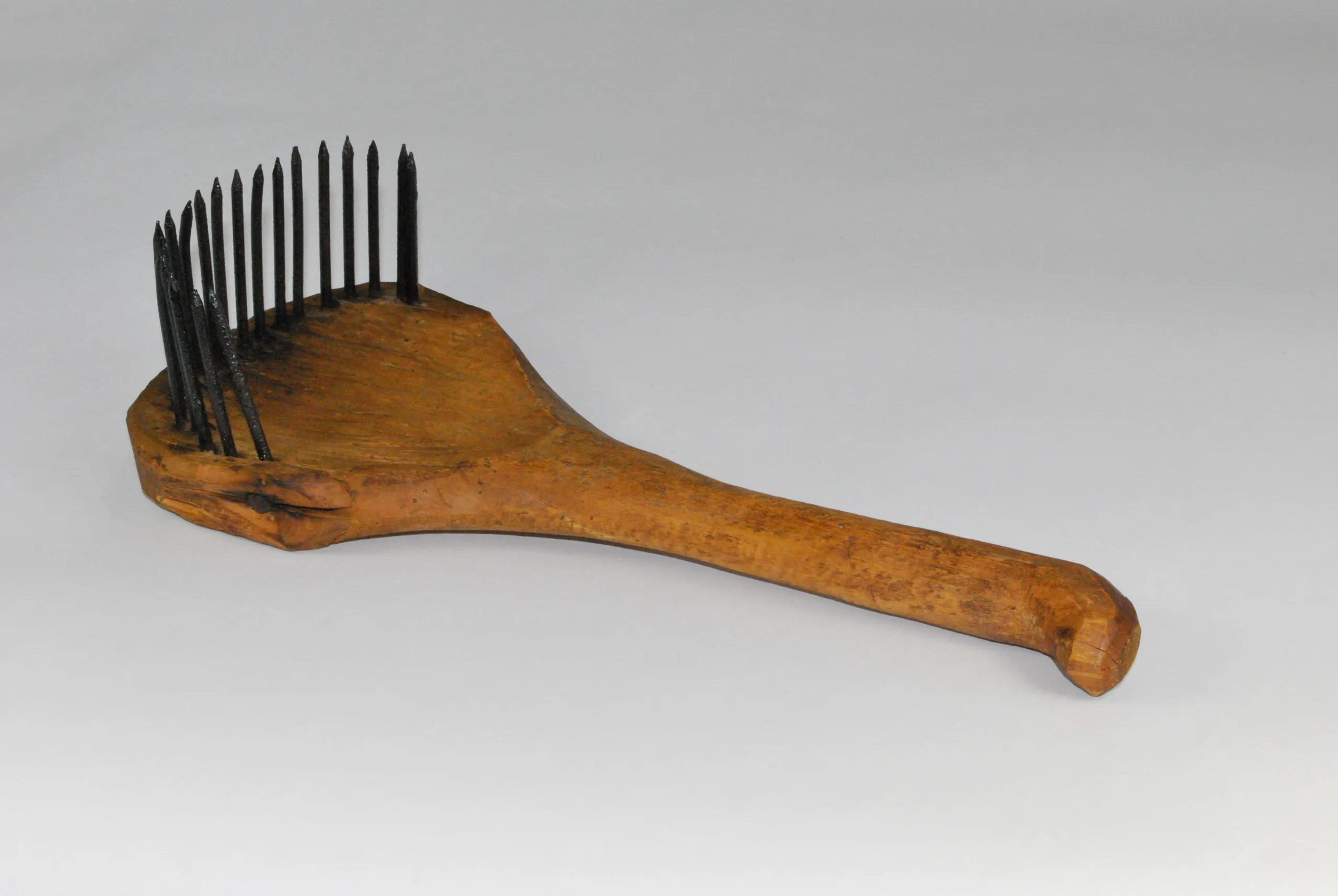
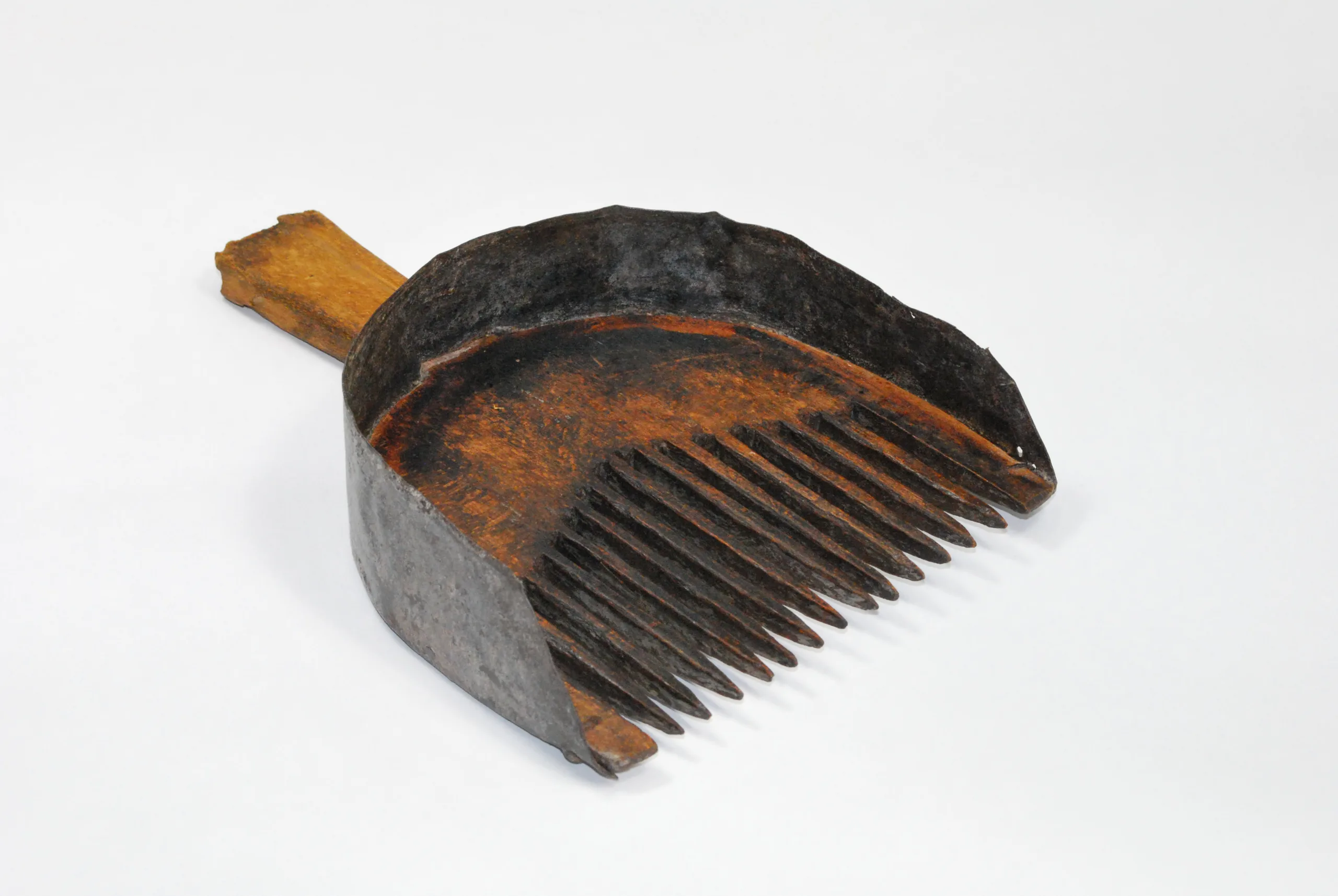
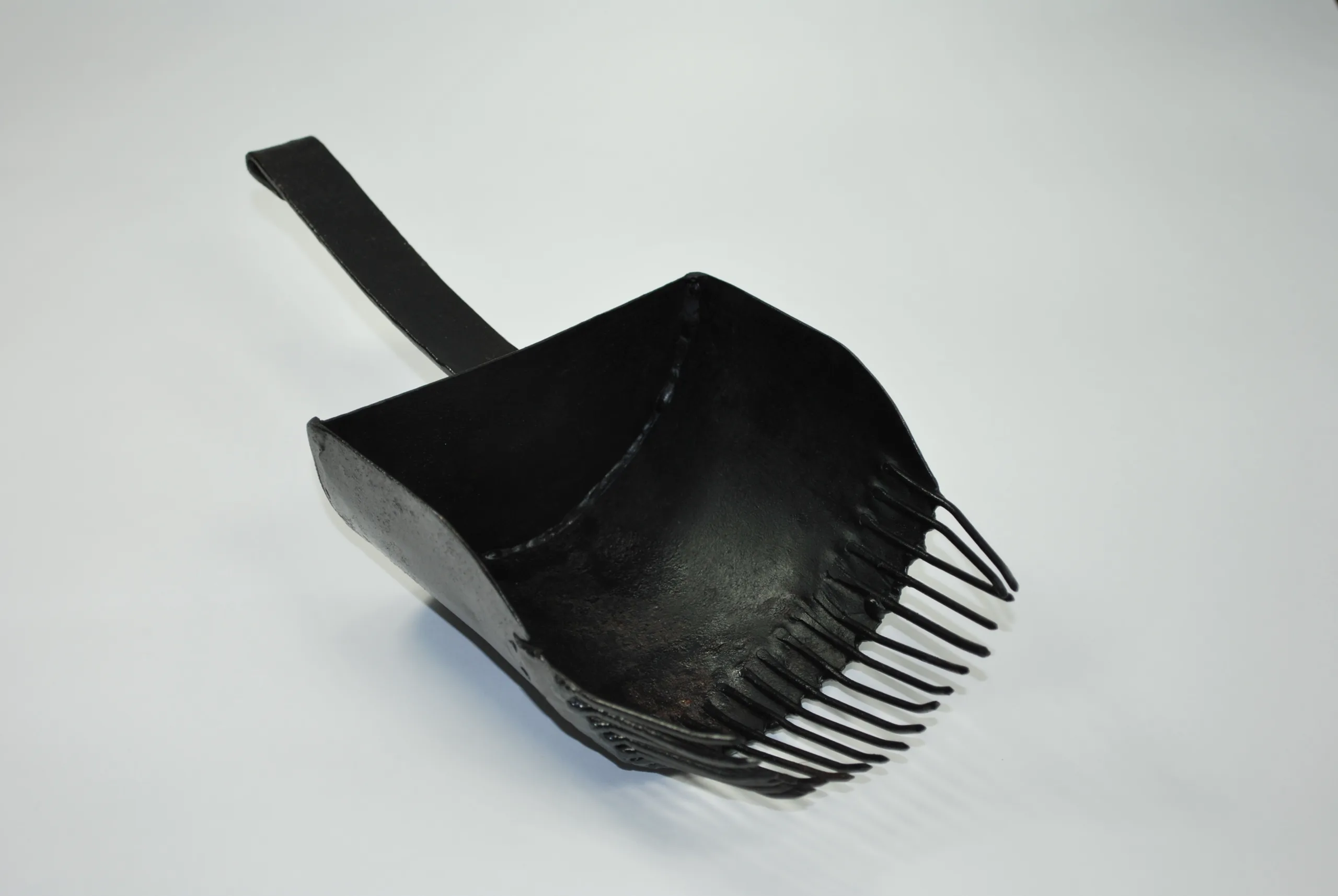
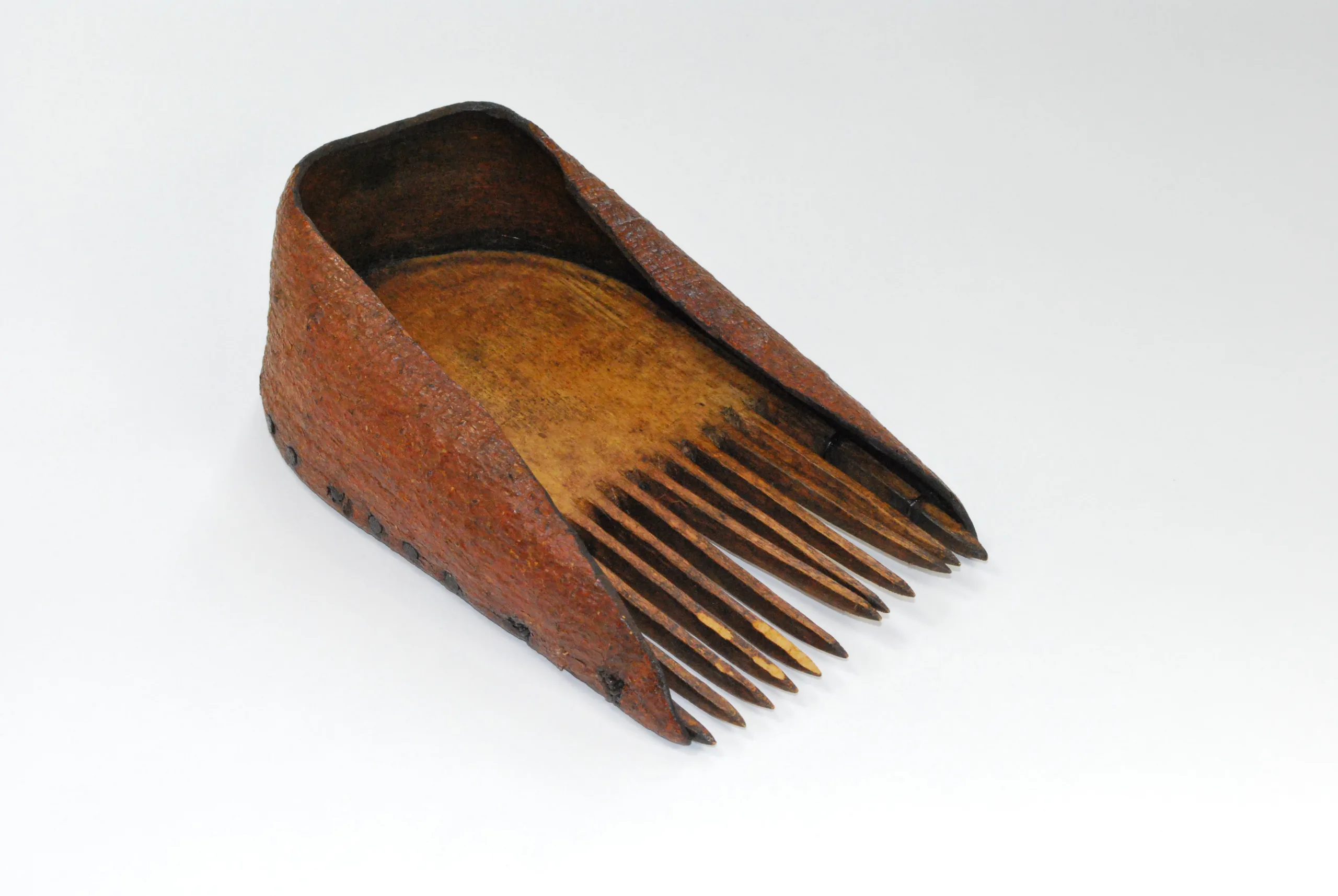
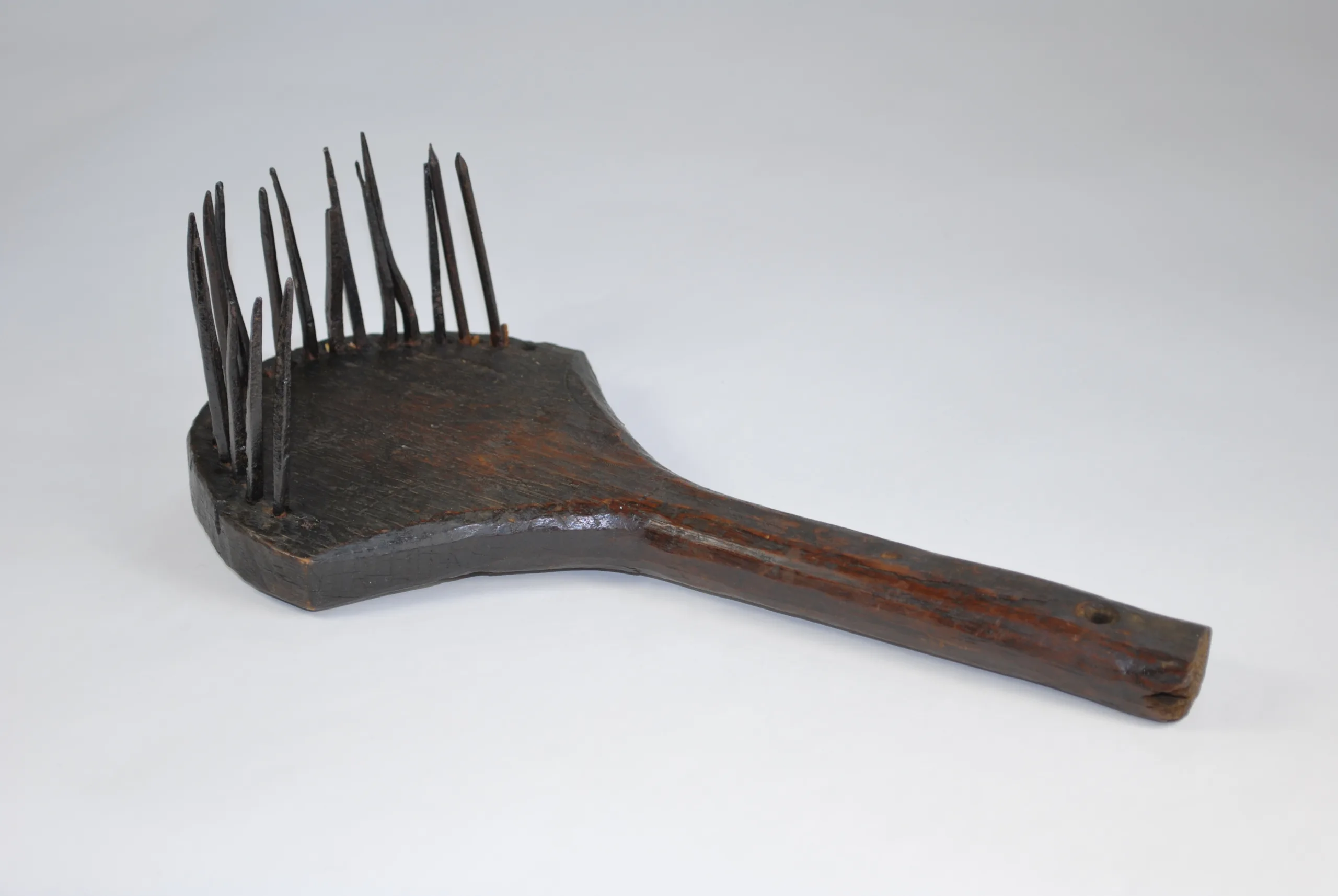
Ten blueberry rakes from Gorenjska — locally kampl, greben or rifl. Tools with which blueberries were stripped and combed in the mid-20th century.
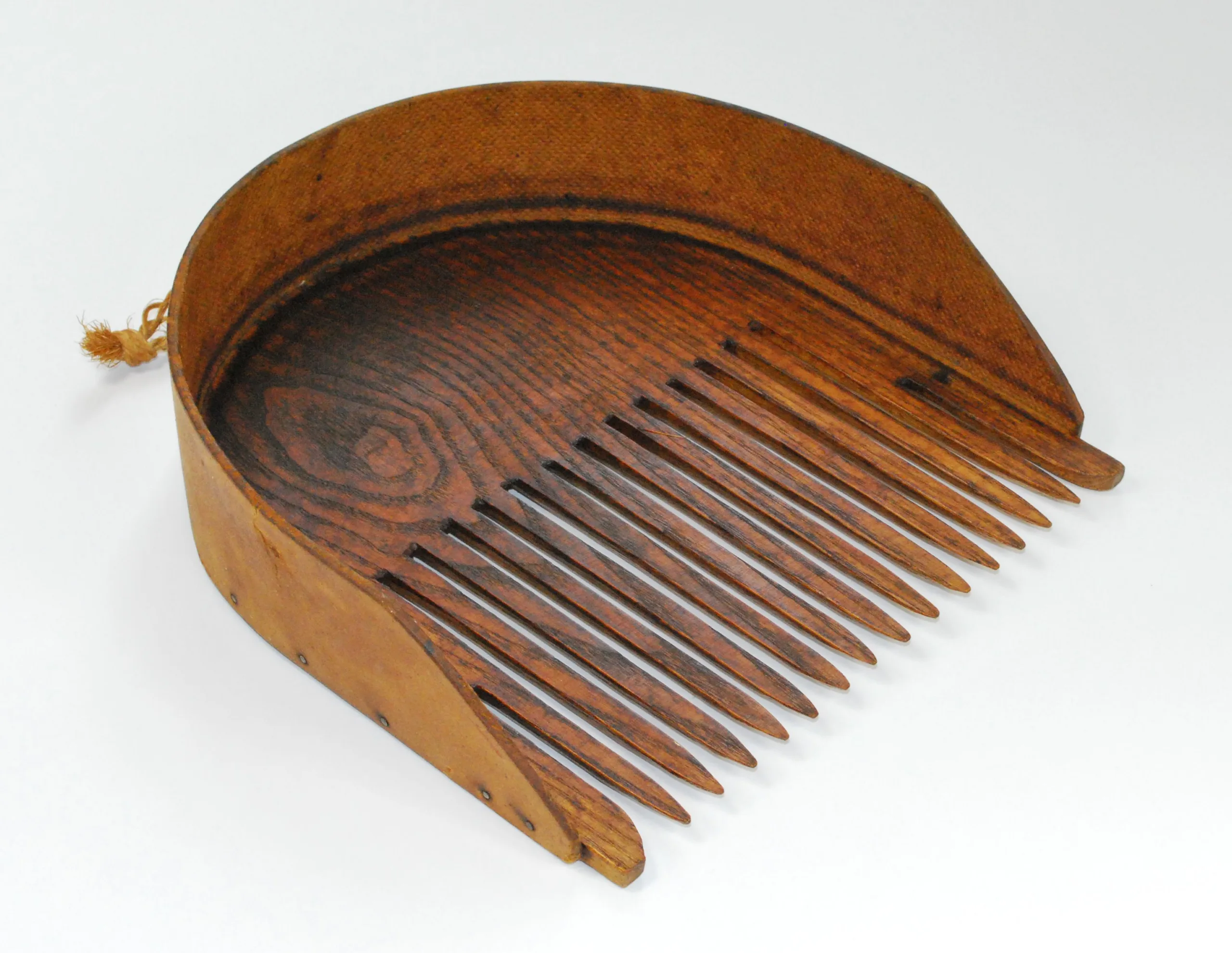
Kampl, greben, rifl
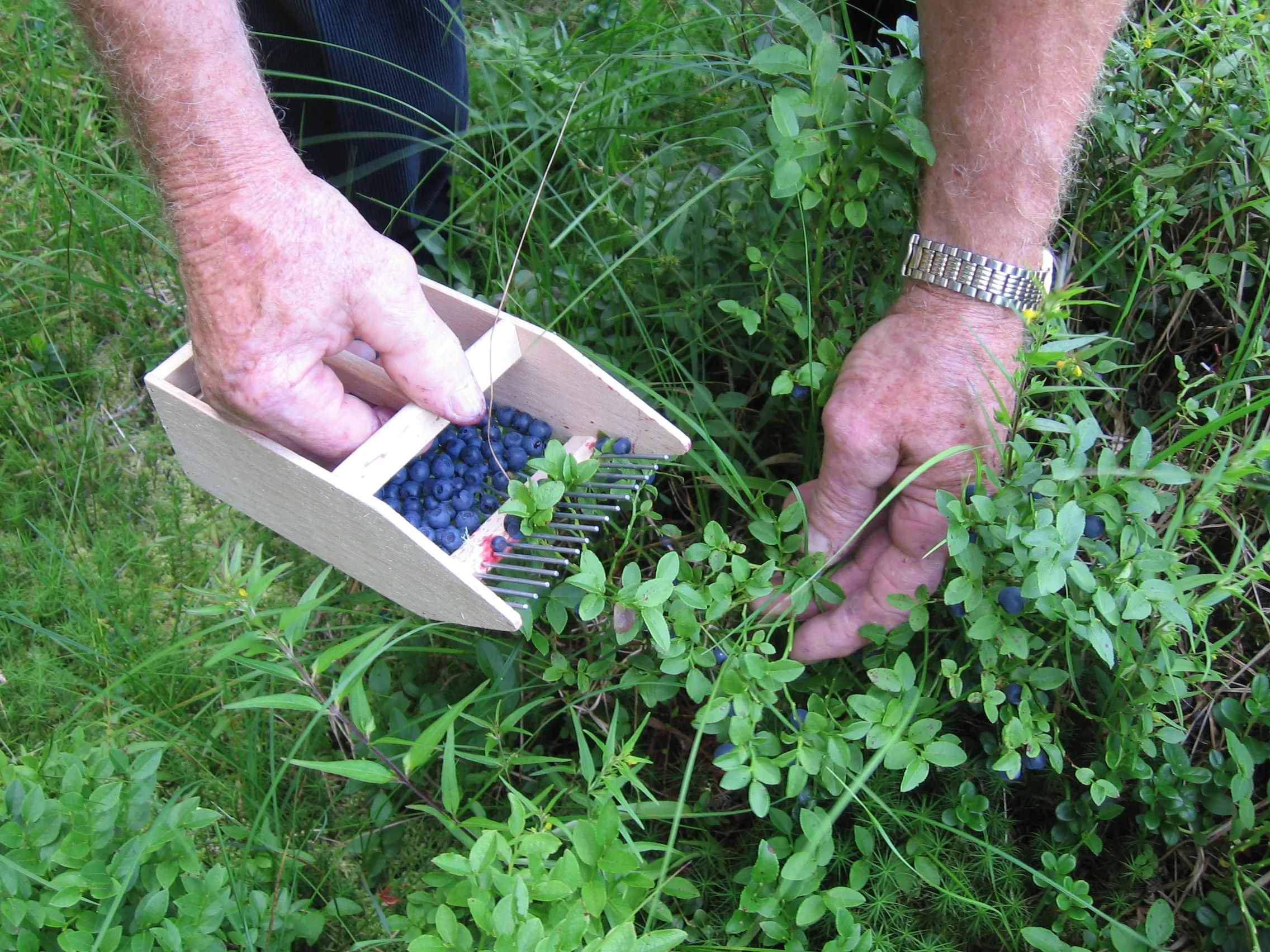
Ethnologists call the blueberry-picking tool grabljice (little rakes). The Gorenjski Museum holds ten from various places in Gorenjska. They were used in the first half and middle of the 20th century.
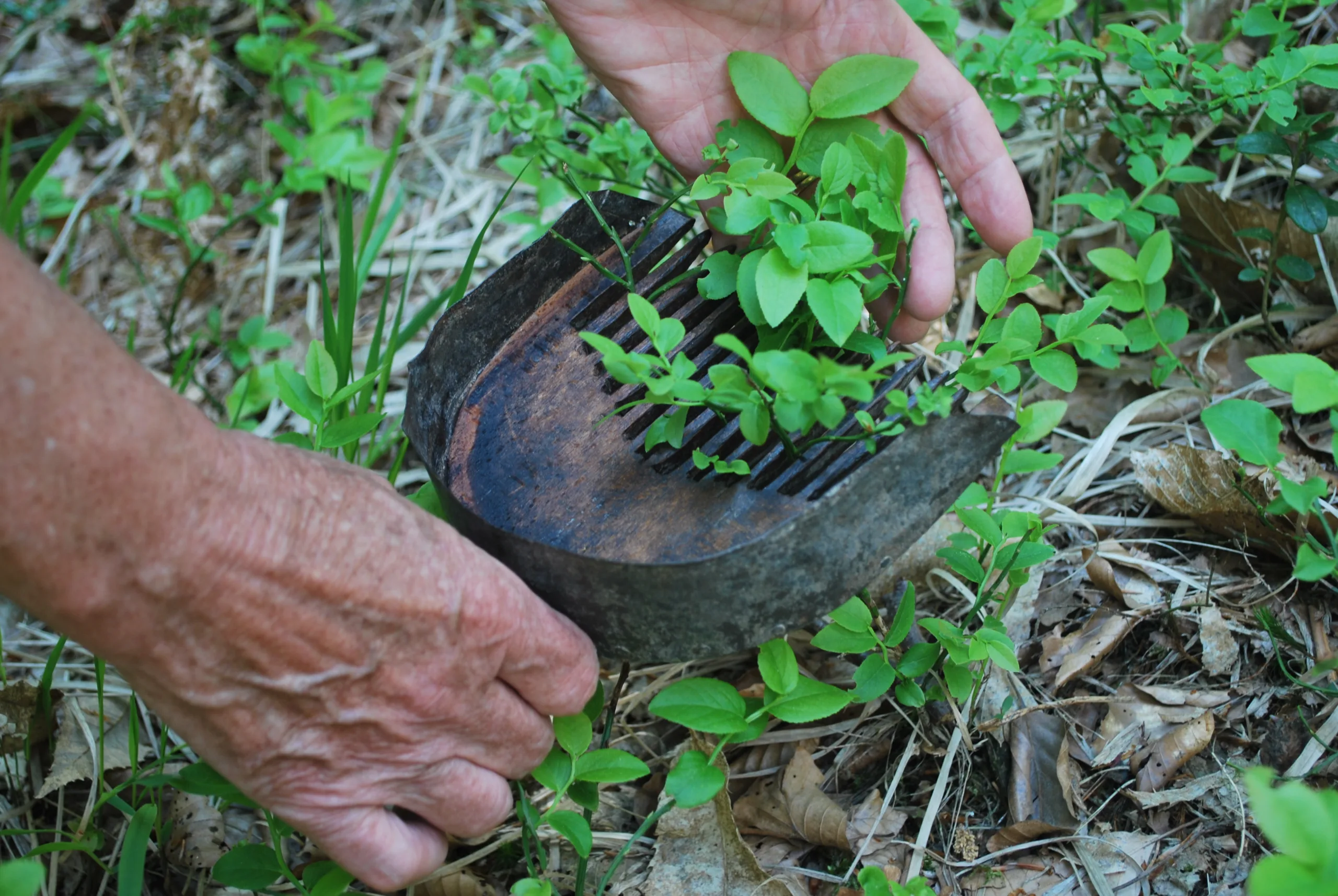
Nine are wooden, probably made at home. The teeth were often sawn from the wooden base; for metal ones they used nails or tips from an old umbrella. Special are rakes of spruce bark; specimens from Kamna Gorica were likely made by a skilled smith — hand-welded from sheet metal.
Trije tipi
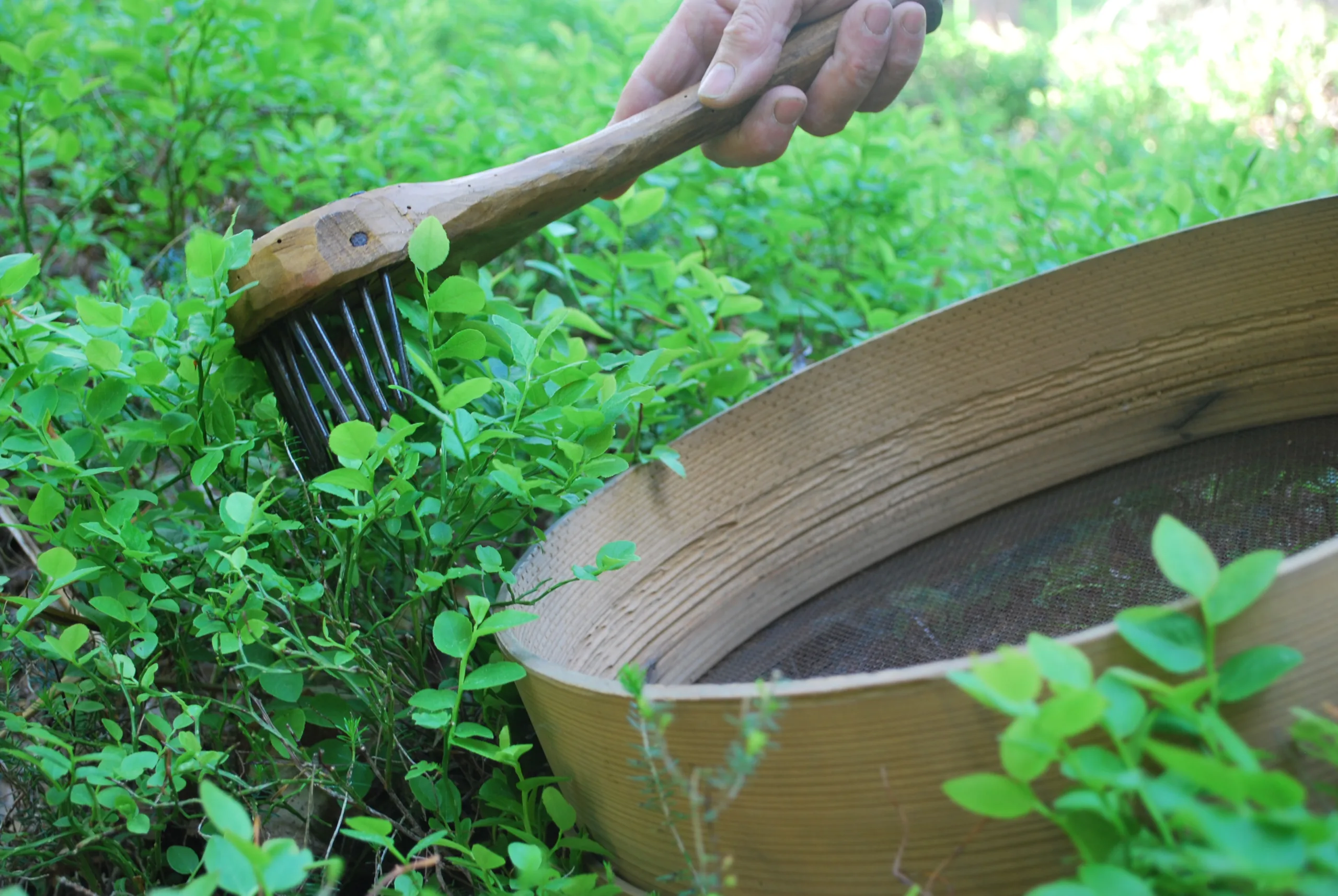
With the first type, shaped like little rakes with nails for teeth, blueberries were stripped onto a sieve held underneath. Others are semicircular tools with sawn teeth — with these blueberries were combed with an upward stroke through the bushes, then lightly shaken and blown to remove leaves. Only one is shaped as a small box with a handle and umbrella tips for teeth.
Only adults gathered with rakes. Although the berries were not as nice as those picked by hand, in the same time they gathered twice as many blueberries.
Predmeti v zbirki
Ten rakes from different places in Gorenjska
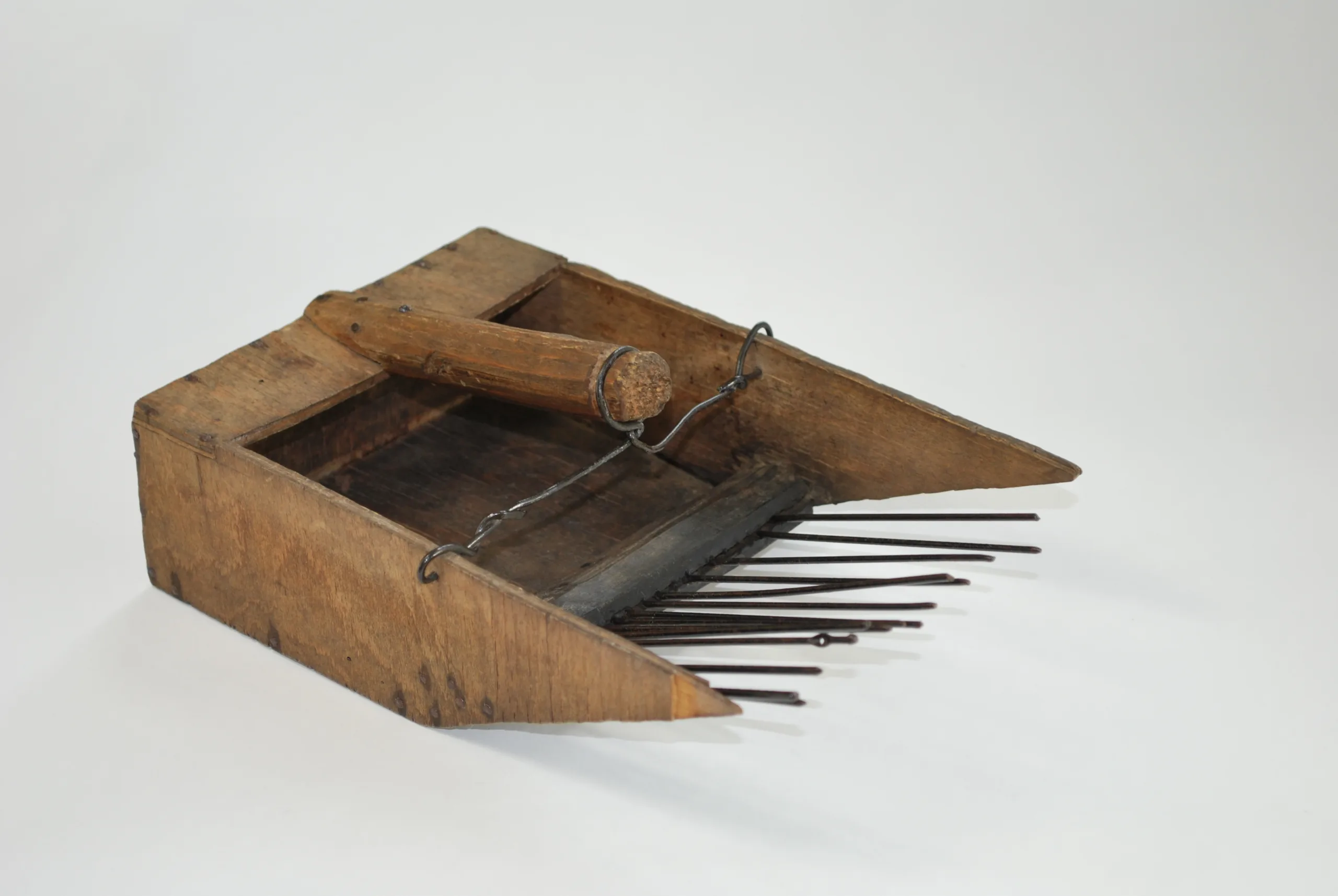
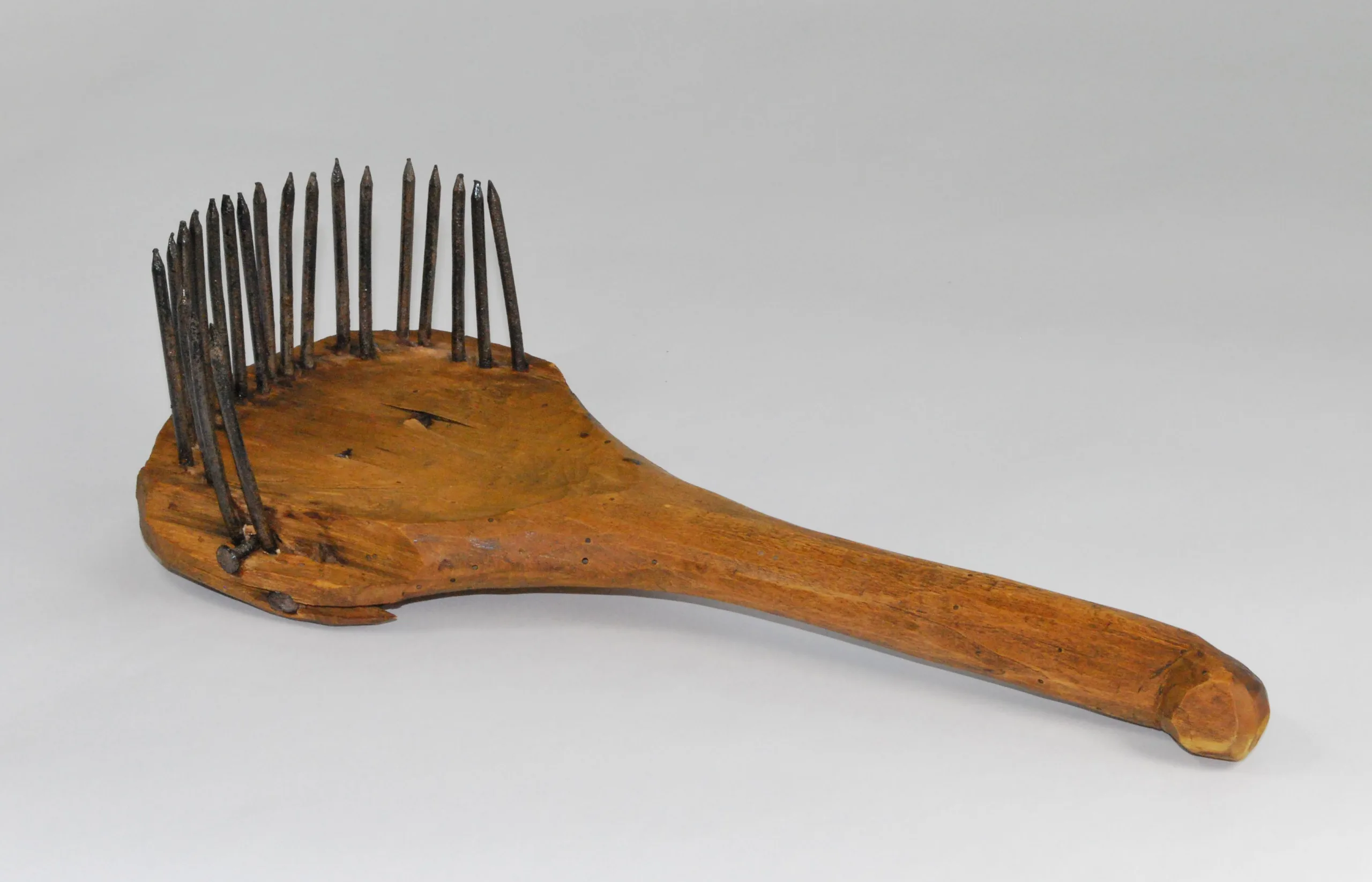
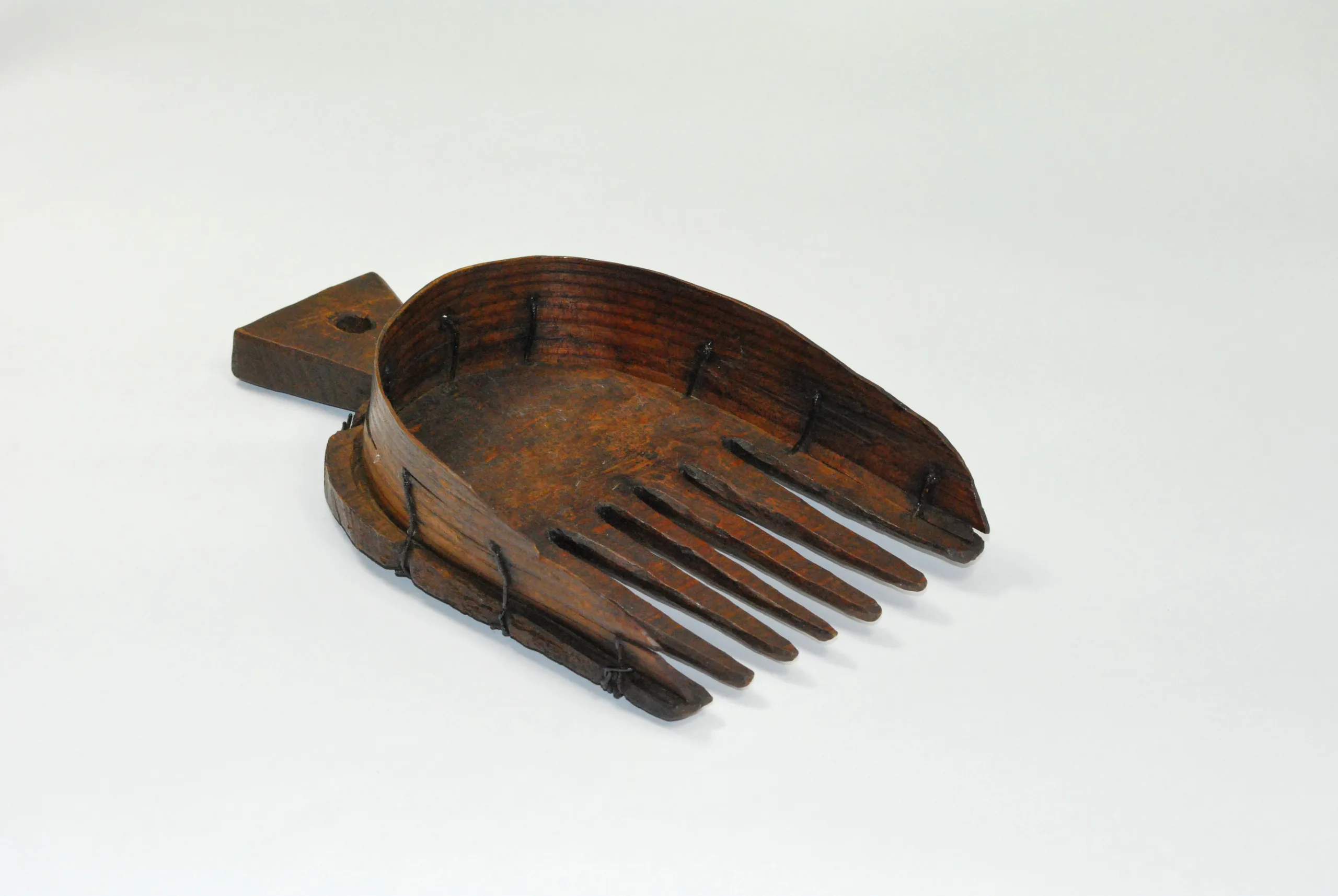
Gathering in the mid-20th century
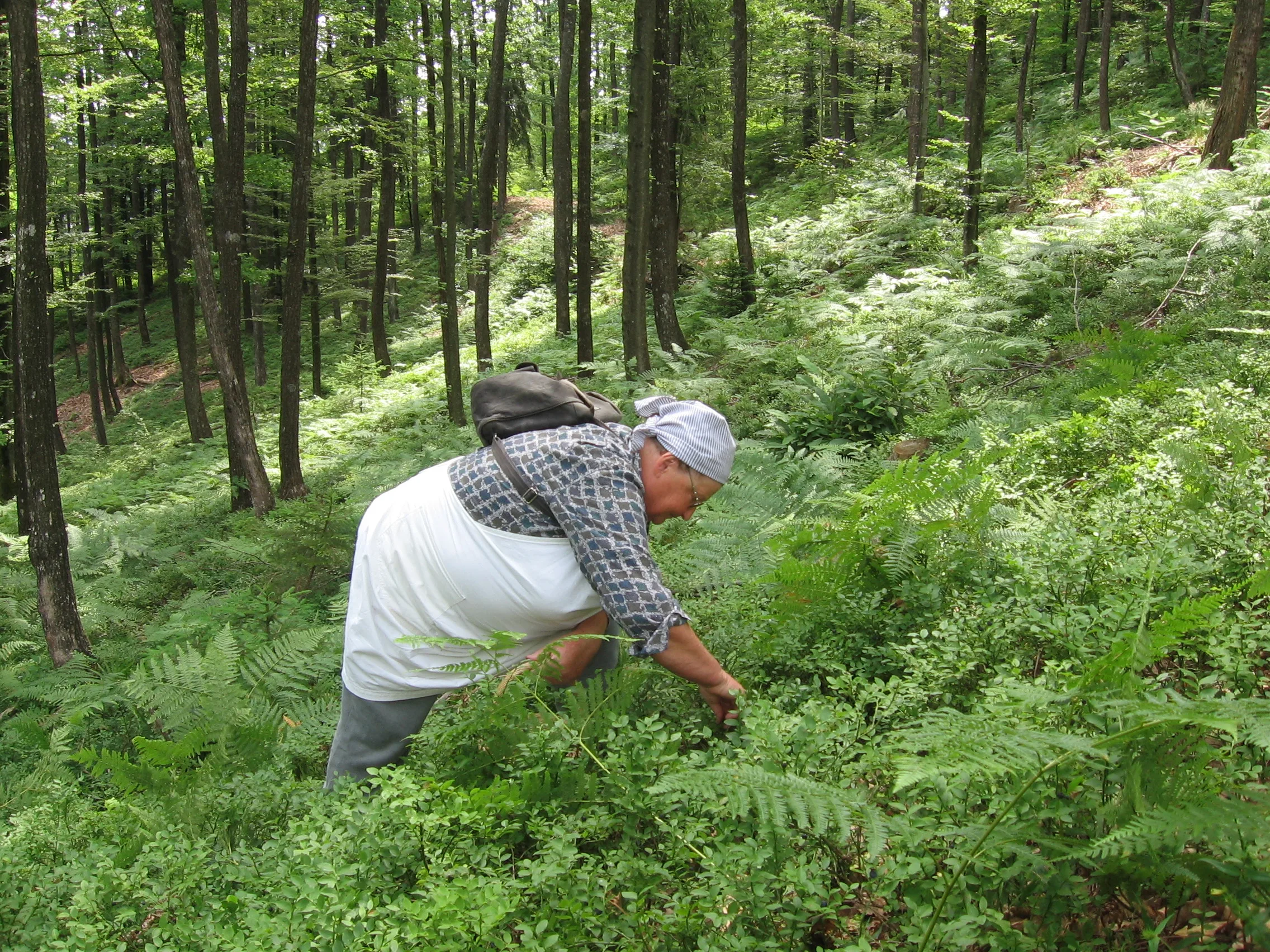
The finest and most prized blueberries had a greyish bloom — those grey ones. They were gathered mainly by women without income or with large families; the most numerous gatherers, however, were children earning money for school supplies.
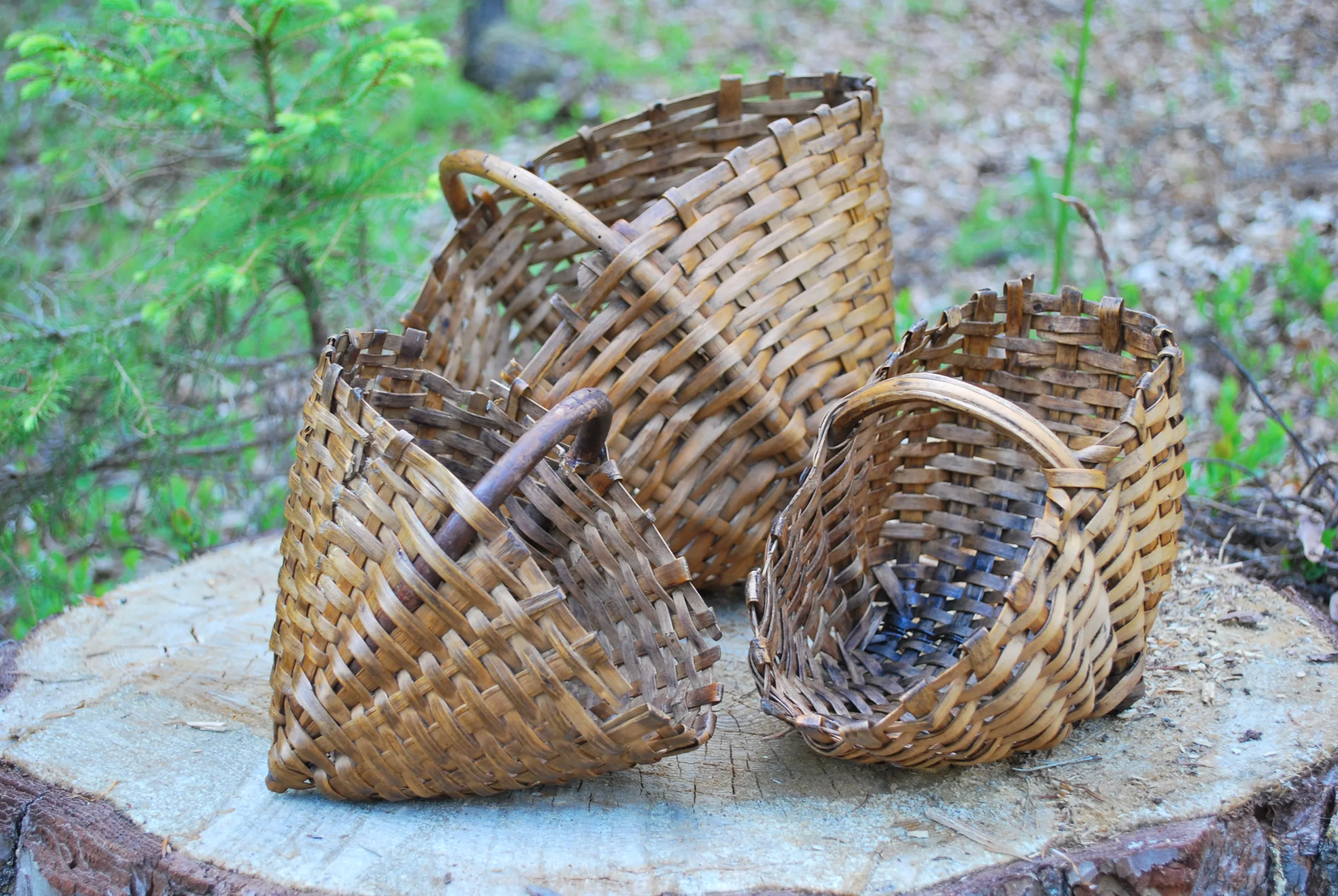
For sale they were mostly picked by hand. Those gathered with rakes were wetter and paid less. They were collected in small pickers’ containers, then poured into larger baskets and back-baskets.
Uporaba in prodaja
Before World War II people often distilled blueberry brandy. For six litres of spirit they had to gather over two hundred litres of blueberries — so for brandy they mostly used rakes.
After the war agricultural cooperatives bought blueberries. Because they were exported to England they had to be neatly picked, greyish and free of leaves. In 1956 the Naklo cooperative alone bought 28 tonnes for export. At home they dried them for tea, preserved them as compote, and made juice and jam.
Documentary photographs
Gathering and museum context